
Step-by-Step Instructions
Step 1 — Load the Wings
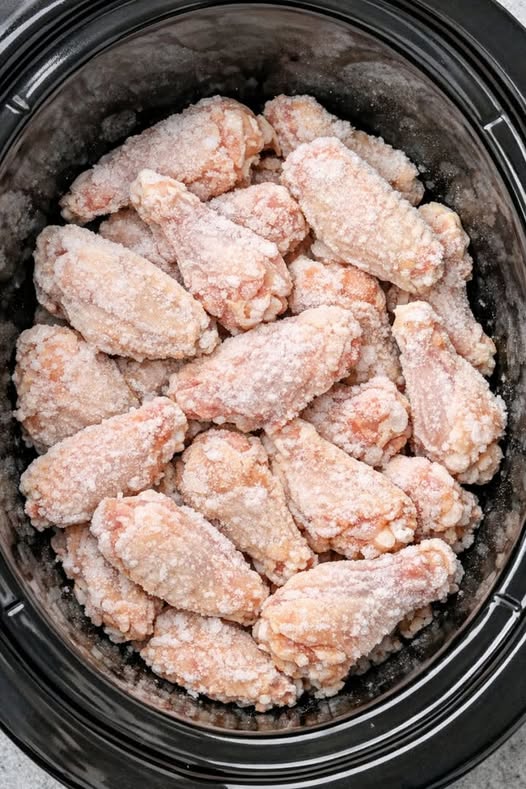
Place the frozen chicken wings in the slow cooker insert, spreading them as evenly as possible in a single layer or with minimal stacking. Complete single-layer placement is often not possible with three to four pounds of wings in a standard 5- to 6-quart insert — some stacking is acceptable, but try to distribute them so all the wings have reasonable sauce contact throughout the cook. Wings on the very bottom will have the most direct sauce contact; those on top will be cooked primarily by the steam environment and the sauce that coats them when stirred. Both cook fully with the specified timing.
Step 2 — Make the Sauce
In a medium bowl, stir together the barbecue sauce and grape jelly until the jelly is fully incorporated into the sauce and the mixture is mostly uniform. The jelly may take a minute of stirring to fully combine with the barbecue sauce — it doesn’t need to be perfectly smooth at this stage, as it will melt and integrate fully once the slow cooker heats up. Pour the sauce mixture evenly over the wings, using a spatula to scrape every bit from the bowl. Use tongs or a large spoon to turn the wings briefly so as many surfaces as possible are coated with the sauce.
Step 3 — Cook
Cover the slow cooker and cook on LOW for 5 to 6 hours or on HIGH for 3 to 4 hours. If possible, stir the wings once or twice during the cook to recoat the upper wings in sauce as it thins and warms — the sauce becomes more fluid as the jelly melts and the chicken releases its juices, and stirring ensures all the wings are coated rather than the sauce concentrating only at the bottom. The wings are done when the meat is very tender and pulls easily from the bone, the sauce is bubbling, and a thermometer inserted into the thickest part of the largest wing (away from bone) reads 165°F or above.
Step 4 — Optional Sauce Reduction
If the sauce in the slow cooker looks thin or watery after the wings are cooked through, remove the lid and switch to HIGH for 15 to 20 minutes, stirring occasionally, to allow some of the liquid to evaporate and the sauce to concentrate into a thicker, stickier consistency. This step is optional — many people are perfectly happy with the sauce consistency directly from the cook — but it produces a more intense, more coating sauce that’s worth the extra time if you’re planning the broiler finish.
Step 5 — Optional Broiler Finish
This step is strongly recommended for the most impressive result. Preheat the oven broiler to HIGH and line a rimmed baking sheet with aluminum foil; lightly spray the foil with cooking spray. Use tongs to transfer the cooked wings from the slow cooker to the prepared baking sheet in a single layer. Spoon additional sauce from the slow cooker generously over each wing. Broil 4 to 6 inches from the heating element for 3 to 5 minutes, watching closely — the sauce caramelizes and the wing surfaces develop slightly charred, deeply colored edges with a glossy, lacquered appearance. Remove immediately when the edges are beginning to char; the sugars in the sauce move quickly from caramelized to burned. Transfer to a serving platter.
Step 6 — Serve
Arrange the wings on a serving platter and spoon or drizzle any remaining sauce from the slow cooker or baking sheet over the top. Serve immediately while hot and sticky, with plenty of napkins alongside.
Tips for the Best Results
Don’t skip the broiler finish. Slow cooker wings are fully cooked and properly sauced, but they lack the caramelized, slightly charred exterior that makes restaurant wings so visually and texturally appealing. Five minutes under the broiler transforms them from good slow-cooker chicken into genuinely impressive wings with the glossy, lacquered surface and slightly crisped edges that most people associate with properly made wings. It’s the single most impactful optional step in the recipe.
Watch the broiler constantly. The grape jelly in the sauce contains significant sugar that caramelizes rapidly at broiler temperatures. The window between perfectly caramelized and burned is narrow — less than a minute at some broiler temperatures. Stay at the oven and check every 60 seconds during the broil.
Stir the wings at least once during cooking. The sauce thins and pools toward the bottom of the insert as it heats and the chicken releases its juices. Wings at the bottom have the most sauce contact throughout the cook; wings at the top have less until a stir redistributes the sauce. A single stir at the halfway point ensures more even coating and more evenly flavored wings across the entire batch.
Use a sauce you genuinely like. The barbecue sauce is the primary flavor agent for the entire dish. A barbecue sauce you find too sweet, too thin, or too bland before cooking will not improve during the slow cooker braise — it will simply be a concentrated version of what you started with. Choose a sauce whose flavor you enjoy straight from the bottle.
For a thicker, stickier sauce, reduce before broiling. Removing the lid and cooking on HIGH for 15 to 20 minutes after the wings are done concentrates the sauce from the thin, braising-liquid consistency of the end of the cook to a thicker, more coating glaze. This thicker sauce adheres better to the wings during the broiler finish and produces a more dramatically glossy result on the finished platter.
Frequently Asked Questions
Is it safe to cook frozen chicken wings directly in the slow cooker?
The USDA’s general guidance recommends against cooking frozen poultry in a slow cooker due to concern about the time the meat spends in the temperature danger zone (40°F to 140°F) during the heating phase. For this recipe, the combination of the specific wings-from-frozen approach and the five to six hour LOW cook time means the wings reach safe internal temperature (165°F) well before the cook is complete. For maximum food safety confidence, thaw the wings overnight in the refrigerator before cooking and reduce the cook time slightly. The recipe works equally well with thawed wings.
Can I use fresh or thawed wings instead of frozen?
Yes — thawed wings work exactly the same way with the same method. Reduce the cook time slightly for thawed wings: 4 to 5 hours on LOW or 2½ to 3 hours on HIGH, checking for tenderness and internal temperature at the lower end of the range. Fresh or thawed wings will release more liquid during the cook than frozen, so the sauce may be thinner — the optional reduction step and broiler finish are particularly worthwhile with thawed wings for the best sauce consistency.
Can I substitute a different jelly?
Yes — any smooth, dark fruit jelly or jam works well in this application. Blackberry, boysenberry, plum, and black currant each produce a slightly different flavor profile while maintaining the same sweet-savory balance and sticky texture. Strawberry or raspberry jelly produce a lighter, more distinctly berry-flavored result. Apricot preserves produce a lighter-colored, slightly more tart result that is particularly good with a spicier barbecue sauce. All should be used in the same quantity and combined with the barbecue sauce in the same way.
Can I double the recipe for a larger crowd?
Yes, easily. Double all three ingredients and use a 7-quart slow cooker. The cook time remains approximately the same, though a very full insert may benefit from an additional 30 to 45 minutes on LOW. Transfer the cooked wings to baking sheets for the broiler finish in two batches if needed — don’t crowd the baking sheet, as crowded wings steam rather than caramelize under the broiler.
How do I reheat leftover wings?
The best method is the oven: arrange the wings on a foil-lined baking sheet and reheat at 350°F for 10 to 15 minutes until warmed through, then switch to the broiler for 2 to 3 minutes to re-crisp the surface. The microwave works but produces a softer, less appealing texture — if using the microwave, heat at medium power in short intervals and accept that the exterior won’t be as crisp. Leftover wing meat pulled from the bone and mixed with the remaining sauce makes an excellent filling for sandwiches, sliders, or tacos.
Variations Worth Trying
Spicy honey version: Replace the grape jelly with half a cup of honey and add one teaspoon of sriracha or one tablespoon of hot sauce to the barbecue sauce before combining. The honey produces a cleaner, more intensely sweet glaze without the grape’s fruitiness, and the hot sauce adds a building heat that contrasts pleasantly with the honey’s sweetness. This version is particularly good with the broiler finish, where the honey caramelizes more dramatically than jelly.
Asian-inspired version: Replace the grape jelly with half a cup of hoisin sauce and the barbecue sauce with a mixture of soy sauce, rice vinegar, and a tablespoon of sesame oil. Add a teaspoon of freshly grated ginger and two minced garlic cloves to the sauce mixture. The hoisin, soy, and ginger combination produces a deeply savory, slightly sweet, intensely flavored sauce that gives the wings a completely different but equally satisfying character. Finish with a sprinkle of sesame seeds and sliced green onion at the table.
Tangy vinegar version: Add two tablespoons of apple cider vinegar to the barbecue sauce and grape jelly mixture before pouring over the wings. The vinegar brightens and sharpens the sweet-savory sauce, cutting through the jelly’s sweetness and giving the finished wings a more complex, tangier flavor with a better balance between sweet and acidic. This version is particularly good with a sweeter barbecue sauce that benefits from the acidity.
Dr Pepper version: Replace the grape jelly with half a cup of Dr Pepper (or similar cola-adjacent soda) and reduce the barbecue sauce to three-quarters of a cup. Add a tablespoon of brown sugar to compensate for the reduced sweetness. The soda adds a complex, slightly caramel-vanilla flavor and additional liquid that produces a slightly thinner sauce than the jelly version — use the reduction step to concentrate it before the broiler finish. This version is close in spirit to cola-braised meats and has a distinctive, hard-to-identify flavor depth that people consistently find interesting.
Peach BBQ version: Replace the grape jelly with half a cup of peach preserves and use a smoky, slightly spiced barbecue sauce. The peach adds a bright, summery fruitiness that pairs beautifully with the smoky sauce and gives the finished wings a distinctly Southern character — peach and smoke is one of the great flavor combinations in barbecue cooking. Stir a pinch of cayenne into the sauce for a gentle heat that plays off the peach’s sweetness.
Serving Suggestions
Slow cooker BBQ grape jelly wings are most naturally served as the centerpiece of a casual meal, piled on a large platter with the remaining sauce drizzled over the top and plenty of napkins available. For a game-day or party spread, serve alongside celery and carrot sticks with ranch or blue cheese dressing for dipping — the classic wing accompaniment that provides a cool, fresh, creamy contrast to the hot, sticky wings. Buttered boiled or mashed potatoes absorb the sweet-savory sauce beautifully when any sauce from the platter runs onto the plate. Coleslaw provides the cool, slightly acidic crunch that balances the richness. Cornbread or dinner rolls are excellent for mopping up any sauce left on the platter. For a more substantial family dinner rather than a casual spread, serve the wings alongside baked beans and a simple salad for a complete meal that requires no additional preparation beyond what the slow cooker has already handled.
Storage
Store leftover wings in an airtight container in the refrigerator for up to 3 days, with as much of the sauce as possible to keep them moist. Reheat in a 350°F oven on a foil-lined baking sheet for 10 to 15 minutes until warmed through, then broil briefly to re-crisp the surface. The wings can also be frozen for up to 2 months — freeze in the sauce in airtight containers, thaw overnight in the refrigerator, and reheat as described above. The leftover wing meat, pulled from the bones and mixed with the remaining sauce, makes an excellent sandwich filling on toasted rolls with coleslaw.
Three Pantry Ingredients, One Genuinely Good Wing Night
Slow Cooker BBQ Grape Jelly Chicken Wings prove the same principle that the entire tradition of American pantry cooking rests on: that a clever combination of accessible, inexpensive ingredients treated with the right method can produce results that compete with more expensive and more effort-intensive preparations. Barbecue sauce and grape jelly from the pantry, frozen wings from the freezer, and a slow cooker set to LOW before the day starts produce wings that are genuinely sticky, deeply flavored, and fall-off-the-bone tender — the kind of wings that prompt people to ask for the recipe rather than assuming they already know it. The optional broiler finish is what makes them look as good as they taste. That combination of simplicity, flavor, and presentation is the whole promise of this recipe, and it delivers.
Enjoy!