

Step-by-Step Instructions
Step 1 — Brown the Meat
Place a large skillet over medium heat. Add the ground beef or sausage and crumble it as it cooks, breaking it into smaller pieces with a wooden spoon or spatula. When the meat is about halfway cooked and no longer pink on the outside, add the diced onion and minced garlic and continue cooking, stirring frequently, for another 4 to 5 minutes until the onion is softened and translucent and the meat is fully browned with no pink remaining. Drain off all but a small amount of the rendered fat — leaving a tablespoon or so behind adds flavor, but too much grease will make the finished dish heavy and oily. Season with the Italian seasoning, a generous pinch of salt, and several grinds of black pepper. Taste and adjust the seasoning — the meat layer should be well-seasoned on its own since it will be distributed through a significant amount of pasta and cheese.
Step 2 — Prepare the Sauce
In a bowl or directly in the emptied can, stir the marinara sauce and crushed tomatoes together to combine them into a unified sauce. Taste and adjust for seasoning — a pinch of salt, a grind of pepper, or a small pinch of additional Italian seasoning can be added here if the sauce tastes like it needs it.
Step 3 — Begin Layering
Lightly grease the interior of a 6-quart slow cooker with cooking spray or a thin wipe of olive oil. Spread a thin layer of the combined tomato sauce across the bottom of the insert — just enough to prevent the pasta from sticking to the bare surface. This bottom sauce layer is important: dry pasta in direct contact with the hot insert without any sauce buffer can stick and scorch.
Step 4 — Build the First Layer
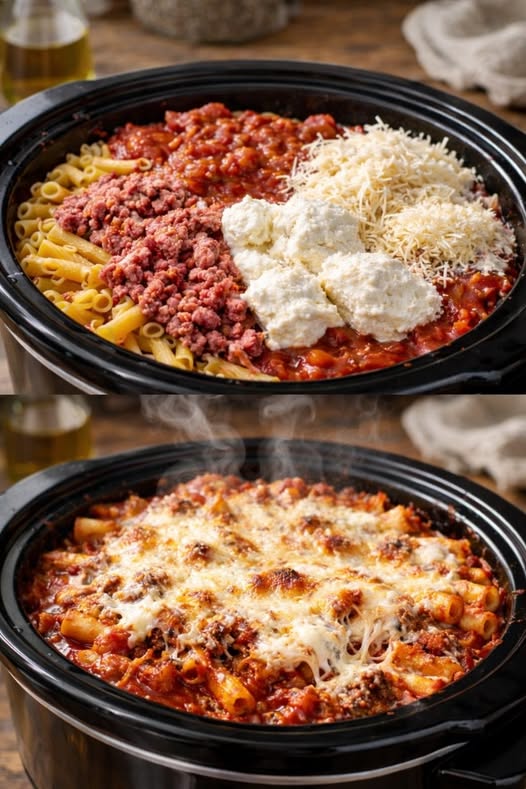
Scatter half of the uncooked ziti in an even layer over the sauce on the bottom of the slow cooker. Spread half of the browned meat mixture over the pasta. Pour or spoon approximately half of the remaining sauce over the meat, spreading it as evenly as possible. Drop half of the ricotta in spoonfuls distributed across the sauce layer. Sprinkle half of the shredded mozzarella and half of the grated Parmesan over the ricotta.
Step 5 — Build the Second Layer
Repeat the layering: scatter the remaining ziti over the cheese layer, spread the remaining meat mixture over the pasta, pour the remaining sauce over the meat, and dollop the remaining ricotta across the surface. Sprinkle the remaining mozzarella and Parmesan evenly over the top to finish. The slow cooker will look very full at this stage — this is normal, as the pasta and sauce will compact considerably during cooking.
Step 6 — Add the Liquid
Pour the cup of water or beef broth slowly and evenly over the assembled layers, distributing it across the entire surface of the top layer rather than pouring it all in one spot. Tilt the slow cooker gently in each direction if needed to encourage the liquid to seep into the lower layers. This liquid is what allows the top layers of pasta to cook through rather than remaining dry and hard.
Step 7 — Cook
Cover the slow cooker and cook on LOW for 4 to 5 hours or on HIGH for 2 to 3 hours, until the pasta is tender throughout when tested with a fork and the sauce is bubbling around the edges. If your slow cooker runs hot, check at the lower end of the time range and stir gently once at the midpoint to redistribute any pasta that may be sitting above the liquid level. The top layer of cheese will be set and melted; it won’t develop a browned crust the way an oven-baked version does, but it will be fully melted and slightly golden in spots.
Step 8 — Rest and Serve
Turn off the slow cooker and allow the ziti to rest with the lid on or slightly ajar for 10 minutes before serving. This brief rest allows the sauce to thicken slightly around the pasta and the layers to settle into a more cohesive, scoopable consistency. Serve with a large spoon, scooping down through both layers to give each portion some of the meat, pasta, ricotta pockets, and melted cheese. Scatter fresh basil or parsley over the top of each serving if using.
Tips for the Best Results
Don’t skip the bottom sauce layer. A thin smear of marinara on the greased insert before the first pasta layer prevents the bottom pasta from sticking to the hot surface and developing a hard, stuck crust that ruins the bottom of the dish and is difficult to clean.
Use freshly shredded mozzarella. The difference between freshly shredded block mozzarella and pre-shredded bag mozzarella is most noticeable in dishes like this one, where the cheese is a primary ingredient. Block mozzarella shredded at home melts into long, glossy, stretchy strands; pre-shredded mozzarella produces a drier, less fluid melt due to the anti-caking starch coating.
Don’t over-stir during cooking. The layered structure of baked ziti is part of its appeal. Stirring too aggressively during the cook collapses the layers into a uniform pasta and meat mixture — which is still good, but loses the visual and textural appeal of distinct ricotta pockets and cheese layers. If your slow cooker runs hot and the edges are browning too quickly, one gentle stir at the midpoint is fine.
Check the pasta, not just the clock. Slow cooker temperatures vary between models, and the difference between a just-done and overcooked pasta can be 15 to 30 minutes depending on your machine. Start checking for pasta doneness at the lower end of the time range by pressing a fork into the top layer — if it meets no resistance, the pasta is done.
Let it rest. Ten minutes of resting after the cook is complete makes the difference between a saucy, somewhat liquid dish and a cohesive, properly set baked ziti that scoops cleanly and holds together on the plate. The sauce firms up around the pasta during this time and the layers consolidate.
Frequently Asked Questions
Can I use a different pasta shape?
Yes. Penne rigate and rigatoni are the best alternatives — similar size and thickness to ziti mean nearly identical cooking times. Smaller shapes like rotini or fusilli cook faster and may become overcooked before the sauce has fully developed; if using them, reduce the cooking time by 30 to 45 minutes and check earlier. Avoid small or thin pasta shapes that are likely to turn mushy in the slow cooker’s moist heat environment.
Can I make this vegetarian?
Yes, easily. Omit the ground beef or sausage and replace it with two cups of sautéed vegetables — diced mushrooms, diced zucchini, and baby spinach are all excellent choices that add substance and nutrition. Cook the vegetables in the skillet with the onion and garlic until softened before layering into the slow cooker as you would the meat. The finished dish is fully vegetarian and very satisfying.
Can I add spinach or other vegetables?
Yes. Baby spinach wilts into the sauce very well — add a large handful (about 2 cups) to the skillet with the cooked meat in the final minute of the browning step, or stir it directly into the sauce before layering. Diced mushrooms cooked with the meat add an earthy, savory depth. Diced bell pepper or zucchini added to the skillet with the onion works well and adds color and nutrition to the finished dish.
How do I keep the pasta from getting mushy?
The most important factor is not exceeding the cooking time. On LOW, four hours is the sweet spot for most slow cookers; five hours is the outer limit. On HIGH, two hours is usually sufficient. Check for pasta doneness at the lower end of the time range. Also ensure there’s enough liquid — both too little liquid (which prevents the pasta from cooking evenly) and too much liquid (which waterloggs the pasta) can produce poor texture results.
Can I assemble this ahead of time and cook later?
Yes. Assemble the dish completely through the liquid-pouring step, cover, and refrigerate the slow cooker insert for up to 12 hours before cooking. Remove from the refrigerator 30 minutes before cooking to let the insert come closer to room temperature, then cook as directed — add 30 minutes to the cooking time to account for the cold start. This is a convenient approach for a weeknight when you want to prep in the morning or the night before and simply switch the slow cooker on when you get home.
Variations Worth Trying
Italian sausage and ricotta version: Use a pound of Italian sausage — half sweet and half hot — in place of ground beef, and increase the ricotta to two cups mixed with a beaten egg and a handful of chopped fresh basil before dolloping. The spiced sausage and the herbed ricotta produce a more complex, intensely flavored dish that’s closer in character to a restaurant baked ziti. This is the version most likely to impress guests.
Four-cheese version: Add half a cup of shredded provolone and half a cup of fontina or Gruyère to the cheese mix, reducing the mozzarella to one cup. The combination of four cheeses produces a more complex, deeply savory cheese layer with more interesting textural variation than straight mozzarella. Provolone adds a mild smokiness; fontina melts beautifully and adds a nutty, slightly sweet quality.
Spinach and ricotta version: Omit the meat and double the ricotta to three cups mixed with two cups of thawed, squeezed-dry frozen spinach, a beaten egg, half a cup of grated Parmesan, salt, pepper, and a pinch of nutmeg. Use this enriched ricotta and spinach mixture as the filling between the pasta layers in place of the meat. The result is a vegetarian baked ziti that’s closer in character to stuffed shells or lasagna and is particularly popular with people who prefer a dairy-forward pasta dish.
Spicy arrabbiata version: Replace the marinara with a jar of arrabbiata sauce (spiced tomato sauce with red chili) and use hot Italian sausage instead of ground beef. Add a half teaspoon of crushed red pepper flakes to the meat while it browns. The result is a baked ziti with a genuine heat that builds through the meal, balanced by the cooling richness of the ricotta and mozzarella.
Meat sauce version: Brown the meat with the onion and garlic, then add the combined marinara and crushed tomatoes directly to the skillet and simmer for 10 minutes to create a proper bolognese-style meat sauce before layering. This extra step produces a more cohesive, restaurant-quality tomato meat sauce that integrates more fully with the pasta and cheese layers in the finished dish. It adds about 15 minutes to the prep but makes a noticeable difference to the depth of flavor in every forkful.
Serving Suggestions
Slow Cooker Baked Ziti is a complete, filling meal on its own. Garlic bread or garlic breadsticks are the most natural accompaniment — essential for mopping up any extra sauce in the bowl. A simple green salad dressed with a sharp vinaigrette provides acidity and freshness to balance the richness of the cheesy pasta. Roasted broccoli or sautéed green beans are good vegetable sides that add color and a fresh element to the table. For a crowd, set out the slow cooker insert as a serving vessel with a large serving spoon and let people help themselves — it holds the pasta warm on the LOW or WARM setting for up to an hour after cooking, making it an ideal potluck dish.
Storage
Leftover baked ziti keeps in an airtight container in the refrigerator for up to 4 days. The pasta continues to absorb sauce during storage and will be noticeably thicker and denser when cold than when freshly made. Reheat individual portions in the microwave covered with a damp paper towel, or reheat larger quantities in a covered baking dish with a splash of water or marinara added to restore moisture, in a 350°F oven for 20 to 25 minutes. The reheated dish is excellent and many people find the second-day version even more flavorful once the sauce has had more time to meld with the pasta. This dish freezes well for up to 3 months in portion-sized airtight containers; thaw overnight in the refrigerator before reheating.
Cheesy, Saucy, and Genuinely Effortless
Slow Cooker Baked Ziti proves that one of the most satisfying Italian-American comfort foods doesn’t require an oven, advance pasta cooking, or much active time in the kitchen. Ten minutes of browning, five minutes of layering, and a slow cooker left alone for a few hours produce a dish that delivers everything the classic baked version is known for — layered pasta, pockets of creamy ricotta, stretchy melted mozzarella, savory meat sauce — without the effort. It’s the kind of recipe that makes the slow cooker feel genuinely indispensable.
Enjoy!