
2-Ingredient Pineapple Angel Food Bars
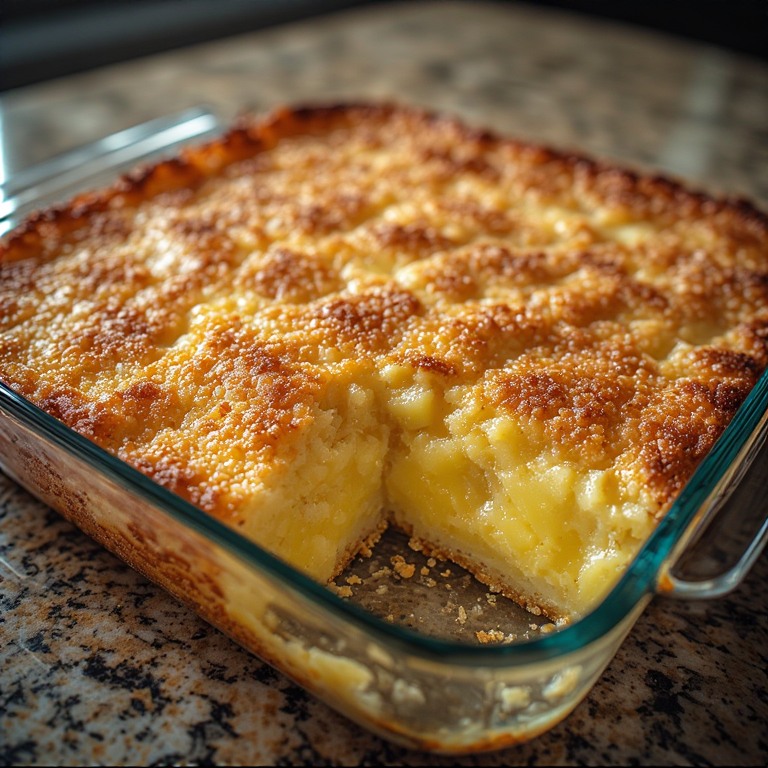
Angel food cake mix and a can of crushed pineapple in juice. Stir together, pour into a pan, bake for thirty minutes. This is a recipe that should not work as well as it does — two ingredients, no eggs, no oil, no added water — and yet produces a genuinely light, tender, pleasantly sweet bar with a slightly crisped golden top and a soft, slightly springy interior that disappears from any plate it’s set on. The mechanism that makes it work is both simple and surprising: the moisture from the crushed pineapple and its juice provides the liquid that the angel food cake mix needs to hydrate, while the pineapple juice’s acidity helps activate the leavening agents already present in the cake mix, producing a batter that foams and aerates as the dry mix and fruit are combined. The result is not quite a cake, not quite a bar, but something in between — light and fruit-forward, with the characteristic cloud-like texture of angel food and a bright tropical sweetness from the pineapple that makes it refreshing as well as sweet.
The two-ingredient concept here is genuine rather than a marketing conceit. Angel food cake mix contains everything the recipe needs beyond liquid and flavoring — the cake flour, the egg white powder (which is the structural protein that gives angel food its characteristic tender chew), the cream of tartar, the sugar, and the leavening. The crushed pineapple provides the liquid, the natural sweetness, the flavor, and the fruit pieces that make the finished bars visually appealing and give each bite a slight tropical character. Nothing else is needed, and adding the ingredients specified on the cake mix box (water, sometimes oil, sometimes eggs depending on the brand) would actually produce a denser, less light result than the pineapple-only method.
Why This Works: The Science Behind the Two-Ingredient Magic
Angel food cake mix’s composition is specifically designed around whipped egg whites as the primary leavening and structural agent. The dried egg white powder in the mix, when hydrated with liquid and agitated (even by simple stirring), begins to produce a foam structure as the egg white proteins partially denature and trap air bubbles — this is a more modest version of what happens when fresh egg whites are whipped to stiff peaks. The cream of tartar in the mix, which stabilizes meringue by lowering the pH of the egg white foam, contributes to the stability of this foam structure even in the stirred rather than whipped preparation.
The crushed pineapple juice contributes two things beyond simple hydration: its natural acidity (pineapple juice has a pH of approximately 3.5 to 4) reinforces the acidic environment that the cream of tartar has established, helping maintain the foam structure; and its natural sugars add to the total sweetness in a way that also contributes to the golden browning of the top surface during baking through caramelization. The crushed pineapple pieces, distributed through the batter, remain soft and slightly translucent in the finished bar, adding their natural sweetness and tropical flavor to every bite without contributing any unwanted texture contrast.
Why You’ll Love This Recipe
Two ingredients, five minutes of preparation (including the time to preheat the oven), twenty-five to thirty minutes of baking, and twenty to thirty minutes of cooling produce a pan of twelve to sixteen bars that are genuinely light, pleasantly sweet, and appropriate for a wide range of occasions — weeknight dessert, potluck contribution, brunch treat, or take-to-the-office occasion. The dish requires one mixing bowl and one baking pan to clean. The bars are lower in fat than most baked desserts because angel food cake mix contains no fat and the pineapple juice adds no fat — the final product has a considerably lighter caloric footprint than a brownie, a cookie bar, or a conventional cake bar. For anyone who wants a sweet, satisfying dessert bar that doesn’t require more than five minutes of active kitchen time, this recipe delivers with remarkable consistency.
Ingredient Notes
Angel food cake mix — one 15.25-ounce box, used dry — is used exactly as it comes from the box, with no modification and no addition of the liquids or eggs specified on the package instructions. The dry mix contains all the structural and leavening ingredients the bars need; the pineapple juice provides the liquid. Different brands of angel food cake mix produce slightly different results — some are sweeter, some have more vanilla character, some produce a more uniformly airy texture. Betty Crocker and Pillsbury are the most widely available and both produce excellent results. Do not substitute a white or yellow cake mix for angel food mix — the structural composition is fundamentally different (angel food relies on egg white powder; conventional cake mixes use leavening agents and often whole egg powder) and would produce a different, denser result.
Crushed pineapple in juice — one 20-ounce can, undrained — provides the liquid, the sweetness, the flavor, and the fruit pieces. The can must be undrained — the pineapple juice is the primary liquid in the recipe, and discarding it would leave insufficient moisture to hydrate the cake mix properly. The pineapple should be crushed rather than chunk or tidbits — crushed pineapple distributes more evenly through the batter and produces a more uniform texture in the finished bar than larger pieces that would create isolated wet pockets. Pineapple packed in juice (rather than syrup) produces a less sweet, more naturally fruit-flavored result; pineapple in heavy syrup produces a sweeter, more dessert-forward bar. Either works; juice-packed is the more commonly recommended option for a less cloying result.
Ingredients
- 1 box (15.25 oz) angel food cake mix, dry (do not follow box instructions)
- 1 can (20 oz) crushed pineapple in juice, undrained
- Nonstick cooking spray or neutral oil, for greasing the pan