
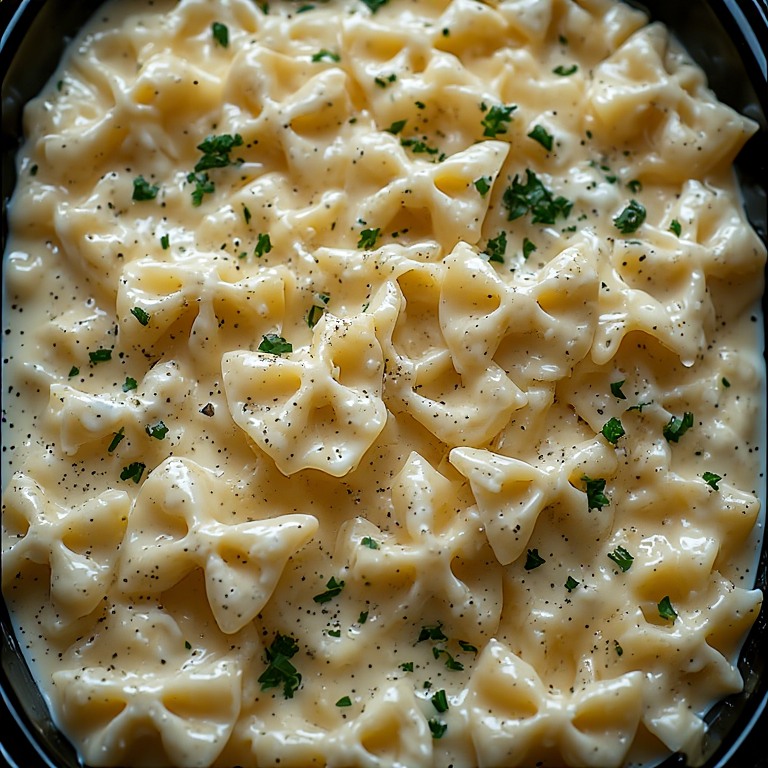
Slow Cooker Springtime Bowtie Pasta
Cooking dry pasta directly in a slow cooker is one of those techniques that sounds wrong until you try it and discover that it works remarkably well — provided the liquid-to-pasta ratio is correct and the cooking time is watched. This creamy bowtie pasta uses that technique to produce a genuinely satisfying, complete meal from five pantry and freezer staples: dry farfalle pasta, chicken broth, cream of mushroom soup, frozen peas, and shredded Parmesan. Everything goes into the slow cooker uncooked or straight from the pantry shelf, the liquid hydrates and cooks the pasta over two to two and a half hours on LOW, and the Parmesan stirred in at the end melts into the reduced cooking liquid to produce a creamy, cohesive sauce that coats every piece of pasta.
The combination of cream of mushroom soup and chicken broth as the cooking liquid is what makes this dish particularly effective. The condensed soup provides body, creaminess, and savory depth that plain broth alone cannot; the broth provides the volume and savory liquid that the pasta needs to hydrate properly without the sauce becoming too thick or glue-like. Together they produce a sauce with exactly the right consistency — substantial enough to cling to the ridged surfaces of the bowtie pasta, fluid enough to coat and distribute evenly through the pot when stirred. The frozen peas, added at the start, soften gently during the cook and provide the bright green color and sweet, fresh note that earns the recipe its “springtime” character.
How Dry Pasta Cooks in a Slow Cooker
Pasta cooked in a slow cooker behaves differently from pasta cooked in boiling water, and understanding the difference helps in getting the best result. In a pot of boiling water, pasta is hydrated and cooked by rapidly circulating, starch-saturated water at 212°F. The vigorous movement of the water prevents the pasta pieces from sticking to each other or to the pot. In a slow cooker, the pasta absorbs liquid through a slower, more gradual process — the surrounding liquid warms to approximately 200°F on the LOW setting over two hours, slowly penetrating the pasta and cooking the starch granules from the outside inward.
The result is pasta that has a slightly different texture than conventionally boiled pasta — softer overall, with a more evenly cooked cross-section and a slight tendency to absorb the surrounding sauce rather than merely being coated by it. This isn’t a defect; it’s actually what makes slow-cooker pasta dishes feel particularly comforting and cohesive — the pasta and sauce become integrated rather than separate components that happen to share a bowl. The key requirements are enough liquid to fully hydrate the pasta (the broth and soup combination provides this), enough time without excessive time (two to two and a half hours on LOW is the correct window for 12 ounces of bowtie pasta), and keeping the lid on during the first 90 minutes to maintain the steam environment that does much of the cooking work.
Why You’ll Love This Recipe
Five pantry and freezer ingredients, ten minutes of prep, and a slow cooker that handles the cooking produce a creamy pasta dish that serves six generously — a practical weeknight main course with a minimal active time investment. The flavor is mild, creamy, and broadly appealing in the way that a well-made pasta casserole tends to be, which makes it a reliable choice for households with varied preferences or children at the table. It’s easily extended into a more substantial main course by stirring in cooked ham, rotisserie chicken, or Italian sausage at the end, and it’s flexible enough to accommodate whatever cream soup is on hand in the pantry.
Ingredient Notes
Bowtie (farfalle) pasta — 12 ounces, dry and uncooked — is the pasta shape. Farfalle’s distinctive pinched-center, ruffled-edge shape is not merely decorative: the ridged edges catch and hold sauce more effectively than smooth pasta shapes, the varied thickness of the pasta (thicker at the pinched center, thinner at the ruffled edges) produces a range of textures in the finished dish from very tender edges to a slightly firmer bite at the center knot, and the shapes are large enough to remain visually distinct in the finished sauce rather than clumping together. The 12-ounce quantity is calibrated against the three cups of broth and one can of soup for the correct liquid-to-pasta absorption ratio — do not increase the pasta without increasing the liquid proportionally.
Low-sodium chicken broth — three cups — provides the primary cooking liquid and the savory depth that the pasta absorbs during the cook. Low-sodium is specified because the cream of mushroom soup already contains meaningful salt; a standard-sodium broth combined with the soup’s salt can produce an over-salted finished dish. Low-sodium broth allows the final salt adjustment to be made by taste at the end rather than being locked in at the start. Vegetable broth can be substituted for a fully vegetarian version with minimal flavor change.
Condensed cream of mushroom soup — one 10.5-ounce can, used undiluted — provides the creamy, savory sauce base. Used straight from the can without the usual diluting water, it contributes both the thick, creamy texture and the concentrated mushroom-forward savory flavor that makes the finished sauce substantially more interesting than plain broth would produce. The soup’s starch content also helps thicken the finished sauce as the pasta releases its own starch into the cooking liquid during the braise. Cream of chicken, cream of celery, or cream of onion soup can all be substituted with good results; each shifts the sauce’s flavor profile slightly while maintaining the same creamy base.
Frozen green peas — one cup, added straight from the freezer without thawing — provide the bright color and sweet, fresh flavor that make this recipe feel like a spring dish rather than a winter one. Frozen peas added at the start of the cook thaw and warm through in the first 30 minutes, then continue to soften gently over the remainder of the cook. They won’t be crisp or bright green by the end of two hours on LOW, but they’ll be tender, sweet, and pleasantly soft — the right texture for a creamy pasta dish. If bright, firmer peas are preferred, stir them in during the last 30 minutes of cooking rather than at the start.
Shredded Parmesan cheese — one cup, added at the end of the cook — is the finishing element that transforms the cooking liquid into a properly creamy, cohesive sauce. Parmesan added to the hot broth-soup mixture at the end of the cook melts and emulsifies into the liquid, thickening it and adding a sharp, nutty, salty richness that rounds out and elevates the mushroom soup’s more neutral creaminess. Freshly grated Parmesan from a block melts more smoothly than pre-grated shelf-stable Parmesan and produces a more evenly silky sauce. Pecorino Romano can be substituted for a sharper, saltier result; Gruyère produces a more mild, buttery result; a combination of Parmesan and shredded mozzarella produces a stretchier, more casserole-like finish.
Ingredients
- 12 oz uncooked bowtie (farfalle) pasta
- 3 cups low-sodium chicken broth
- 1 can (10.5 oz) condensed cream of mushroom soup
- 1 cup frozen green peas (no need to thaw)
- 1 cup shredded Parmesan cheese, plus more for serving
- Salt and freshly ground black pepper, to taste