
Amish Golden Stew
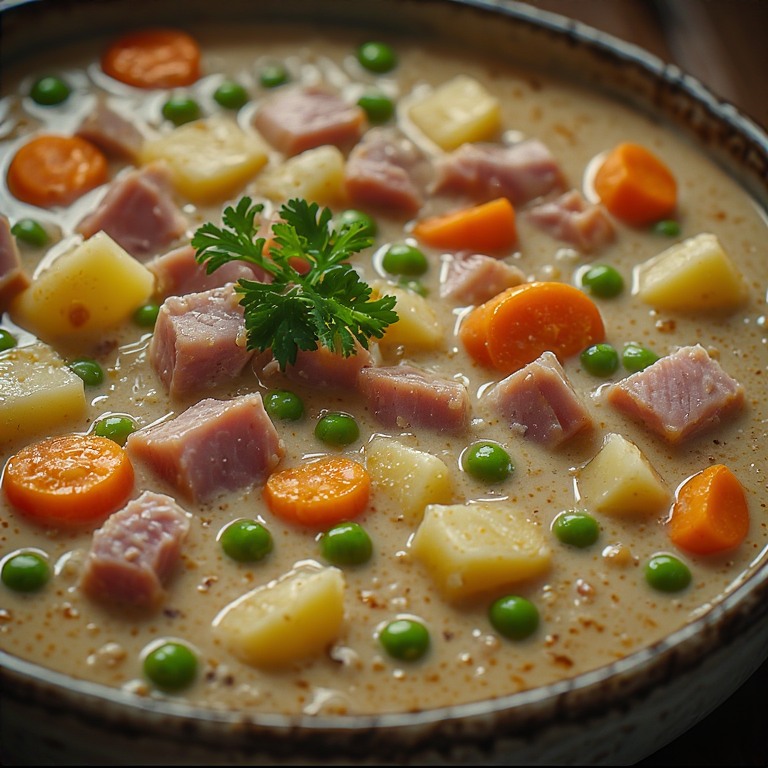
The name earns itself. Amish Golden Stew arrives at the table in the color that gives it its identity — a warm, amber-gold broth, pale yellow from the cheddar cheese soup that forms the base, punctuated by the orange of tender carrot pieces, the cream-white of diced potato, the pink cubes of ham, and the vivid green of peas added in the final half-hour. It’s a visually welcoming bowl that tastes exactly as warm and comforting as it looks, and it comes together with minimal preparation from a short list of pantry and refrigerator staples.
The character of this stew is deeply Amish and Midwestern in spirit: practical ingredients used efficiently, long gentle cooking that develops flavor without demanding attention, and a result that feeds a family generously with nothing exotic or difficult on the ingredient list. Ham, carrots, potatoes, onion, peas, chicken broth, celery soup, and cheddar cheese soup — these are the building blocks of Midwestern household cooking, and the combination produces a stew that’s hearty, filling, and genuinely satisfying in the way that simple, well-executed comfort food always is.
Why This Stew Works So Well
The defining ingredient is the condensed cheddar cheese soup, which transforms what would otherwise be a vegetable and ham soup into something considerably richer and more substantial. Cheddar cheese soup used as a base rather than diluted as intended produces a broth that’s thick, creamy, and cheese-flavored throughout without requiring any separate sauce preparation. It contributes the body and the golden color that gives the stew its name and character.
The condensed celery soup is the supporting act, adding a herbal, slightly aromatic depth that the cheddar alone doesn’t provide. Together the two condensed soups create a layered, complex-tasting base from two pantry staples that requires no additional work beyond opening the cans and stirring them in. The chicken broth thins this base to the right stew consistency and adds a clean savory depth throughout. The ham, which is pre-cooked and added at the beginning of the slow cook, has time to infuse its smoky, salty flavor into the broth as the vegetables cook around it. Peas, added in the final 30 minutes, retain their bright color and slight bite — a textural and visual contrast to the tender, fully cooked vegetables in the rest of the pot.
Why You’ll Love This Recipe
This is an excellent slow cooker recipe for days when you want a substantial, warming dinner without any real cooking effort. Everything goes into the slow cooker raw or pre-cooked, the condensed soups and chicken broth do the sauce work, and six to seven hours later on LOW you have a complete, filling stew that needs only peas stirred in and a final seasoning adjustment before serving. It’s equally good made on the stovetop in under an hour for nights when there isn’t time to plan ahead.
The ham provides protein without any additional cooking step — leftover baked ham, diced deli ham, or a diced ham steak all work perfectly. The recipe is naturally built around using up leftover ham, which makes it a particularly practical post-holiday recipe when a ham bone has already been used for soup and the remaining meat needs a good use. It also scales easily for larger households and reheats very well, making it a practical batch-cooking choice for lunches through the week.
Ingredient Notes
Cooked cubed ham — two cups — is the protein base and one of the primary flavor contributors to the stew. Any fully cooked ham works: leftover baked ham cut into roughly half-inch cubes is the most flavorful option; a pre-diced ham steak from the supermarket is the most convenient; deli ham cut thick and cubed works adequately though it produces a slightly less robust flavor than a proper bone-in or bone-out whole ham. The ham’s saltiness and smokiness season the broth throughout the long cook, so taste and adjust the final seasoning with this in mind before adding extra salt.
Carrots — half a cup, peeled and sliced or cubed — add sweetness, color, and a pleasant vegetable bite that holds up well through the long slow cook. Slice them into quarter-inch rounds or cut into rough half-inch pieces — both work well, with slices offering more surface area for the broth to coat and cubes producing a more chunky, distinct texture. Pre-cut baby carrots sliced in half crosswise are a very convenient substitute.
Potatoes — two cups, peeled and cubed — provide the starchy substance that makes this stew genuinely filling. Yukon Gold or red potatoes hold their shape better through the long cook than russets, which tend to break down and partially dissolve into the broth after 6 to 7 hours — a result that produces a creamier, thicker stew but less distinct potato pieces. Both outcomes are pleasant; choose based on whether you prefer more textural definition (Yukon Gold, red) or a creamier, more integrated stew (russet). Cut the potatoes into roughly three-quarter-inch cubes so they cook through completely without turning mushy before the carrots are done.
Onion — half a cup, diced — adds aromatic sweetness and savory depth to the broth. After 6 to 7 hours in the slow cooker the onion will have practically dissolved into the stew, contributing its flavor throughout without being identifiable as distinct pieces. This is exactly the right outcome — onion flavor distributed evenly through the stew rather than concentrated in occasional bites.
Frozen peas — 10 ounces, added in the final 30 minutes — provide color, sweetness, and a fresh, bright note that contrasts pleasantly with the rich, savory broth. Adding them in the last half hour rather than at the beginning preserves their vivid green color and slight texture — peas cooked for the full 6 to 7 hours turn drab and mushy, losing both their visual appeal and their textural contribution to the finished stew. Thaw the peas under cold water before adding if they’re frozen in a solid block, so they distribute evenly through the stew rather than dropping the temperature of the whole pot significantly.
Chicken broth — two cups — provides the primary cooking liquid and the savory depth that balances the richness of the condensed soups. Two cups produces a properly thick, substantial stew; add an additional half cup if you prefer a slightly looser, more brothy consistency. Low-sodium chicken broth is recommended since both the ham and the condensed soups contribute meaningful salt to the finished stew — regular-sodium broth may produce a dish that’s uncomfortably salty without any additional seasoning.
Condensed celery soup — one 10.5-ounce can — is used straight from the can without additional dilution. It provides an herbal, slightly aromatic depth to the broth base that the cheddar soup’s richness doesn’t supply. Condensed cream of celery and condensed cream of chicken are both appropriate and produce slightly different flavor characters — celery is more herbal and delicate; chicken is more neutral and savory. Either works; cream of mushroom is an acceptable substitute that adds an earthy depth.
Condensed cheddar cheese soup — one 10.75-ounce can — is the defining ingredient that gives the stew its golden color and creamy, cheese-forward character. Used straight from the can without diluting, it provides the thick, coating base that makes this stew distinctive and identifies it as Golden Stew rather than a straightforward vegetable and ham soup. Campbell’s Cheddar Cheese Soup is the most widely available option; any equivalent condensed cheddar cheese soup works identically.
Ingredients
- 2 cups cooked ham, cubed (about ½-inch pieces)
- ½ cup carrots, peeled and sliced or cubed
- ½ cup yellow onion, diced
- 2 cups potatoes, peeled and cubed (about ¾-inch pieces)
- 10 oz frozen peas (added in the last 30 minutes)
- 2 cups low-sodium chicken broth
- 1 can (10.5 oz) condensed cream of celery soup
- 1 can (10.75 oz) condensed cheddar cheese soup
- Salt and black pepper, to taste