

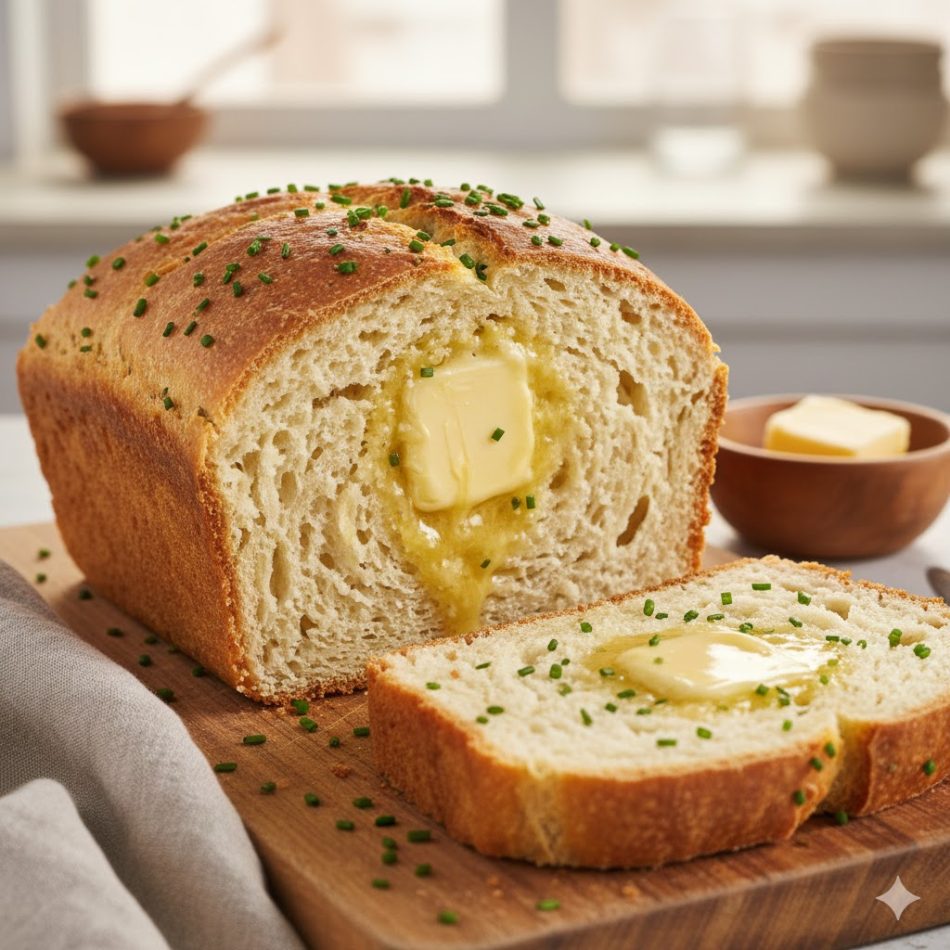
Two-Ingredient Cottage Cheese Bread: The Protein-Packed, Gluten-Free Revolution
When you discover that real, sliceable, toastable bread can be made with just cottage cheese and eggs, it changes everything. This isn’t a substitute bread or a compromise—it’s genuine bread with remarkable texture, impressive protein content, and zero flour. For anyone following gluten-free, low-carb, or high-protein lifestyles, this recipe represents the holy grail: bread you can actually enjoy without guilt or digestive issues.
The magic lies in the simplicity. Cottage cheese and eggs blend together to create a batter that bakes into soft, moist bread with surprising structure. The cottage cheese provides casein protein and natural moisture, while eggs contribute binding power and additional protein. The result is bread that slices cleanly, toasts beautifully, and delivers over 10 grams of protein per slice.
This recipe has transformed meal planning for countless people who thought they had to give up bread forever. Whether you’re making sandwiches, toast, or just want something substantial to accompany your meal, this two-ingredient wonder delivers satisfaction without compromise.
Why This Bread Changes Everything
Impossibly Simple Formula – Just two ingredients—cottage cheese and eggs—create real bread. No flour, no yeast, no complicated steps. If you can blend and bake, you can make this bread.
Protein Powerhouse – Each slice contains over 10 grams of complete protein, making this bread a nutritional asset rather than empty carbs. Perfect for post-workout fuel or sustained energy throughout the day.
Naturally Gluten-Free – Contains zero wheat, grains, or gluten-containing ingredients. Safe for celiac disease and gluten sensitivity without any special gluten-free flours or additives.
Low-Carb Friendly – Fits perfectly into ketogenic and low-carb eating plans. The carbohydrate content comes entirely from the natural lactose in cottage cheese—no added sugars or starches.
Surprisingly Versatile – Use it exactly like regular bread: sandwiches, toast, French toast, bread pudding, croutons. The neutral flavor accepts both sweet and savory applications.
Meal Prep Champion – Bakes once, slices easily, and freezes beautifully. Make several loaves at once and you’ve got protein-rich bread ready whenever you need it.
Understanding the Two Key Ingredients
Cottage Cheese (1 cup) – Choose full-fat or 2% cottage cheese based on preference. Full-fat creates slightly richer bread, while 2% produces a lighter texture. The key is blending the cottage cheese completely until smooth—this eliminates curds and creates a homogeneous batter that bakes into even-textured bread.
Cottage cheese is rich in casein protein, which provides slow-digesting amino acids and contributes to the bread’s structure. The natural moisture in cottage cheese keeps the bread tender and prevents dryness, while the mild flavor remains neutral enough for any application.
Large Eggs (3) – Eggs serve multiple crucial functions here. They bind the ingredients together, contribute additional high-quality protein, provide structure as they set during baking, and help the bread rise slightly for a lighter texture. Room temperature eggs blend more smoothly, though cold eggs work too.
For extra fluffiness, separate the eggs and whip the whites to stiff peaks before folding them into the blended cottage cheese mixture. This adds more air and creates even lighter bread, though it’s an optional step.
Optional Enhancements – While the bread works perfectly with just two ingredients, you can add:
- 1 teaspoon baking powder for extra rise
- Garlic powder or dried herbs for savory bread
- Cinnamon and vanilla extract for sweet versions
- A pinch of salt to enhance overall flavor
Step-by-Step Preparation
Complete measurements appear in the recipe card below.
Prepare Your Equipment – Preheat your oven to 350°F (175°C). Line a standard loaf pan with parchment paper, letting the paper hang over the sides for easy removal later. Alternatively, grease the pan thoroughly with butter or oil. Proper preparation prevents sticking and ensures you can remove the bread cleanly.
Blend the Ingredients – Place 1 cup cottage cheese and 3 large eggs into a high-powered blender. Blend on high speed for 30-45 seconds until completely smooth. The mixture should look uniform with no visible curds remaining. If you don’t have a blender, use whipped cottage cheese and beat vigorously with a whisk or hand mixer, though the texture won’t be quite as smooth.
Add Optional Ingredients – If using any flavor enhancements, add them now and pulse briefly to incorporate. Sweet additions like cinnamon and vanilla blend in easily. For herbs or spices, a few pulses distributes them evenly.
Pour and Smooth – Transfer the batter to your prepared loaf pan. The batter will be quite liquid—this is normal. Use a spatula to smooth the top if desired, though it will level itself during baking.
Bake to Perfection – Place the pan in your preheated oven and bake for 35-40 minutes. The bread is done when the top appears golden brown, the center feels firm to gentle touch, and a toothpick inserted in the center comes out clean or with just a few moist crumbs.
Cool Properly – This step is crucial. Let the bread cool in the pan for 10 minutes, then use the parchment paper overhang to lift it out onto a wire rack. Allow it to cool completely before slicing—warm cottage cheese bread is fragile and will crumble if sliced too soon. Complete cooling takes about an hour.
Slice and Enjoy – Once fully cooled, use a sharp serrated knife to slice the bread. The texture will be soft and slightly dense, similar to pound cake or banana bread. For firmer slices, refrigerate the bread overnight before slicing.
Essential Tips for Success
Blend Thoroughly – The smoothness of your final bread depends entirely on how well you blend the cottage cheese. Take the full 30-45 seconds to ensure no curds remain visible.
Cool Completely Before Slicing – This cannot be overstated. Warm cottage cheese bread has a custardy texture that firms up only upon cooling. Slicing too early results in crumbling and tearing.
Toast for Best Texture – While the bread is delicious as-is, toasting transforms it. The exterior becomes slightly crispy while the interior stays soft, creating a texture more similar to traditional bread.
Use Parchment Paper – Even with nonstick pans, parchment paper makes removal foolproof. The overhanging edges create handles for lifting the loaf out cleanly.
Store Properly – This bread contains significant moisture from the cottage cheese, so room temperature storage leads to spoilage. Always refrigerate or freeze.
Storage and Reheating Guidelines
Refrigerator Storage – Once completely cooled, store the bread in an airtight container or resealable bag in the refrigerator. It stays fresh for 4-5 days. The bread firms up in the refrigerator, which actually makes it easier to slice thinly.
Freezer Storage – For longer storage, slice the bread completely, then place parchment paper between each slice. Stack the separated slices in a freezer bag, removing as much air as possible. Freeze for up to 3 months. Individual slices thaw quickly and can even be toasted directly from frozen.
Reheating Methods – Toast slices in a toaster or toaster oven for the best texture and flavor. The heat crisps the exterior while warming the interior. If using a microwave, heat for just 15-20 seconds—longer makes the bread rubbery. For whole slices, a 325°F oven for 5-6 minutes works well.
Creative Variations
Savory Herb Bread – Add Italian seasoning, rosemary, dried basil, or oregano to the batter. A teaspoon of garlic powder creates garlicky bread perfect for bruschetta or alongside pasta.
Everything Bagel Bread – Mix in everything bagel seasoning or sprinkle it on top before baking for a savory breakfast bread.
Cinnamon Sweet Bread – Add 1 teaspoon cinnamon and 1 teaspoon vanilla extract for morning toast. Sweetener is optional—the bread remains naturally low-carb.
Cheese Bread – Fold in shredded cheddar, parmesan, or your favorite cheese for extra richness and flavor.
Seed Bread – Stir in chia seeds, sesame seeds, or everything bagel seasoning for added texture and nutrition.
Nutritional Yeast Addition – A tablespoon of nutritional yeast adds a subtle cheesy, umami flavor while boosting B vitamins.
Serving Suggestions
Classic Toast – Slice and toast until golden, then top with butter, almond butter, sugar-free jam, or avocado. The high protein content makes it incredibly satisfying.
Sandwich Foundation – Use for any sandwich filling: turkey and cheese, egg salad, tuna salad, or grilled vegetables. The bread holds up well to moisture from fillings.
French Toast – Slice thickly, dip in an egg wash with cinnamon and vanilla, and pan-fry for protein-packed French toast with double the protein.
Croutons – Cube the bread, toss with olive oil and seasonings, and bake at 375°F until crispy. These high-protein croutons elevate any salad.
Bread Pudding – Cube and use in bread pudding recipes for a protein-rich dessert base.
Alongside Soup – Serve slices with your favorite soup for dipping and dunking.
Ingredient Substitution Options
Dairy-Free Alternative – Plant-based cottage cheese alternatives exist, though results will vary. Silken tofu blended smooth can work but changes the texture and flavor profile.
Egg Substitution – Flax eggs (3 tablespoons ground flaxseed mixed with 7.5 tablespoons water, left to gel) can replace eggs, though the bread will be denser and less fluffy. This makes it more of a flatbread texture.
Cottage Cheese Type – Small curd, large curd, whipped, or regular all work. Whipped cottage cheese requires less blending time. Low-fat works but creates slightly less rich bread.
Nutritional Benefits
This bread delivers impressive nutrition per slice (assuming 10 slices per loaf):
- Over 10g complete protein
- Minimal carbohydrates (primarily from natural lactose)
- Good source of calcium from cottage cheese
- B vitamins from eggs
- No added sugars or artificial ingredients
The high protein content promotes satiety, making this bread genuinely satisfying rather than leaving you hungry an hour later like many bread alternatives.
Why This Recipe Works
The science behind this bread is fascinating. Cottage cheese contains casein protein, which provides structure when heated. Eggs contribute albumin protein that coagulates during baking, creating a matrix that traps air and moisture. Together, these proteins create a network that mimics the gluten structure in traditional bread—without any actual gluten.
The moisture from cottage cheese prevents the protein-heavy bread from becoming dry or rubbery, a common problem with many gluten-free or low-carb breads. The eggs provide fat and emulsifiers that contribute to tender texture.
Because there’s no gluten to develop, you can’t overmix this batter. In fact, thorough mixing ensures the smoothest final texture.
Common Questions Answered
Can I make this without a blender? Yes, though the texture won’t be as smooth. Use whipped cottage cheese and beat vigorously with a hand mixer or whisk. Small curds will remain visible but won’t affect functionality.
Is this truly keto-friendly? Yes. With minimal carbohydrates per slice (from natural lactose only) and high protein and fat content, this bread fits ketogenic macros perfectly.
Why is my bread wet in the middle? This usually means it needs more baking time. Every oven varies—add 5-minute increments until the center is fully set.
Can I double the recipe? Absolutely. Use two loaf pans or a larger pan, adjusting baking time as needed. Larger/thicker loaves take longer to cook through.
Does it taste like cottage cheese? No. The cottage cheese flavor completely disappears during baking, leaving neutral-flavored bread.
Final Thoughts
This two-ingredient cottage cheese bread represents a paradigm shift in how we think about bread alternatives. It’s not about tolerating something less than ideal—it’s about discovering something genuinely delicious that happens to be healthier. The protein content transforms bread from a nutritional compromise into a nutritional asset.
For anyone who thought giving up gluten or reducing carbs meant permanently saying goodbye to real bread, this recipe is revelation and liberation. It proves that sometimes the simplest solutions—just two whole-food ingredients—create the most impressive results.
Prep Time: 5 minutes
Bake Time: 40 minutes
Total Time: 45 minutes
Yield: 10 slices
Course: Bread, Breakfast
Cuisine: Modern Healthy
Difficulty: Easy
Special Diets: Gluten-Free, Low-Carb, Keto, High-Protein, Grain-Free