

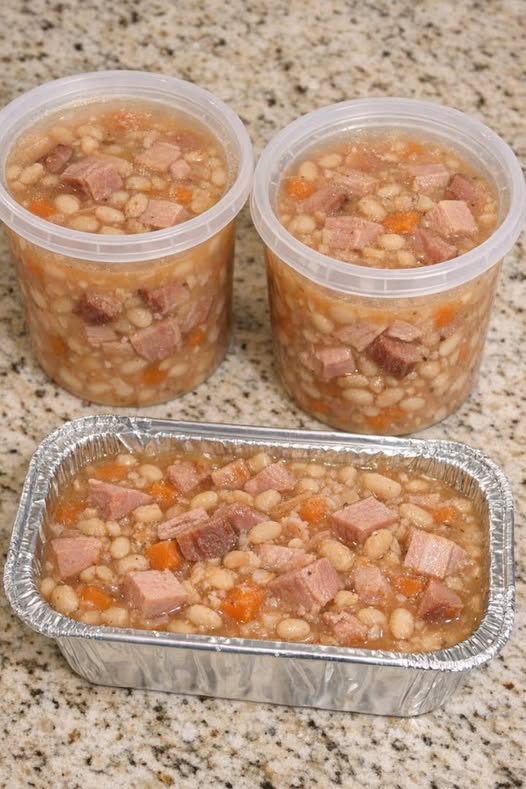
Ham and Navy Bean Soup
Ham and bean soup is one of the most enduring preparations in American home cooking — a dish that stretches the value of a ham bone into a full pot of hearty, deeply flavored soup that feeds a family generously and improves with each passing day. The navy bean, small and creamy and mild in flavor, is the ideal legume for this application: it absorbs the smoky, savory flavor of the ham broth completely during the long simmer, and it breaks down at the edges while remaining intact at the center, which is what produces the soup’s characteristic texture — thick and creamy from the partially dissolved beans, while still having enough whole beans in every spoonful to provide substance and bite. The ham bone, simmered for two hours in the broth with the aromatics and beans, yields all of its remaining meat and collagen into the soup, enriching the broth with gelatin and depth that no amount of ham pieces in plain broth can replicate.
This is a recipe that rewards patience more than technique. The overnight bean soak reduces cooking time by approximately thirty minutes and produces a more evenly cooked, more uniformly soft bean. The gentle simmer at low heat produces a clearer, more flavorful broth than a vigorous boil, which clouds the liquid and can cause the beans to burst before they’re properly tender throughout. The optional smoked paprika, which is worth including, extends the smoky character of the ham bone through the entire broth and vegetables rather than concentrating it only where the ham has been in direct contact with the broth. None of these are difficult observations; all of them are worth knowing.
Why Navy Beans Are the Right Choice
Navy beans are the traditional bean of American ham and bean soup for several reasons that have to do with their specific characteristics rather than mere convention. Their small size — significantly smaller than great northern or cannellini beans — means they cook through evenly and thoroughly in the same window of time that the ham and aromatics need for their flavors to fully develop in the broth. Their high starch content, released during the simmer, naturally thickens the broth without requiring any added starch or reduction, producing the soup’s characteristic creamy consistency from the beans themselves. Their mild, clean flavor absorbs the ham and aromatic flavors completely rather than contributing a strongly beany taste that would compete with the ham’s character. And their slightly tender, creamy texture — they become very soft without losing their shape entirely — provides the right balance of substance and creaminess in each spoonful.
Great northern beans, cannellini, or pinto beans can all be substituted with good results; each shifts the soup’s texture and flavor slightly while maintaining the same basic character. Great northern beans are the most similar to navy beans in texture and flavor. Cannellini produce a slightly firmer, more substantial bean texture. Pinto beans add a slightly earthier, more robust flavor. Any of these are appropriate substitutions if navy beans are unavailable.
The Ham Bone Advantage
A meaty ham bone is the gold standard ingredient for ham and bean soup, and it is worth understanding why it produces results that diced ham alone cannot. A ham bone contains marrow, collagen-rich connective tissue, and residual meat — all of which contribute meaningfully to the finished soup during the long simmer. The marrow adds deep, unctuously rich flavor to the broth. The connective tissue breaks down into gelatin that gives the broth a silky, coating quality that is perceptible in the finished bowl — the broth from a bone-simmered soup coats the spoon and the palate in a way that a broth-based soup made only with diced ham does not. The residual meat yields from the bone during cooking and can be picked off and returned to the soup, providing additional ham pieces that are more thoroughly flavored from their time on the bone than pre-cut diced ham.
For households without a ham bone — those who buy sliced or pre-cut ham rather than whole bone-in joints — two to three cups of diced cooked ham produces an excellent soup when combined with good-quality low-sodium chicken broth. Adding a teaspoon of ham base (such as Better Than Bouillon Ham Base) to the broth deepens the ham flavor meaningfully and partially compensates for the depth that the bone’s gelatin and marrow would have provided.
Why You’ll Love This Recipe
Ham and bean soup is one of the best meal-prep investments available in home cooking: a single pot produces six to eight generous servings that get better over the first two days as the flavors continue to develop, refrigerate well for up to four days, and freeze excellently for up to three months. The active cooking time is modest — about fifteen minutes of prep plus a brief period of stovetop attention — and the two-hour simmer is entirely unattended beyond an occasional stir. The recipe uses inexpensive, widely available ingredients, is naturally dairy-free and gluten-free, and adapts well to whatever ham situation the household has — leftover holiday ham bone, diced pre-cooked ham from the refrigerator, or smoked ham hocks from the grocery store.
Ingredient Notes
Dried navy beans — one pound — should be soaked overnight in plenty of cold water before use. The soaking allows the beans to rehydrate gradually, which reduces the cooking time and helps them cook more evenly throughout. Quick-soaking methods (covering with water, bringing to a boil, removing from heat, soaking for one hour, draining) work but produce slightly less consistently cooked beans than the overnight method. Sorting through the beans before soaking takes one minute and removes any small stones or damaged beans that occasionally find their way into dried bean bags.
Ham bone or diced cooked ham — a meaty ham bone or two cups (approximately ten to twelve ounces) of diced cooked ham — is the primary flavoring agent and protein. A leftover ham bone from a baked holiday ham is the ideal option, as described above. Smoked ham hocks, available fresh or smoked at most grocery stores, are the best alternative for households that don’t have a leftover bone — they provide the same gelatin, marrow, and smoky ham flavor in a more compact form. For a diced ham version, choose a good-quality smoked ham rather than a pre-sliced deli ham for the best flavor contribution to the broth.
Low-sodium chicken broth — eight cups — is the cooking liquid. Low-sodium is important because both the ham bone and the diced ham contribute significant salt to the soup during the simmer; starting with full-sodium broth can produce an over-salted finished product that can’t be corrected. Start with low-sodium broth and adjust the salt at the end by taste, which is the most reliable approach for any long-simmered, salt-variable recipe. Good-quality chicken broth (Swanson Low Sodium, Kitchen Basics, or homemade) produces a noticeably better result than discount broth; the broth is the soup’s primary liquid and its quality affects every sip.
The aromatics — yellow onion, carrots, celery, garlic — are the classic mirepoix base that provides the background sweetness, earthiness, and savory depth of the soup’s broth. The brief sauté before the liquid is added develops the aromatics’ flavors through gentle caramelization and makes the finished broth noticeably more complex than adding the vegetables raw to the cold broth. Don’t rush the sauté — five to seven minutes over medium heat until the onion is translucent and the edges are beginning to color produces a meaningfully better flavor base than two minutes of barely softened aromatics.
Smoked paprika — one teaspoon, described as optional — is effectively a required ingredient for anyone who wants the deepest, most fully developed ham soup character. It extends the smoky, slightly sweet, warm flavor note of the ham throughout the entire broth and vegetables rather than concentrating it only where the ham has been in direct contact. The soup without it is good; with it, it’s perceptibly better and more complex. Use Spanish-style smoked paprika (pimentón de la Vera) if available — the smoked character is more pronounced and more interesting than domestic smoked paprika.
Ingredients
- 1 lb dried navy beans, soaked overnight and drained
- 1 meaty ham bone, or 2 to 3 cups diced cooked ham
- 8 cups low-sodium chicken broth, plus extra as needed
- 1 tbsp olive oil or butter
- 1 medium yellow onion, diced
- 2 medium carrots, peeled and diced
- 2 celery stalks, diced
- 3 cloves garlic, minced
- 1 bay leaf
- 1 tsp dried thyme
- 1 tsp smoked paprika (strongly recommended)
- ½ tsp black pepper, plus more to taste
- ½ tsp kosher salt, plus more to taste
- 1 to 2 cups water, as needed
- 2 tbsp chopped fresh parsley, for serving (optional)