

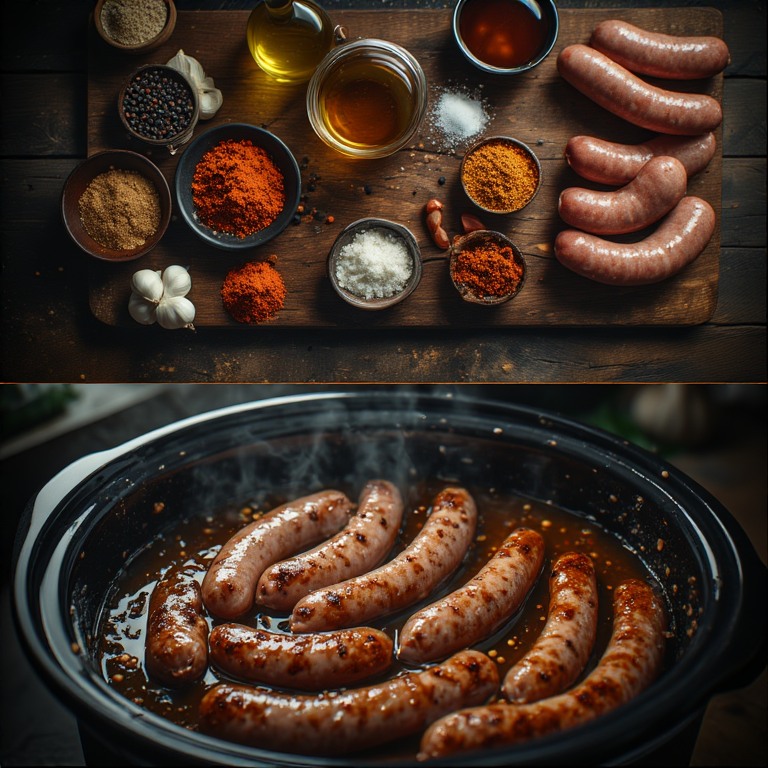
Step-by-Step Instructions
Step 1 — Brown the Sausages
Heat a large skillet over medium heat — no oil needed, as the sausage casings contain enough fat to prevent sticking. Add the pork sausages and cook for 5 to 7 minutes, turning them regularly with tongs, until the casings are nicely browned on all sides. You’re not cooking the sausages through at this stage — just developing color on the exterior and rendering some of the fat from the casings, both of which contribute significantly to the flavor of the finished gravy. A few browned patches and a slightly tightened casing is what you’re looking for. Transfer the browned sausages to the slow cooker insert, including any juices that have rendered into the pan — tip or scrape these into the slow cooker as well.
Step 2 — Add the Onion
Scatter the sliced onion wedges around and over the sausages in the slow cooker insert, tucking pieces between the sausages and around the edges of the insert. Try to distribute the onion as evenly as possible so every sausage has onion nearby throughout the cook rather than all the onion piled on top of the pile of sausages.
Step 3 — Prepare the Gravy
In a medium bowl, combine both cans of condensed brown gravy and the entire packet of dry brown gravy mix. Whisk together briskly until the dry mix is fully dissolved into the canned gravy and the mixture is smooth and uniform — no dry lumps of powder remaining. The mixture will be quite thick at this stage. If it’s so thick that it’s difficult to pour evenly, whisk in up to a quarter cup of water to loosen it to a more pourable consistency. Keep in mind that the sausages and onions will release additional liquid during cooking, so the finished sauce will be somewhat thinner than the mixture looks at this point.
Step 4 — Combine and Cook
Pour the gravy mixture evenly over the sausages and onions in the slow cooker, using a spoon to ensure the gravy reaches between the sausages and covers as much of the surface as possible. Nudge the onion wedges down into the gravy so they’re submerged rather than sitting dry on top where they’d risk dehydrating during the long cook. Cover and cook on LOW for 6 to 7 hours or on HIGH for 3 to 4 hours. The sausages are done when they’re plump, cooked through, and very tender — the casings should look glossy and slightly puffed, and the gravy around them should be dark, bubbling, and coating the back of a spoon.
Step 5 — Adjust and Serve
Remove the lid and give the gravy a gentle stir to incorporate any fat that has risen to the surface back into the sauce. Taste and add a grind of black pepper if desired — additional salt is rarely needed since the condensed gravy and dry mix together contribute substantial seasoning. If the gravy seems thinner than you’d like, switch the slow cooker to HIGH with the lid off and cook for an additional 15 to 20 minutes, stirring occasionally, until the sauce reduces to the preferred consistency. Serve the sausages hot, with plenty of the dark onion gravy spooned generously over each portion.
Tips for the Best Results
Don’t skip the browning step. The brief skillet browning of the sausages is the difference between a good dish and a great one. The caramelized casing color, the rendered fat, and the browned juices that transfer to the slow cooker with the sausages all contribute depth of flavor that the moist, low-temperature slow cooker environment simply cannot develop on its own. Five to seven minutes is all it takes and the payoff is substantial.
Whisk the dry mix into the canned gravy thoroughly. Dry gravy mix that goes into the slow cooker undissolved can form clumps that don’t fully incorporate during cooking, producing uneven seasoning and texture in the finished sauce. Take 30 to 60 seconds to whisk them together until completely smooth before pouring into the insert.
Tuck the onions into the gravy. Onion wedges that sit above the gravy level during the long cook will dry out and take on a different texture than those submerged in the sauce. Taking a moment to nestle the onion pieces down into the liquid before the lid goes on ensures they soften and meld into the gravy throughout the cook.
Use thick sausages. Thin sausages — breakfast links, cocktail sausages — overcook during the long braise and can split or fall apart. Thick sausages have the right ratio of casing to filling to withstand six to seven hours in the slow cooker and emerge plump, juicy, and intact.
Let the gravy reduce at the end if needed. If the finished sauce seems thinner than you’d like, the simplest fix is removing the lid and cooking on HIGH for 15 to 20 minutes before serving. Condensed gravy-based sauces reduce quickly and the consistency can be adjusted significantly in this short additional time.
Frequently Asked Questions
Can I use a different type of sausage?
Yes. Bratwurst is an excellent alternative to standard pork bangers and produces a slightly richer, more spiced flavor in the finished gravy from the bratwurst’s seasoning mix. Beef bangers or thick beef sausages work well for a richer, more intensely savory result. Chicken or turkey sausages produce a lighter version — brown them in a lightly oiled pan rather than dry since they contain less fat, and be aware that the finished gravy will be slightly less rich from the reduced fat contribution. Smoked sausages like kielbasa can be used but don’t require browning since they’re already cooked; just add them directly to the slow cooker and reduce the cooking time to 4 to 5 hours on LOW.
Can I use prepared gravy instead of condensed?
Yes. If condensed canned gravy isn’t available, substitute three cups of prepared jarred or canned brown gravy. Since prepared gravy is already at serving consistency, omit the water entirely and reduce the dry gravy mix to half a packet (since the prepared gravy is already seasoned). The finished sauce may be slightly thinner than the condensed version; cook uncovered on HIGH for the last 20 minutes of the cook to reduce it to the preferred consistency.
Can I add vegetables to this dish?
Yes, easily. Baby carrots tucked around the sausages at the beginning of the cook become tender and slightly sweet by the time the sausages are done. Sliced mushrooms added to the slow cooker with the onion contribute an earthy depth to the gravy. Diced potatoes added at the start will be soft and fully cooked through after the long cook, which makes the dish a complete one-pot meal without a separate side of mashed potatoes. Any of these work within the basic method.
Can I make this ahead?
Yes. Cook the dish completely, allow it to cool, and refrigerate in the slow cooker insert or in an airtight container for up to 3 days. The flavors deepen overnight and the second-day version is particularly good. Reheat gently on the stovetop in a covered pan over medium-low heat with a splash of water or broth if the gravy has thickened considerably in the refrigerator, or return to the slow cooker on LOW for an hour or so with the lid on.
How do I serve this as an open-faced sandwich?
Slice the cooked sausages into thick diagonal coins — halved lengthwise or cut into thirds. Lay thick slices of white sandwich bread or toasted crusty bread on plates, arrange the sausage pieces over the bread, and ladle the onion gravy generously over everything so it soaks into the bread. Finish with a grind of black pepper and a scatter of flat-leaf parsley if you have it. This open-faced presentation is one of the most satisfying ways to serve bangers in gravy and is particularly popular for a casual weekend lunch.
Variations Worth Trying
Mushroom gravy bangers: Use condensed brown gravy with mushrooms in place of plain brown gravy — most major brands offer this variety. The mushroom flavor adds an earthy, savory depth to the sauce that complements the pork sausages particularly well. For a more intensely mushroom-forward version, add 8 ounces of sliced cremini mushrooms to the slow cooker alongside the onion at the beginning of the cook.
Dijon and onion version: Whisk a tablespoon of whole-grain Dijon mustard into the combined gravy mixture before pouring it over the sausages. The mustard adds a gentle sharpness and a slightly tangy complexity that cuts through the richness of the brown gravy and gives the finished sauce a more sophisticated character. A splash of Worcestershire sauce added at the same stage deepens the savory quality of the gravy further.
Caramelized onion version: Before adding the onion to the slow cooker, cook the sliced onion wedges in the skillet with the sausage drippings after browning the sausages, over medium heat for 15 to 20 minutes, stirring occasionally, until the onions are deeply golden and beginning to caramelize. Transfer the caramelized onions to the slow cooker along with the sausages. This extra step produces an onion contribution to the gravy that’s sweeter, more complex, and more deeply flavored than raw onion added directly — a worthwhile upgrade if you have the extra time.
Ale and gravy bangers: Replace the quarter cup of water used to thin the gravy mixture with a quarter cup of brown ale or dark beer. The ale adds a malt-forward, slightly bitter depth to the sauce that deepens the gravy’s overall flavor considerably and gives it a subtle pub-quality complexity. Use the same approach as the brown ale pork chop recipe — a smooth, malt-forward brown ale rather than a heavily hopped IPA.
Peppery bangers: Add half a teaspoon of coarsely cracked black pepper and a pinch of cayenne to the gravy mixture before pouring it over the sausages. The pepper builds gradually through the long cook and produces a finished sauce with a warm, building heat that contrasts with the richness of the gravy in a way that makes the whole dish feel more alive and interesting. This variation is particularly good alongside cold mashed potatoes left slightly chunky rather than fully smooth.
What to Serve Alongside
The classic pairing is creamy mashed potatoes — the most natural companion for bangers in gravy, providing a smooth, buttery base for the dark sauce to pool over. Take the time to make them properly: well-seasoned potatoes, plenty of butter, warmed cream or milk stirred in until the texture is rich and just fluffy. Buttered wide egg noodles are an equally satisfying alternative that holds the gravy well. Steamed or boiled green peas are the traditional vegetable accompaniment in British and Irish pub cooking, their sweetness providing contrast to the savory gravy. Green beans, roasted carrots, or steamed broccoli all work equally well. Thick slices of white bread or crusty rolls alongside are important for the gravy that pools on the plate — it’s too good to waste. A simple green salad with a tart vinaigrette adds a fresh, acidic element that balances the meal’s richness and makes the whole spread feel more complete.
Storage
Leftovers keep in an airtight container in the refrigerator for up to 4 days, stored with the sausages in the gravy to prevent them from drying out. The gravy thickens considerably when cold; reheat gently on the stovetop with a splash of water or broth stirred in to restore its flowing consistency. For a quick next-day meal, slice the leftover sausages into thick coins and stir them back into the reheated gravy — serve over fresh mashed potatoes or egg noodles for a fast weeknight dinner that’s almost as satisfying as the original. The dish also freezes well for up to 3 months in portion-sized containers; thaw overnight in the refrigerator before reheating.
Simple Ingredients, Proper Pub Flavor
Slow Cooker Brown Gravy Bangers is one of those recipes where the finished result is considerably better than the ingredient list has any right to produce — a deeply savory, dark, glossy gravy surrounding plump, tender pork sausages that tastes like it came from a proper pub kitchen rather than a four-ingredient slow cooker dinner. The browning step does more work than its five minutes suggest, the combination of condensed and dry gravy builds the right foundation, and the long slow cook does what it always does best: turning simple, inexpensive ingredients into something genuinely satisfying and comforting. It’s a reliable, crowd-pleasing meal that earns its place at the weekly dinner table.
Enjoy!