
3. Instructions
-
Parboil the Potatoes: Place the sliced potatoes in a large pot of salted water. Bring to a boil and cook for about 5-7 minutes until just barely fork-tender. Drain and let them steam dry for a few minutes; this ensures a crispier exterior.
-
Caramelize the Onions: While the potatoes dry, heat 1 tablespoon of butter and 1 tablespoon of oil in a large skillet over medium-low heat. Add the onions and cook slowly, stirring occasionally, for about 15-20 minutes until they are deep golden brown. Remove from the skillet and set aside.
-
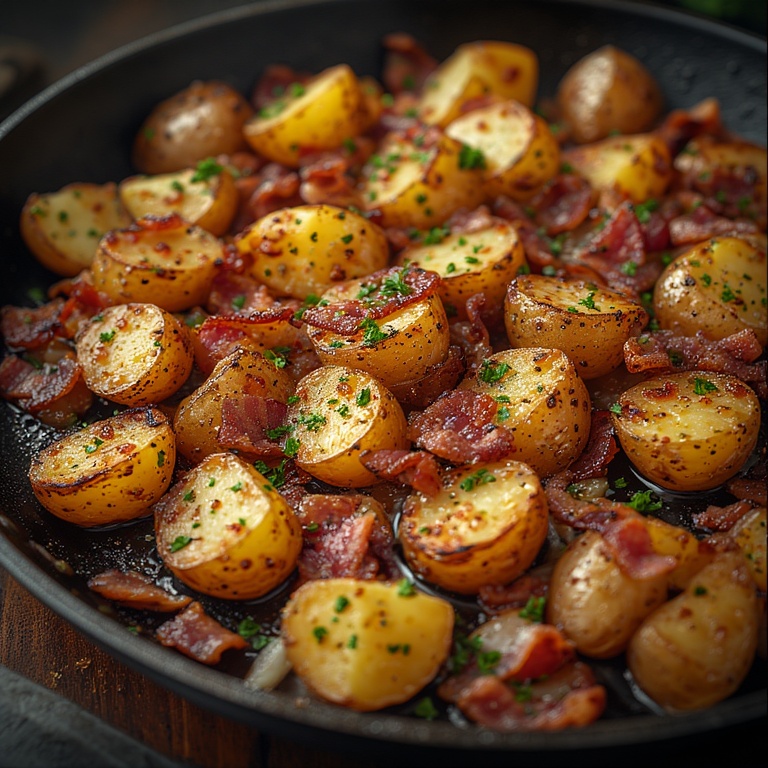
Crisp the Potatoes: Increase the heat to medium-high and add the remaining butter and oil to the same skillet. Arrange the potatoes in a single layer.
-
Searing: Fry the potatoes for 5-6 minutes per side without moving them, allowing a deep golden crust to form.
-
Combine: Add the garlic, dried herbs, and the caramelized onions back into the skillet. Toss everything together for another 2-3 minutes until the garlic is fragrant and everything is well-combined.
-
Final Touch: Season generously with salt and pepper.
-
Serve: Remove from heat and garnish with a shower of fresh parsley.
4. Variations
-
Bacon Infusion: Fry diced bacon in the skillet first and use the rendered fat to cook the potatoes for a smoky, salty depth.
-
Spicy Kick: Add a pinch of smoked paprika or red chili flakes during the final toss for a warm heat.
-
Cheesy Finish: Sprinkle a handful of grated Parmesan or Gruyère over the top in the last minute of cooking until melted.
5. Serving and Storage
-
Serving: Serve immediately while the potatoes are at their peak crispness. They pair exceptionally well with steak, roast chicken, or a simple fried egg.
-
Storage: Store leftovers in an airtight container in the refrigerator for up to 3 days.
-
Reheating: To revive the texture, reheat in a skillet over medium heat or in an air fryer at 180°C (350°F) for 5 minutes. Avoid the microwave, as it will make the potatoes soft.
6. Benefits
-
Energy Provider: High in complex carbohydrates, providing sustained energy throughout the day.
-
Potassium Rich: Potatoes are a significant source of potassium, which is essential for heart health and muscle function.
-
Gluten-Free: A naturally satisfying and gluten-free side dish that fits many dietary requirements.
7. History of Skillet Potatoes and Fried Onions
The tradition of frying potatoes and onions together is a culinary staple found in almost every European and North American folk tradition. In Germany, this dish is known as Bratkartoffeln, a beloved comfort food that emerged in the 19th century as a way to use leftover boiled potatoes. Across the Atlantic, similar preparations became the cornerstone of the “American Breakfast” in the form of home fries or Lyonnaise potatoes (a French-influenced version utilizing clarified butter).
Historically, the skillet was the primary tool for working-class families because it was versatile and required only a single heat source. Caramelizing onions was a technique used to add “meat-like” richness and sweetness to meals when expensive proteins were scarce. The slow cooking of onions releases their natural sugars, a process that has been utilized since ancient Roman times to enhance the flavor of starchy vegetables.
In the mid-20th century, the skillet potato became a symbol of the “diner” culture in the United States, representing a quick, hot, and filling meal for travelers. Today, the dish has been elevated by modern chefs who focus on “parboiling” techniques and high-quality fats to achieve the perfect contrast between a creamy interior and a glass-like crunch. It remains one of the few dishes that is equally at home in a rustic cast-iron pan over a campfire as it is on a fine-dining porcelain plate.