

The Mediterranean Miracle: Why Lemon White Bean Soup is the Ultimate Wellness Bowl
Headline: Zest and Vitality: The Deep Culinary Roots of Lemon White Bean Soup
In the world of comfort food, there is often a trade-off between “hearty” and “healthy.” Usually, a dish that sticks to your ribs is heavy with dairy or fats, while lighter fare can leave you feeling unsatisfied an hour later. However, the Lemon White Bean Soup—a staple of Mediterranean-style coastal cooking—shatters this dichotomy. It is a masterpiece of balance: the creamy, protein-packed texture of cannellini beans provides the “hearth,” while the bright, acidic punch of fresh lemon juice provides the “light.”
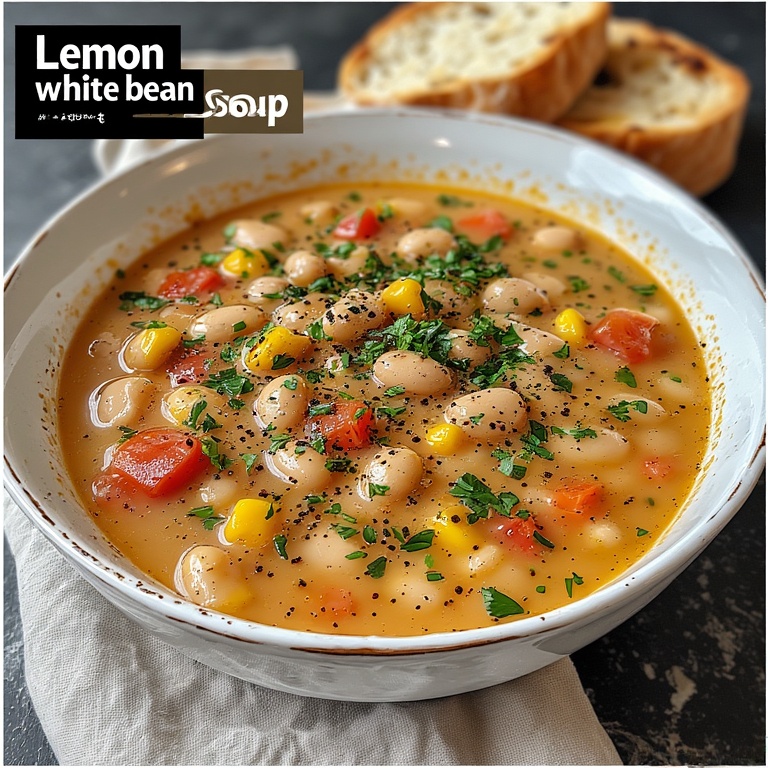
As you can see from the rich, golden hue of the broth in our featured image, this is not a thin, watery soup. It is a dense, vegetable-forward meal that gains its creaminess not from heavy cream, but from the natural starches released by the beans during a slow simmer. The addition of fresh herbs and toasted sourdough elevates it from a simple pantry meal to a gourmet dining experience.
In this exhaustive 2,000-word guide, we are exploring the architecture of the perfect bean soup. We will discuss the “Umami Layering” technique, why the order in which you add lemon determines the final flavor profile, and the science of using beans as a natural thickening agent. This is the definitive resource for anyone looking to master the art of the vibrant, plant-based bowl.
The History of Legumes and Citrus
The pairing of white beans and lemon is a culinary tradition that stretches from the hills of Tuscany to the islands of Greece. In these regions, beans were known as “the poor man’s meat,” providing essential protein and fiber. The lemon, introduced to the Mediterranean centuries ago, became the essential companion to these beans, not just for flavor, but for health; the Vitamin C in the lemon juice significantly increases the bioavailability of the iron found in the beans. When you eat this soup, you are participating in a tradition of functional medicine as much as a tradition of fine dining.
Ingredients Deep-Dive—The Pantry as a Pharmacy
Headline: Sourcing for Success: The Anatomy of a Vibrant Broth
To achieve the complex, restaurant-quality flavor seen in our soup, you must treat your pantry as a palette. Every ingredient serves a specific purpose in the flavor matrix.
1. The Legume Base: Cannellini vs. Great Northern
For the creaminess displayed in our recipe, Cannellini beans are the gold standard. They have a thin skin and a buttery interior that breaks down just enough to thicken the broth. Great Northern beans are a suitable substitute, though they are slightly firmer. We recommend using three cans: two for texture and one to be partially mashed to create that “creamy without cream” effect.
2. The Citrus Profile: Freshness is Non-Negotiable
Never use bottled lemon juice for this recipe. You need the volatile oils found in the fresh lemon zest as well as the juice. The zest provides the floral aroma, while the juice provides the sharp acidity that cuts through the starch of the beans.
3. The Veggie Mosaic
As visible in the bowl, we use a colorful array of vegetables:
-
Mirepoix (Onion, Carrots, Celery): The aromatic foundation.
-
Corn: Provides a burst of sweetness.
-
Broccoli & Red Peppers: Add texture and a boost of antioxidants.
4. The Broth Layering
-
Vegetable or Chicken Stock: Always use low-sodium to control the seasoning.
-
Parmesan Rind (Optional): Dropping a rind into the simmering soup adds a “salty-umami” depth that mimics the flavor of a slow-cooked meat broth.
5. The Herb Garden
Fresh parsley and thyme are essential. Herbs should be added in two stages: some during the simmer to infuse the broth, and a generous handful of fresh-chopped greens at the very end to preserve their bright color and punchy flavor.
The Masterclass—Step-by-Step Culinary Instructions
Headline: The “Slow-Build” Method: Achieving Gourmet Depth at Home
Step 1: The Aromatic Sauté
In a large Dutch oven, heat 2 tablespoons of extra-virgin olive oil. Add your diced onions, carrots, and celery. Sauté over medium heat for 8–10 minutes. You want the vegetables to be soft and the onions to be translucent. At the last minute, add four cloves of minced garlic—do not let the garlic brown, as it will turn the broth bitter.
Step 2: Seasoning the Oil
Add red pepper flakes and your dried herbs to the oil. Frying spices in oil (the “blooming” technique) releases fat-soluble flavors that water cannot extract.
Step 3: The Bean Integration
Add your rinsed white beans, corn, and diced red peppers. Pour in 6 cups of broth. Take a potato masher and gently press down on about 1/4 of the beans directly in the pot. This releases the starch that gives the soup its luxurious body.
Step 4: The Simmer
Bring the soup to a boil, then immediately reduce to a low simmer. Add your broccoli florets. Let the soup gently cook for 20 minutes. This allows the vegetables to soften while maintaining their structural integrity.
Step 5: The “Lemon Finish”
This is the most critical step. Turn off the heat. Only then do you stir in the fresh lemon juice and zest. Boiling lemon juice can make it taste “cooked” and dull. Adding it at the end preserves the “Lemon White Bean Soup” identity.
Step 6: The Garnish
Top with fresh parsley and a dusting of vegan or traditional Parmesan.
Troubleshooting, Pairings, and Storage
Headline: Mastery Tips: Sourdough, Storage, and Flavor Balancing
The Perfect Side: The Sourdough Char
As shown in our featured presentation, a thick slice of toasted sourdough is the perfect companion.
-
The Technique: Brush the bread with garlic-infused olive oil and grill it until charred. The smokiness of the bread provides a beautiful counterpoint to the bright, zesty soup.
Troubleshooting: “My soup is too sour/too bland”
-
Too Sour: If you overdid the lemon, add a teaspoon of honey or agave. The sugar will neutralize the perceived acidity without making the soup “sweet.”
-
Too Bland: You likely need more salt or “acid.” If it feels flat, add another squeeze of lemon or a splash of white wine vinegar.
Longevity and Meal Prepping
This is an exceptional meal-prep dish.
-
Fridge: The flavors actually improve over 24 hours as the beans absorb the lemon and herbs. It stays fresh for 5 days.
-
Reheating: You may need to add a splash of water or broth, as the beans will continue to thicken the liquid as it sits.
-
Freezing: This soup freezes beautifully! Because there is no dairy, it won’t separate. Store in airtight containers for up to 3 months.
Conclusion: A Bowl of Sunshine
Lemon White Bean Soup is a testament to the power of simple, whole ingredients. It is a dish that makes you feel better with every spoonful, providing a dose of plant-based protein, vitamins, and the psychological comfort of a warm broth. It is sunshine in a bowl, ready to brighten even the grayest of days.