

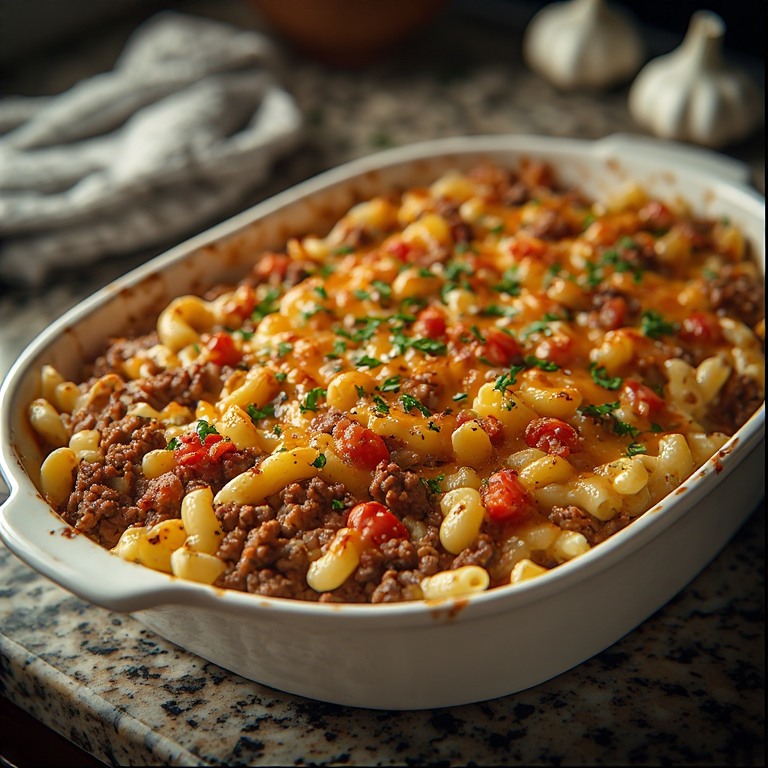
Oven-Baked Amish Goulash
American goulash — the Midwestern version built around ground beef, elbow macaroni, and tomatoes — exists in dozens of variations across the households that have made it for generations, but the most practical of them all may be this oven-baked version where the dry, uncooked macaroni goes directly into the baking dish and absorbs the tomato sauce as it bakes rather than requiring a separate pot of boiling water. The technique produces results that are in some ways better than stovetop versions: the pasta absorbs the stewed tomato and cream of tomato sauce as it hydrates, each noodle becoming flavored from the inside by the tomato liquid rather than merely coated by a sauce that’s been stirred together separately. After forty-five to fifty-five minutes under a foil-sealed cover at 350°F, the macaroni is tender throughout, the ground beef has been distributed through the pasta and sauce, and the result is a dish that is cohesive and deeply flavored in a way that speaks directly to the practical, unadorned farmhouse cooking tradition it comes from.
The Amish-style designation reflects the cooking philosophy: four pantry ingredients, a baking dish, and an oven produce a complete, filling dinner without stovetop monitoring, without multiple pots, and without technique beyond browning ground beef. The cream of tomato soup combined with the stewed tomatoes creates a sauce that is simultaneously tomatoey and creamy — more complex than either ingredient alone — and the stewed tomatoes themselves, with their included liquid and soft, seasoned tomato pieces, contribute a depth that plain canned tomatoes or tomato sauce would not produce in the same way.
Why Stewed Tomatoes Rather Than Plain Canned
The choice of stewed tomatoes over plain canned diced or crushed tomatoes is one of the recipe’s most meaningful ingredient decisions. Stewed tomatoes are canned tomatoes that have been cooked before canning, along with added aromatics that typically include onion, green bell pepper, celery, and seasonings. This pre-cooking and additional seasoning gives stewed tomatoes a significantly more developed, more savory flavor than plain canned tomatoes, and the softer, more broken-down tomato pieces distribute more evenly through the pasta and sauce during baking. The liquid in the stewed tomato can is also more flavorful than the water-packed liquid of plain canned tomatoes — it is the seasoned cooking liquid from the stewed preparation rather than neutral packing liquid, and it contributes meaningfully to the flavor of the finished sauce.
Using two cans provides the correct liquid volume for hydrating two cups of dry elbow macaroni in the oven — one can would produce an under-hydrated result where some pasta remains firm, and the tomato presence would be insufficient relative to the pasta volume. The cream of tomato soup adds both additional liquid and the creamy, slightly thickened sauce quality that distinguishes this recipe from a simpler tomato pasta and gives the finished dish its characteristic Midwestern casserole character.
Why You’ll Love This Recipe
This dish is among the most straightforward oven casseroles possible: brown the beef, layer everything in the baking dish, pour the sauce over, cover with foil, and bake for 45 to 55 minutes. No stovetop sauce building, no separate pasta cooking, no multiple-pan juggling. The result is a complete, protein-and-starch main course that serves six generously from a single 9×13-inch dish. It reheats extremely well, makes excellent leftovers, and assembles in under fifteen minutes of active preparation before the oven takes over. For busy weeknights or cold Sunday evenings when a warm, filling dinner needs to happen with minimal effort and minimal cleanup, this is one of the most reliable recipes available.
Ingredient Notes
Uncooked elbow macaroni — two cups (approximately eight ounces) — goes into the baking dish dry and absorbs the tomato sauce during the covered bake. Two cups is calibrated against the two cans of stewed tomatoes and the one can of cream of tomato soup — together these three cans provide just enough liquid for the pasta to absorb and become tender without producing a watery finished dish. Do not increase the pasta without increasing the liquid proportionally, or the additional pasta will absorb all the available liquid before it finishes cooking, leaving it firm in the center. The dry pasta should be spread in an even layer so all the pieces have roughly equal access to the liquid poured over.
Ground beef — one pound, browned and drained before use — is the protein. The browning step is important: it develops the Maillard reaction browning on the beef’s surface that contributes savory depth and flavor to the finished dish. Beef that goes in raw would cook through in the oven but without this browning, and the resulting finished dish would taste noticeably flatter and less developed. Drain the browned beef thoroughly — excess fat from undrained beef pools in the finished dish and makes it greasy rather than rich. An 85 percent lean ground beef produces the best balance: enough fat for flavor and richness, not so much that drainage is insufficient and the finished dish is greasy. The browned, drained beef is scattered over the dry pasta layer before the sauce is added.
Canned stewed tomatoes — two 14.5-ounce cans, undrained — are the primary tomato component and the majority of the liquid that hydrates the pasta. The cans go in undrained — the seasoned packing liquid is an important flavor and volume contributor and discarding it would produce both a less flavorful and a less liquid result that might not fully hydrate the pasta. Look for stewed tomatoes that include onion and bell pepper in the ingredients for the most complex, most savory flavor. If only plain stewed tomatoes are available, their flavor is still meaningfully more developed than plain diced canned tomatoes.
Condensed cream of tomato soup — one 10.5-ounce can, used undiluted — adds both additional liquid and the creamy, slightly thickened sauce quality that gives the finished dish its distinctly casserole-like character. The condensed soup’s thick, concentrated tomato and cream base disperses through the pasta and stewed tomatoes during baking, producing a unified sauce that is both tomatoey and creamy — more complex and more satisfying than tomatoes alone would produce. Use it straight from the can without diluting. Cream of tomato soup is the traditional choice; cream of mushroom produces a similar creaminess but shifts the flavor away from the tomato-forward character that defines this dish.
Ingredients
- 2 cups (8 oz) uncooked elbow macaroni
- 1 lb ground beef (85% lean recommended)
- 2 cans (14.5 oz each) stewed tomatoes, undrained
- 1 can (10.5 oz) condensed cream of tomato soup, undiluted