
Step-by-Step Instructions
Step 1 — Preheat and Prepare the Dish
Position the oven rack in the center and preheat to 350°F (175°C). Lightly grease a 9×13-inch baking dish with cooking spray or butter, coating the bottom and sides. This prevents the pasta from sticking to the dish, particularly at the edges where the sauce concentrates and can caramelize against the dish walls.
Step 2 — Layer the Dry Macaroni
Pour the dry, uncooked elbow macaroni into the prepared baking dish and spread it into as even a layer as possible across the entire bottom of the dish. The evenness of this layer determines how consistently the pasta cooks — a thick pile in the center surrounded by thin coverage at the edges produces pasta that is over-hydrated and mushy in some areas and still firm in others by the time the dish finishes baking.
Step 3 — Brown the Ground Beef
While the oven preheats, cook the ground beef in a large skillet over medium-high heat, breaking it into small pieces with a spoon or spatula, until fully browned throughout with no pink remaining and some pieces have developed golden-brown color on their surface — approximately 8 to 10 minutes. Drain the cooked beef in a colander or tilt the skillet and remove the fat with a spoon, leaving the meat in the pan. Scatter the browned, drained beef evenly over the dry macaroni layer in the baking dish.
Step 4 — Make and Pour the Sauce
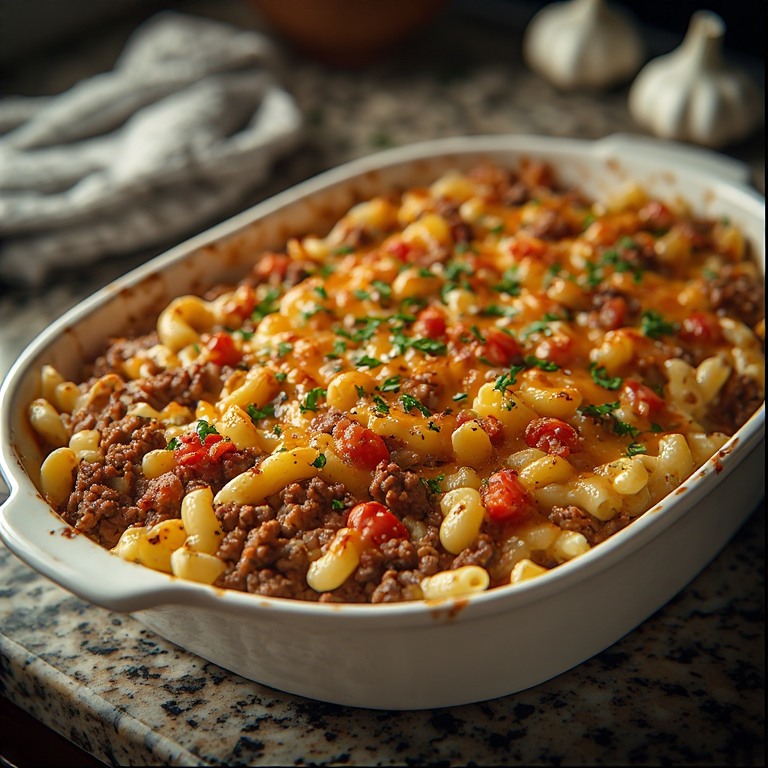
In a medium bowl or large measuring cup, stir together the two undrained cans of stewed tomatoes and the undiluted can of cream of tomato soup until the soup is fully incorporated into the tomato liquid with no lumps of condensed soup remaining. The mixture will be chunky from the tomato pieces and visually quite loose — this is correct, and the pasta will absorb the excess liquid during baking. Pour the sauce mixture slowly and evenly over the beef and macaroni in the baking dish, moving the pour across the full length and width of the dish to distribute the liquid as uniformly as possible. Gently press down on any dry macaroni pieces sitting above the liquid level to submerge them in the sauce.
Step 5 — Cover and Bake
Cover the baking dish tightly with aluminum foil, pressing the edges firmly against the rim of the dish to create as complete a seal as possible. The foil seal traps the steam produced as the sauce heats, which is what cooks the dry pasta from above while the liquid cooks it from below. A loose or poorly sealed cover allows steam to escape and can produce pasta that takes significantly longer to cook through or cooks unevenly. Bake on the center rack at 350°F for 45 to 55 minutes until the pasta is completely tender throughout when pierced with a fork through the foil at the edge of the dish and the sauce is bubbling at the edges.
Step 6 — Rest and Serve
Carefully remove the foil (directing the released steam away from your face). Give the goulash a gentle stir with a large spoon, pulling up from the bottom to redistribute the sauce from below through the pasta and beef. Allow the dish to rest uncovered for 5 minutes — the sauce will thicken slightly as the pasta continues to absorb it and the temperature drops from just-baked to properly serving temperature. Taste and add salt and black pepper if needed. Serve hot, scooped directly from the baking dish.
Tips for the Best Results
Brown the beef properly before adding it to the dish. The browning step is what gives the ground beef in this dish its savory depth and prevents the finished goulash from tasting bland. Beef that is merely cooked through without browning produces a noticeably flatter result. Take the time to let some pieces develop genuine golden-brown color on the skillet surface before stirring.
Seal the foil tightly. The sealed foil cover is what creates the steam environment that cooks the dry pasta. A loose or poorly sealed cover allows steam to escape, extending the cooking time significantly and producing unevenly cooked pasta. Press the foil firmly against the rim of the baking dish on all four sides before it goes in the oven.
Make sure all the dry pasta is submerged. Any pasta sitting above the sauce level at the start of the bake will not be in contact with liquid and may remain firm at the center even when the rest of the dish is fully cooked. After pouring the sauce, a quick pass with the back of a spoon pressing any elevated macaroni down into the liquid adds 30 seconds to the prep and ensures uniform cooking throughout.
Don’t skip the 5-minute rest. The goulash immediately after the foil is removed is very fluid — the sauce is at its thinnest point from the heat of the oven. Five minutes of resting thickens it to a properly scoopable consistency where the sauce coats and clings to the pasta rather than flowing like water. Serving immediately after removing the foil produces a thinner, less satisfying result.
Add cheese in the final stretch for a richer version. One to two cups of shredded cheddar, Colby Jack, or mozzarella scattered over the surface after removing the foil, returned to the oven uncovered for 5 to 10 minutes until melted and beginning to color, is the most popular and most effective upgrade to the base recipe. The melted cheese layer makes the goulash look and taste more substantial and indulgent without adding any preparation complexity.
Frequently Asked Questions
Can I use plain canned tomatoes instead of stewed?
Yes, though the result will be notably less flavorful. Plain diced or crushed canned tomatoes lack the pre-cooking and seasoning that gives stewed tomatoes their distinctive depth. If substituting, add half a teaspoon each of onion powder and garlic powder to the sauce mixture, a pinch of dried oregano and dried basil, and a teaspoon of sugar to approximate the seasoning and sweetness that stewed tomatoes bring. This produces a comparable result but requires additional pantry spices to compensate for the missing seasoning.
Can I assemble this ahead of time?
Yes, with one consideration: the dry pasta will begin to absorb moisture from the sauce if assembled and refrigerated before baking, which can result in thicker, partially hydrated pasta going into the oven. For best results, assemble and bake immediately. If advance preparation is needed, layer the beef and dry macaroni in the dish and refrigerate them, then mix and add the sauce just before baking. This keeps the pasta dry until immediately before the oven and produces a more reliable result than fully assembled and refrigerated.
Can I substitute ground turkey or chicken?
Yes. Ground turkey produces a leaner, slightly lighter result with a more neutral flavor base that relies more on the tomato sauce for its character. Ground turkey should be cooked to an internal temperature of 165°F during the browning step. The finished dish will have somewhat less richness from the fat than the beef version but is equally satisfying in its tomato-and-pasta character.
Can I add vegetables?
Yes. Frozen mixed vegetables, frozen corn, or frozen green peas scattered over the dry macaroni before the beef and sauce are added will cook through during the 45 to 55-minute covered bake and add color, nutrition, and textural variety to the finished dish. One to two cups is the right quantity — more than this can affect the sauce-to-pasta-to-vegetable balance. Fresh diced onion, bell pepper, or celery can be sautéed briefly in the skillet with the beef for even more authentic Midwestern goulash flavor, though this adds slightly to the prep time.
What do I do if the pasta is still firm after the specified baking time?
Replace the foil and return the dish to the oven in 10-minute increments, checking for tenderness each time. If the sauce looks very thick or the pasta appears to have absorbed all the liquid before it’s fully cooked, add a quarter cup of warm water or beef broth around the edges of the dish before replacing the foil. Individual ovens vary enough in calibration that a dish that takes 45 minutes in one oven may need 60 minutes in another — the fork-tenderness test is the reliable doneness indicator rather than the clock.
Variations Worth Trying
Cheddar-topped version: After removing the foil at the end of the covered bake, scatter one and a half cups of shredded sharp cheddar evenly over the surface. Return the uncovered dish to the oven for 8 to 10 minutes until the cheese is fully melted and beginning to develop golden spots. The cheddar adds a sharp, dairy richness that elevates the dish from a simple tomato pasta to something that feels more like a proper baked casserole. This is the most popular and most widely recommended upgrade to the base recipe.
Sausage and pepper version: Brown half a pound of mild Italian sausage (removed from its casing) alongside the ground beef, adding half a diced green bell pepper and half a diced onion to the skillet. Drain and proceed as directed. The Italian sausage’s fennel and herb seasoning alongside the aromatic vegetables gives the finished dish a more complex, more assertively flavored character that shifts it from classic Midwestern goulash toward something with more Italian-American influence.
Spiced tomato version: Add one teaspoon of smoked paprika and half a teaspoon of garlic powder to the sauce mixture before pouring. A pinch of cayenne adds mild heat for households that prefer a little warmth in their goulash. The smoked paprika adds a warm, slightly smoky depth that gives the tomato sauce more complexity and a flavor that reads as more deliberately seasoned without significantly changing the character of the dish.
Vegetable-loaded version: Scatter one cup of frozen corn, half a cup of frozen peas, and half a diced green bell pepper over the dry macaroni before adding the beef and sauce. The vegetables cook through during the covered bake and add color, texture, and nutritional variety that make the dish feel more complete as a single-dish meal. Reduce the ground beef to half a pound if adding this full vegetable quantity to maintain the correct sauce-to-solid ratio.
Greek-style version: Replace the cream of tomato soup with condensed tomato bisque and add half a teaspoon of dried cinnamon and a quarter teaspoon of dried allspice to the sauce mixture. These spices — characteristic of Greek-style meat sauces used in Cincinnati-style and Greek-American chili and pasta preparations — give the finished dish an unexpected warmth and complexity that is distinctly different from the standard Midwestern version and very good in its own right.
Serving Suggestions
Amish goulash is a complete dinner on its own — protein, starch, and tomato sauce in a single dish — but it benefits from something green and slightly acidic alongside to balance the richness of the cream soup and the heartiness of the pasta and beef. Buttered green beans, steamed broccoli, or a simple tossed salad with vinaigrette all work well for this purpose. Warm dinner rolls or a slice of crusty bread alongside are practically essential for collecting the extra tomato-cream sauce that pools at the edges and bottom of the baking dish — this sauce is too good to leave behind. The dish is well suited to family-style service directly from the baking dish at the center of the table, with a large spoon for scooping. For potluck or church supper transport, cover the baked dish with foil and transport in an insulating bag; it holds well at serving temperature for an hour and reheats successfully if needed.
Storage
Store leftover goulash in an airtight container in the refrigerator for up to four days. The pasta absorbs more sauce during storage and the leftovers will be noticeably thicker than the freshly baked dish. Add a splash of water or beef broth when reheating to restore the sauce’s flowing consistency. Reheat in a covered dish in a 325°F oven for 15 to 20 minutes, or in the microwave at medium power, covered, stirring once during heating. The goulash can be frozen for up to two months — thaw overnight in the refrigerator before reheating and add extra liquid when reheating from frozen to compensate for additional moisture absorption during the freeze-thaw cycle.
Four Ingredients, One Generous Pan
Oven-Baked Amish Goulash earns its place in the regular weeknight rotation by delivering a complete, comforting, generously portioned dinner from four pantry staples with less than fifteen minutes of active preparation. The technique of baking dry pasta directly in the tomato sauce produces a result that is more cohesive and more deeply flavored than a separately cooked pasta version — each noodle absorbs the tomato and cream soup character from the inside rather than merely wearing a sauce on its surface. That quality, combined with the practical simplicity of a single baking dish and forty-five minutes in the oven, makes this one of the most reliably satisfying four-ingredient dinners available to the home cook.
Enjoy!