

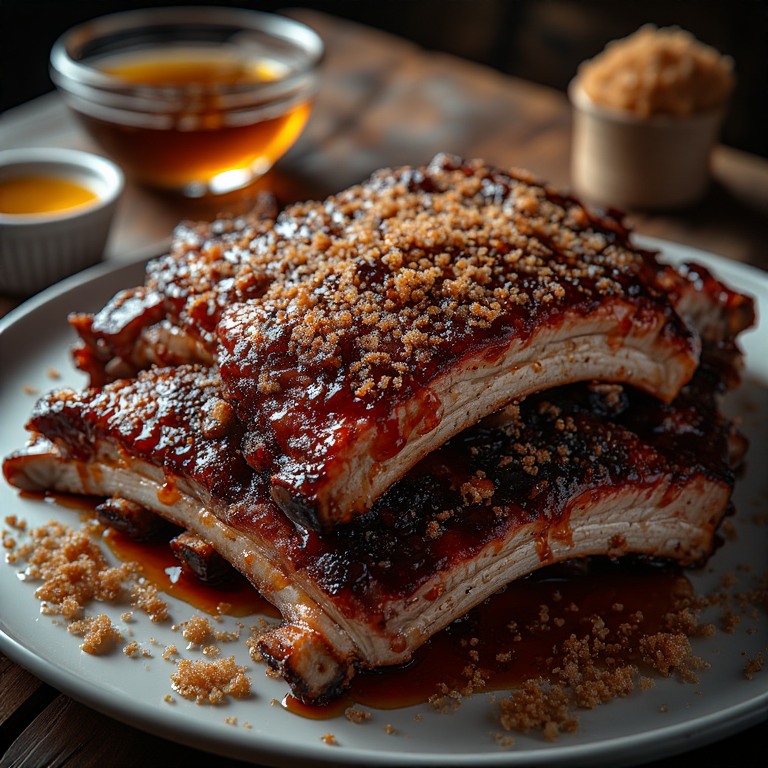
Slow Cooker Baby Back Ribs
Baby back ribs cooked in a slow cooker are one of the most convincing arguments for the appliance’s value: a cut of meat that traditionally requires three to five hours of low-and-slow smoke cooking, or at minimum several hours of oven work with careful temperature management, emerges from the slow cooker after seven to eight hours on LOW as tender as the best barbecue restaurant versions, with the meat pulling cleanly from the bone and the sauce — a combination of bottled barbecue sauce, ketchup, brown sugar, and Worcestershire — caramelized into a dark, slightly sticky glaze around each section. No smoker needed, no babysitting, no temperature checks every thirty minutes. Set up in the morning and dinner is done.
What makes baby back ribs work particularly well in the slow cooker is their anatomy. Baby backs are cut from the upper portion of the pork rib cage where the ribs meet the spine, and they are leaner and shorter than spare ribs. The connective tissue in baby back ribs — particularly around the cartilage at the ends of each rib — breaks down into gelatin during the long, moist, low-temperature braise of the slow cooker cook, which is exactly the transformation that produces the tender, pull-from-the-bone texture that makes properly cooked ribs so satisfying. The slow cooker’s enclosed, moist environment accomplishes this connective tissue breakdown as effectively as a smoker does, with the only tradeoff being the absence of the smoky bark and caramelized exterior that direct heat produces. The optional broiler finish addresses this tradeoff directly.
The Role of Each Sauce Ingredient
The sauce in this recipe — bottled barbecue sauce, ketchup, brown sugar, and Worcestershire sauce — is a four-ingredient combination that produces something more complex and more interesting than any of the four components alone. Understanding what each contributes clarifies both why the combination works and how to adjust it toward personal preference.
Bottled barbecue sauce provides the foundational flavor: smoke, tomato, sweetness, and a specific spice blend that varies by brand but typically includes onion, garlic, paprika, and often a vinegar note. This is the sauce’s dominant flavor character, and the brand chosen will most influence the finished dish. Ketchup is not merely redundant with the barbecue sauce — it adds additional concentrated tomato flavor and acidity that makes the sauce brighter and more fruit-forward, and its consistency contributes to the sauce’s gloss. Brown sugar adds sweetness that is distinct from the barbecue sauce’s sweetness because of its molasses content — the molasses contributes a caramel depth and the sugars available for caramelization are what produce the glossy, slightly sticky glaze quality of the finished sauce. Worcestershire sauce adds the savory, umami depth that is its primary contribution in any application — the fermented fish sauce, molasses, tamarind, and vinegar combination in Worcestershire produces a flavor complexity that deepens the savory character of the sauce without any of its individual components being identifiable in the finished result.
Why You’ll Love This Recipe
Five ingredients, ten minutes of setup, seven to eight hours of completely unattended cooking, and an optional five-minute broiler finish produce slow-cooked baby back ribs that are fall-off-the-bone tender, fully sauced, and genuinely impressive. The broiler step — transferring the cooked ribs to a baking sheet, brushing with additional sauce, and broiling for three to five minutes — is what makes the finished ribs look and taste like properly finished barbecue rather than slow-cooked ribs. That step is optional but strongly recommended for any occasion where presentation matters. For a busy weekday dinner with minimal morning prep, the ribs from the slow cooker without the broiler step are entirely satisfying on their own.
Ingredient Notes
Baby back ribs — three to four pounds, membrane removed — are the cut. “Baby back” refers to the shorter ribs from the upper rib cage, not to the age of the pig; they are meatier per bone than spare ribs and cook more evenly in the slow cooker’s enclosed environment. The membrane on the bone side of the rack — the thin, translucent silver skin that covers the concave surface — should be removed before cooking. It doesn’t soften adequately during the slow cook and creates a tough, chewy layer between the meat and the bone that makes the ribs less pleasant to eat. Removing it is straightforward: slide a butter knife under the edge, grip the flap with a paper towel for traction, and pull it away in one piece. Cut the rack into three- or four-rib sections to fit in the slow cooker — a full rack of baby backs is typically 1.5 to 2 feet long and won’t fit flat in any standard slow cooker insert.
Bottled barbecue sauce — one and a half cups — is the primary flavor base. A sauce with good depth, a reasonable balance of sweet and savory, and some smoke character produces the best finished ribs. Kansas City-style sauces (tomato-based, moderately sweet, with vinegar balance and smoke) are the most universally compatible with this preparation. Sweet Baby Ray’s, KC Masterpiece, Stubb’s Original, and Bull’s-Eye all work well. The ketchup, brown sugar, and Worcestershire additions will modify the sauce’s character somewhat, but the bottled sauce’s inherent flavor profile is the dominant element.
Ketchup — half a cup — adds bright tomato acidity and additional body to the sauce. It prevents the barbecue sauce and brown sugar combination from being too cloying and adds the slight tartness that makes the sauce more vibrant. Do not substitute tomato paste — it is more concentrated and less sweet than ketchup and produces a different balance in the finished sauce.
Brown sugar — one-quarter cup, packed — provides sweetness and caramelization potential. The brown sugar is what produces the glossy, slightly sticky glaze quality of the finished sauce during the optional broiler step, as the sugar caramelizes rapidly under the broiler’s heat. Dark brown sugar produces a deeper, more molasses-forward character; light brown sugar is milder. Either is appropriate; dark brown is preferred for the most complex flavor result.
Worcestershire sauce — two tablespoons — adds savory depth and complexity throughout the sauce. Two tablespoons is a noticeable but not assertive amount — the Worcestershire should deepen the sauce’s savory character without its own flavor being identifiable. It is the ingredient that makes the sauce taste like something was deliberately built rather than simply combined.
Ingredients
- 3 to 4 lbs baby back ribs, membrane removed
- 1½ cups bottled barbecue sauce
- ½ cup ketchup
- ¼ cup packed brown sugar
- 2 tbsp Worcestershire sauce