
Step-by-Step Instructions
Step 1 — Add the Meatballs
Place the frozen beef meatballs directly into a 5- to 6-quart slow cooker insert, spreading them into as even a single layer as the size of the insert allows. A single layer ensures each meatball is in contact with the hot gravy on as many sides as possible during the long cook, producing more even heating and better flavor absorption from the sauce. If your slow cooker is smaller and the meatballs need to be two layers deep, that’s fine — stir them once or twice during the initial cook to rotate the layers and ensure even heating throughout.
Step 2 — Add the Gravy and Broth
Pour both cans of condensed beef gravy over the meatballs, scraping the cans thoroughly to get every bit of the thick gravy into the pot. Pour the two cups of beef broth over the gravy. Stir gently to combine the condensed gravy with the broth into a unified sauce and to coat the meatballs without breaking them apart. The sauce will look thinner than expected at this stage — it will reduce and concentrate during the long cook to develop a richer, more coating consistency by the time the noodles go in.
Step 3 — Cook the Meatballs
Cover the slow cooker and cook on LOW for 4 to 5 hours, or on HIGH for 2 to 3 hours, until the meatballs are heated all the way through and the gravy is bubbling steadily around the edges. The long cook develops the flavor of the sauce as the meatballs release their juices into it and the broth concentrates slightly. Avoid lifting the lid frequently during this stage — each removal releases heat and extends the cook time.
Step 4 — Check the Sauce Consistency
About 35 to 45 minutes before you’re ready to eat, remove the lid and stir and taste the sauce. The gravy should be savory, well-seasoned, and substantial but still pourable — not so thick that it’s starting to stick to the bottom or so thin that it looks watery. If it’s very thick, stir in a splash of hot beef broth or water to loosen it to the right consistency for cooking the noodles. If it seems thin, that’s fine — the starch released by the cooking noodles will thicken the sauce considerably in the final stage. Adjust the heat to HIGH if you’ve been cooking on LOW.
Step 5 — Add the Noodles
Stir the dry, uncooked wide egg noodles directly into the hot gravy and meatballs, working them down into the liquid so that most of the noodles are submerged in or in close contact with the sauce. The noodles will absorb the gravy and broth as they hydrate and cook. If the sauce doesn’t quite cover all the noodles, press them gently down with the back of a spoon and they will settle as they begin to soften.
Step 6 — Cook the Noodles
Cover and cook on HIGH for 20 to 30 minutes, stirring once at the halfway point to redistribute the noodles and check their progress. The noodles are done when they are tender throughout with a slight remaining chew — not chalky in the center, but not soft and collapsing either. The sauce will have thickened noticeably from the starch released by the cooking noodles. If the pot looks dry at the midpoint stir, add a small splash of broth or hot water. If the sauce looks very thin, leave the lid slightly ajar for the remaining cook time to allow some steam to escape.
Step 7 — Rest and Serve
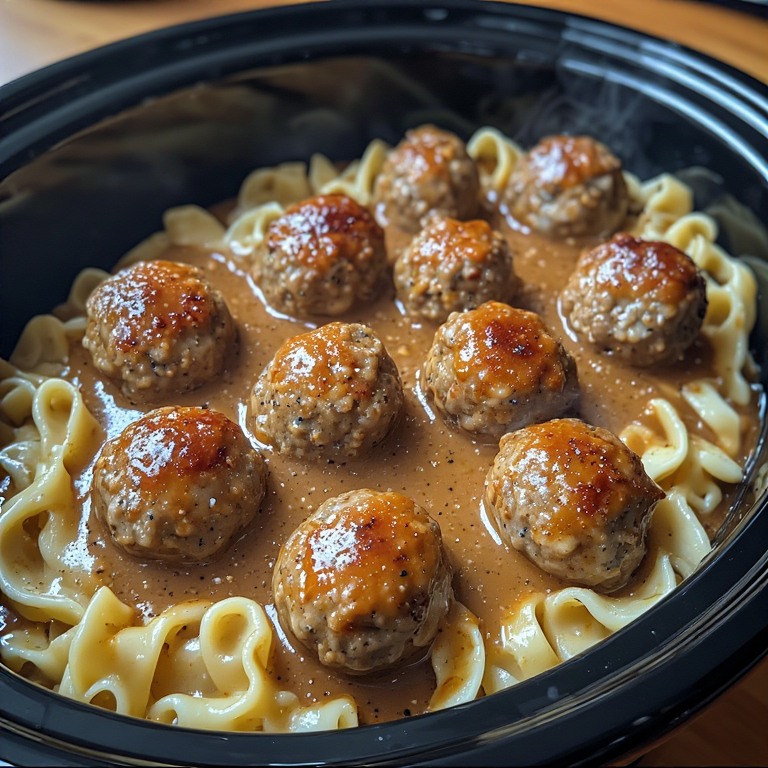
Once the noodles are cooked through, switch the slow cooker to WARM and allow the dish to sit for 5 to 10 minutes before serving. This brief rest allows the noodles to absorb a final amount of sauce and the gravy to thicken slightly further, producing a cohesive, glossy, fully integrated dish. Give everything a final stir before ladling generous portions — with both noodles and meatballs — into wide, shallow bowls.
Tips for the Best Results
Watch the noodles carefully in the final stage. This is the one part of the recipe that benefits from close attention. Egg noodles in a slow cooker can go from perfectly tender to soft and overcooked in 5 to 10 minutes, particularly if the slow cooker runs hot. Start tasting at 20 minutes. If in doubt, pull the noodles slightly underdone — the residual heat during the WARM resting stage will finish them without risk of overcooking.
Use low-sodium broth. Condensed beef gravy contains substantial salt. Regular-sodium beef broth alongside it can produce a finished dish that’s uncomfortably salty. Low-sodium broth keeps the seasoning in your control — you can always add salt at the table.
Consider browning the meatballs first. Even 8 to 10 minutes in a hot skillet before adding the meatballs to the slow cooker develops browned surface color that adds a meaningful layer of savory depth to the finished sauce. The fond left in the pan can be deglazed with a splash of beef broth and added to the slow cooker. Optional, but the single best upgrade available.
Extra-wide noodles hold up best. Among egg noodle varieties, extra-wide ribbons hold their texture better than medium or thin noodles in the slow cooker’s moist heat environment and carry more of the glossy brown sauce on their wider surface.
Don’t skip the resting step. The 5 to 10 minutes on WARM after the noodles are cooked makes a genuine difference to the final texture and cohesion of the dish. The noodles continue absorbing sauce and the gravy tightens around them during this brief wait.
Frequently Asked Questions
Can I use homemade meatballs?
Yes. Raw homemade meatballs no larger than 1½ inches in diameter can be added to the slow cooker at the beginning and will cook through fully during the 4 to 5 hours on LOW. Fully cooked homemade meatballs, browned in a skillet first, can be added the same way as the frozen variety and will contribute even more flavor to the sauce.
Can I use a different type of pasta?
Wide egg noodles are the best-suited choice, but other pasta shapes can work with adjustment. Medium egg noodles cook faster — start checking at 15 minutes. Short pasta shapes like rotini or penne require up to 35 minutes and may absorb more broth; add extra broth if the pot looks dry. Avoid very delicate pasta shapes that fall apart quickly in the hot sauce.
Can I add vegetables?
Yes. Frozen peas stirred in at the same time as the noodles will be perfectly heated through by the time the pasta is done. Sliced mushrooms added at the beginning of the cook add an earthy depth. Diced carrots added at the start will be tender after 4 to 5 hours on LOW. All of these work within the spirit of the recipe.
Can I make this on the stovetop?
Yes. Combine the frozen meatballs, condensed gravy, and broth in a large deep pot or Dutch oven and bring to a simmer over medium heat. Reduce to low, cover, and simmer 20 to 30 minutes until meatballs are heated through. Add the egg noodles, increase heat to medium, and cook uncovered for 8 to 12 minutes, stirring frequently, until tender and the sauce has thickened. The stovetop version is faster but requires more attention during the noodle stage.
How do I store and reheat leftovers?
Store in an airtight container in the refrigerator for up to 4 days. The noodles will soften further and the dish will thicken considerably when cold. Reheat gently on the stovetop with a splash of beef broth or water stirred in to restore the saucy consistency, or reheat individual portions in the microwave, stirring once halfway through and adding broth as needed.
Variations Worth Trying
Mushroom gravy version: Add 8 ounces of sliced cremini or button mushrooms to the slow cooker at the beginning of the cook alongside the meatballs. The mushrooms release liquid into the gravy during the long simmer, adding an earthy, savory depth that makes the sauce taste more complex and naturally rich.
Onion and garlic version: Add one thinly sliced yellow onion and two minced garlic cloves to the slow cooker with the meatballs and gravy at the start. The onion becomes completely soft and sweet after hours in the sauce, infusing the gravy with a gentle savory sweetness throughout.
Creamy stroganoff variation: Replace one can of condensed beef gravy with a can of condensed cream of mushroom soup. Stir a quarter cup of sour cream into the finished dish just before serving. The result is a creamier, stroganoff-adjacent sauce with a gentle, earthy character that’s a crowd favorite.
Italian-style meatball noodles: Use Italian-style frozen meatballs and swap one can of beef gravy and the beef broth for one can of condensed tomato soup and one can of diced tomatoes. Season with a teaspoon of dried Italian herbs. The result is a tomato-based meatball noodle dish — a different dish entirely but equally satisfying using the same slow cooker method.
Browned butter finish: Just before serving, melt two tablespoons of butter in a small skillet over medium heat and cook, swirling, until lightly golden and nutty-smelling. Drizzle over the finished pot of noodles and meatballs and stir once to incorporate. The toasted butter adds a subtle richness that elevates the whole dish with almost no effort.
What to Serve Alongside
The meatball noodle dish is a complete, filling main course. Simple sides that add freshness work best: a green salad with a sharp vinaigrette, cucumber and onion in a light cider vinegar dressing (a traditional Midwestern pairing), steamed green beans or roasted broccoli. Warm dinner rolls are excellent for soaking up extra gravy. A side of plain applesauce — a common accompaniment at Amish and Mennonite tables — adds a gentle sweetness that plays nicely against the deeply savory brown gravy in a way that’s more effective than it might initially sound.
Storage
Leftovers keep in an airtight container in the refrigerator for up to 4 days. Reheat gently with a splash of broth added to restore the saucy consistency. To freeze, store the meatballs and gravy separately from the noodles where possible — the noodle texture softens significantly after freezing and thawing. Cook fresh noodles when reheating for the best leftover experience.
Effortless, Satisfying, and Completely Reliable
Slow Cooker Amish Meatball Noodles is the kind of recipe that earns a permanent place in the rotation not because it’s impressive or surprising, but because it’s consistently, genuinely good and asks almost nothing from you in return. The slow cooker handles the long flavor-building simmer while you’re otherwise occupied, the noodles go in at the end and drink up everything the sauce has developed over those hours, and dinner arrives at the table warm, filling, and deeply satisfying. Four ingredients, one pot, and a result that brings people back for seconds every time.
Enjoy!