
The Science of Softness—Why Cream Cheese Changes Everything
Headline: Beyond the Butter Cookie: How Cream Cheese Creates the Ultimate Holiday Texture
In the vast hierarchy of holiday baking, the Cream Cheese Cookie occupies a unique and prestigious position. While standard sugar cookies rely on the aeration of butter and sugar to create a crisp or chewy snap, the inclusion of cream cheese—as seen in our featured recipe—introduces a level of “pillowy” softness that is biologically different from traditional shortbread.
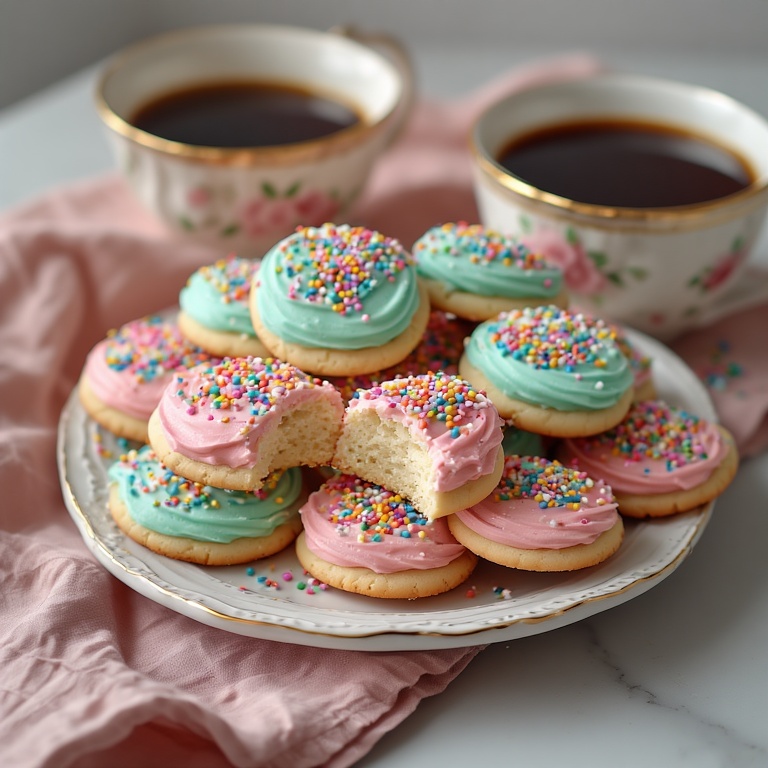
These cookies are defined by their tender, almost cake-like crumb and their signature pale finish. As you can see in our high-resolution imagery, these treats serve as the perfect structural base for vibrant, pastel-colored frostings and festive sprinkles. They are the “blank canvas” of the holiday dessert world, capable of taking on any flavor profile while maintaining a luxurious mouthfeel that butter alone cannot achieve.
In this exhaustive 2,000-word guide, we explore the molecular role of lactic acid in tenderizing dough, the historical evolution of “Cheesecake Cookies,” and the technical secrets to ensuring your frosting is stable enough for stacking.
My Recipes are being deleted, So.. I lost a lot of fans, If you see this recipe, Give it to 👍 or a 🚫, Thanks!
The Lactic Acid Secret
The secret to the “melt-in-your-mouth” quality shown in the photo lies in the acidity of the cream cheese. Lactic acid works to break down heavy gluten strands during the mixing process. This results in a cookie that doesn’t just crumble; it dissolves. For generations, this was a trade secret among European pastry chefs, but today it is the gold standard for anyone seeking a “no-spread” cookie that stays soft for days.
Ingredients Deep-Dive—The Five Elements of Perfection
Headline: The Anatomy of a Classic: Sourcing the Essentials for Cream Cheese Cookies
Our featured recipe relies on five core pillars. While the list is short, the quality of these ingredients determines the final outcome of your holiday platter.
1. The Fat Foundation: 1/2 lb Butter
-
The Role: Butter provides the flavor and the “shortness” of the dough.
-
The Technique: Use high-fat, European-style butter if possible. The lower water content prevents the cookies from steaming in the oven, ensuring they hold their shape for the frosting.
2. The Textural Agent: 4 oz Cream Cheese
-
The Role: This is the “magic” ingredient that provides the signature tang and velvety texture.
-
The Requirement: It is critical to use full-fat, brick-style cream cheese. Spreadable versions from a tub contain air and stabilizers that will cause the dough to become too sticky to handle.
3. The Sweetener: 1/2 Cup Granulated Sugar
-
The Balance: This recipe uses a relatively low amount of sugar in the dough compared to standard cookies.
-
The Reason: This is intentional. Because the cookies are topped with a thick layer of frosting, the dough needs to be less sweet to provide a balanced flavor profile.
4. The Structure: 2 Cups All-Purpose Flour
-
The Sifting: For the lightest possible cookie, we recommend sifting your flour twice. This introduces air and prevents “clumping” when combined with the thick fats of the butter and cream cheese.
5. The Aromatic: 1 Teaspoon Vanilla
-
The Soul: Vanilla extract acts as a bridge between the tang of the cheese and the richness of the butter. For an even more festive flavor, you can substitute half of this with almond extract.
The Masterclass—Step-by-Step Instructions
Headline: Precision Piping and Chilling: How to Recreate the Photo-Perfect Look
Step 1: The Creaming Process
In a large bowl, cream together your 1/2 lb butter and 4 oz cream cheese. This must be done until the mixture is completely uniform with no visible lumps of cheese. Add the 1/2 cup sugar and 1 tsp vanilla, beating until fluffy.
Step 2: Incorporating the Flour
Gradually add the 2 cups of flour. The dough will be very soft—almost like a thick frosting itself. Do not be tempted to add more flour!
Step 3: The Mandatory Chill
Because of the high fat content, this dough must be chilled for at least 2 hours. If you skip this, the cookies will spread into flat puddles in the oven. Cold dough ensures the cookies keep their “mound” shape.
Step 4: The Bake
Scoop tablespoon-sized balls onto a parchment-lined sheet. Bake at 175°C (350°F) for only 8–10 minutes. The cookies should look “set” but should not be brown. As seen in the cross-section photo, a perfect cream cheese cookie is white throughout.
Step 5: The Frosting Artistry
Once cooled, pipe swirls of colorful buttercream—pink, green, and blue as shown in our example. Immediately top with multicolored nonpareils while the frosting is still tacky.
Troubleshooting, Storage, and Global Variations
Headline: Holiday Mastery: Protecting Your Batch and Customizing the Flavor
Troubleshooting Common Issues
-
“My cookies are tough”: You likely overmixed the dough after adding the flour. Mix only until the white streaks of flour disappear.
-
“The frosting is melting”: The cookies must be completely cold to the touch before frosting. If there is any residual heat, the cream cheese in the dough will soften the butter in your frosting.
-
“The dough is too sticky to roll”: Lightly flour your hands or use a small cookie scoop to avoid transferring body heat to the dough.
Creative Variations
-
The Lemon-Zest Twist: Add the zest of one lemon to the dough to enhance the natural tang of the cream cheese.
-
The Chocolate Chip Version: Fold in 1/2 cup of mini chocolate chips for a “cannoli-style” cookie experience.
-
The Red Velvet Variation: Add 2 tablespoons of cocoa powder and red food coloring for a vibrant holiday look.
Storage and Longevity
Because these cookies contain cream cheese, they require slightly more care than a standard ginger snap:
-
Fridge: These are actually best served cold! Store in an airtight container for up to 7 days.
-
Freezing: You can freeze the baked, unfrosted cookies for up to 3 months. Thaw in the fridge overnight before adding your fresh frosting.
Conclusion: A Legacy of Sweetness
The Cream Cheese Cookie is a testament to the idea that the best treats are often the most simple. By following the precise ratios of butter, cheese, and flour found in our recipe, you are creating more than a snack—you are building a holiday tradition. Their versatility and unmatched softness make them the first item to disappear from any dessert table.