
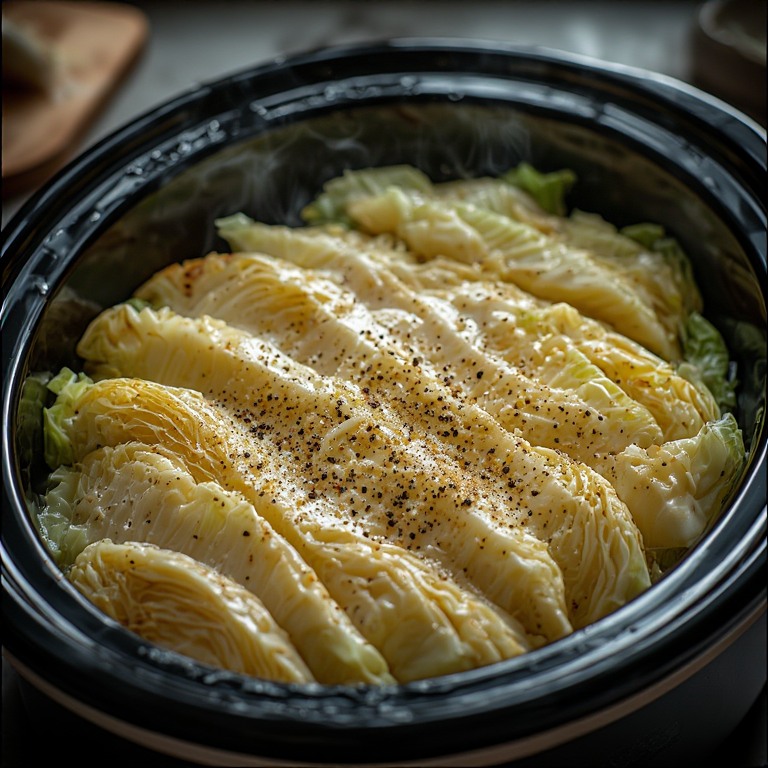
Slow Cooker Garlic Parmesan Whole Cabbage with Lemon Butter
Cooking a whole cabbage in the slow cooker is one of those techniques that surprises people the first time they encounter it — and then immediately makes sense. Cabbage is dense, mild, and exceptionally well-suited to long, moist, low-temperature cooking. What emerges after six to eight hours is completely different from raw or quickly cooked cabbage: the leaves become silky and tender throughout, the natural sweetness of the vegetable deepens considerably, and every layer has absorbed the garlic, Parmesan, lemon butter, and broth that the cabbage has been steaming in all day. The result is a humble vegetable transformed into something genuinely elegant.
This recipe dresses the cabbage in flavors that work together with particular harmony. Garlic cooked gently in butter loses its sharpness and becomes mellow and aromatic. Parmesan stirred into the warm butter adds a nutty, savory richness that coats each leaf. Lemon zest and juice cut through the butter’s richness and keep the finished dish tasting bright rather than heavy. Vegetable broth in the bottom of the slow cooker creates the steam environment the cabbage needs to cook through completely and provides the base for any sauce that collects during cooking. Together these elements elevate a very inexpensive, very ordinary vegetable into a dish worthy of a proper dinner table.
Why Cook a Whole Cabbage?
Most cabbage recipes call for chopping, shredding, or slicing the vegetable before cooking. Cooking it whole produces a different result and a different experience. The intact head retains its structure throughout the long cook, which means it can be lifted out and presented as a whole at the table — dramatic in its own understated way — and then cut into wedges for serving. The outer leaves protect the inner layers from overcooking while the entire head slowly tenderizes from the inside out. Cooking the cabbage whole also means the center, which is the densest part, has time to become as fully tender as the outer leaves rather than staying firm while the outside turns mushy.
The core removal is an important preparation step: cutting out the dense, woody core before cooking allows the garlic butter to penetrate the interior of the head and gives the interior leaves access to the steam and flavors in the pot. A medium-sized head fits comfortably in a standard 6-quart slow cooker with room for the broth around the base.
Why You’ll Love This Recipe
Cabbage is one of the most affordable vegetables available year-round, and this recipe demonstrates what it’s capable of when given proper time and attention. The slow cooker does the bulk of the work entirely unattended, and the hands-on preparation time is genuinely minimal — coring the cabbage, stirring together the butter mixture, and pouring everything into the pot takes under ten minutes. The finished dish is vegetarian, naturally low in carbohydrates, and substantial enough to serve as a main course alongside potatoes or bread, or as a generous side dish to grilled or roasted meat.
The flavor profile — butter, garlic, Parmesan, lemon — is broadly appealing and familiar enough that even people who are skeptical of cabbage as a main event tend to enjoy this preparation. The bitterness and sharp sulfur notes that make some people reluctant about cabbage are significantly softened by the long, gentle cooking time, leaving behind the vegetable’s natural sweetness and a silky, yielding texture that’s genuinely pleasant to eat.
Ingredient Notes
Whole cabbage — one medium head, approximately 2 to 2½ pounds — is the centerpiece. Green cabbage is the standard choice: its mild flavor, firm structure, and wide availability make it ideal. Savoy cabbage, with its crinkled, more delicate leaves, also works beautifully and cooks slightly faster due to its looser structure; it produces a more refined-looking finished dish. Red cabbage can be used but will turn an unexpected shade of purple-grey during the long cook, which affects presentation. Choose a head that fits inside your slow cooker with enough room to close the lid — measure if you’re uncertain. Remove any damaged or yellowed outer leaves before cooking.
Unsalted butter is the base of the sauce. Using unsalted butter gives you full control over the final salt level, since Parmesan already contributes meaningful saltiness. Four tablespoons is enough to coat the exterior and seep between the leaves generously. The butter is melted and used as a vehicle for the garlic and Parmesan rather than being browned, so low heat in the saucepan is important — you want fragrant, melted, golden butter, not brown butter (though brown butter is also delicious here if you choose to take it a step further).
Garlic — four cloves, minced — is cooked briefly in the melted butter until fragrant before the other ingredients are stirred in. This one to two minute cook time in warm butter takes the edge off the raw garlic’s sharpness and infuses the fat with its flavor, which then distributes throughout the Parmesan and lemon mixture. If you love garlic, increase to five or six cloves. For a milder garlic presence, reduce to two or three or substitute a half teaspoon of garlic powder, which provides a softer, more evenly distributed garlic flavor throughout.
Parmesan cheese, finely grated, is stirred into the warm butter off the heat. Pre-grated Parmesan from a container works adequately but freshly grated Parmesan from a block produces a notably better result — it melts more smoothly into the butter, has a more complex and nutty flavor, and doesn’t contain the anti-caking agents that can make pre-grated cheese slightly grainy. Half a cup is the right amount to flavor the whole head generously. Some of the Parmesan will melt into the sauce during cooking; additional Parmesan sprinkled over the cabbage as it’s served adds a pleasant sharpness to each wedge.
Lemon — zested and juiced — adds the brightness that keeps this dish from feeling too heavy. The zest provides a more aromatic, floral lemon presence than the juice alone, and adding both means the lemon flavor is fuller and more complex. One medium lemon yields about a tablespoon of zest and two to three tablespoons of juice, which is the right amount for this recipe. The acidity also interacts with the Parmesan and butter to create a sauce that coats the cabbage leaves rather than running off them completely.
Vegetable broth in the bottom of the slow cooker provides the moisture that creates the steaming environment the cabbage needs to cook through. One cup is sufficient — it sits beneath the cabbage head and vaporizes slowly during the cook, keeping the interior of the slow cooker humid and preventing the bottom of the cabbage from scorching. Chicken broth can be substituted for a slightly richer flavor if the vegetarian nature of the dish isn’t a priority.
Ingredients
- 1 medium whole green cabbage (about 2–2½ lbs)
- 4 tbsp unsalted butter
- 4 cloves garlic, minced
- ½ cup finely grated Parmesan cheese
- 1 lemon, zested and juiced
- 1 tsp salt
- ½ tsp black pepper
- 1 cup vegetable broth
- Fresh flat-leaf parsley, chopped, for garnish