
Step-by-Step Instructions
Step 1 — Make the Gravy Base
Lightly spray the interior of a 4- to 6-quart slow cooker with nonstick cooking spray. Pour the four cups of water into the insert, then add both packets of brown gravy mix. Whisk until the powder is fully dissolved with no lumps remaining — the mixture should be uniformly dark brown, thin, and smooth at this stage. It will look much thinner than finished gravy; it thickens as it heats and the starch in the mix gelatinizes, and it thickens further as the noodles absorb liquid and release their own starch during cooking.
Step 2 — Heat the Gravy
Cover the slow cooker and cook the gravy mixture on HIGH for 1 hour (or LOW for 2 hours) until it is hot throughout and beginning to thicken slightly. This preliminary heating step serves two purposes: it develops the gravy’s flavor through the application of heat, which activates the Maillard reaction browning in the beef flavoring compounds of the gravy mix; and it produces the uniformly hot liquid environment that allows the egg noodles to cook quickly and evenly when they’re added in the next step.
Step 3 — Add the Noodles
Open the slow cooker and give the hot gravy a stir. Add the dry egg noodles directly to the hot gravy base, using a spoon or spatula to press them down and submerge as many as possible in the hot liquid. The noodles should be mostly submerged — any noodles sitting completely above the liquid level will not cook properly. If the liquid level doesn’t fully cover the noodles, add a small splash of hot water (two to three tablespoons) to bring the level up.
Step 4 — Cook the Noodles
Cover and cook on HIGH for 25 to 35 minutes, stirring every ten minutes during the cook. The stirring is important: it prevents the noodles from sticking to the insert walls where they’re in direct contact with the heat, redistributes the noodles that have absorbed more liquid with those that have absorbed less, and checks the cooking progress. Each time you stir, pull the spatula or spoon from the bottom of the insert upward to bring lower noodles to the top. Check for doneness at the 20-minute mark by pressing a noodle against the side of the insert — it should feel soft and tender throughout with no firmness at the center. If the mixture thickens too much before the noodles are fully cooked, add a splash of hot water and stir to loosen.
Step 5 — Rest and Serve
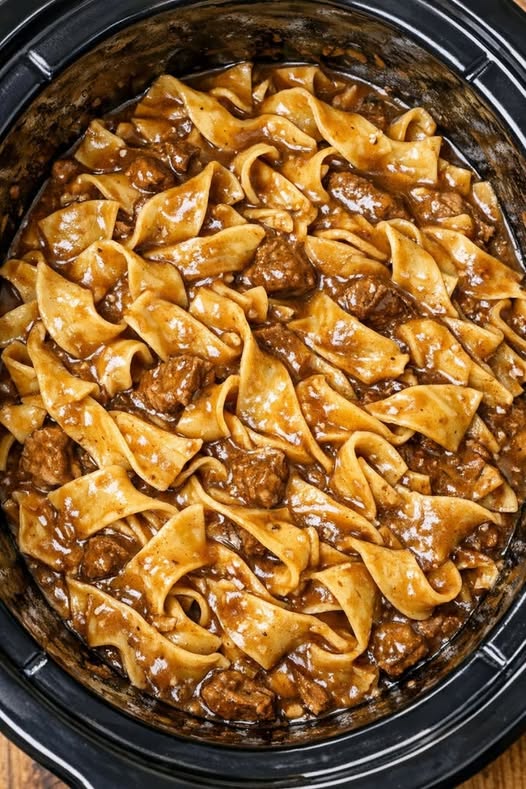
Once the noodles are tender and the gravy has thickened to a rich, glossy consistency that coats each noodle heavily, switch to WARM. Allow the dish to rest covered for 5 to 10 minutes — this brief rest allows the gravy to settle around the noodles and thicken slightly from its cooking-hot consistency to a properly coating, serving-temperature consistency. Serve directly from the slow cooker, scooping from the bottom so each portion gets plenty of the thick gravy that has accumulated at the base of the insert.
Tips for the Best Results
Heat the gravy base before adding the noodles. This is the most important technique decision in the recipe. Cold liquid in a slow cooker takes 30 to 45 minutes to reach cooking temperature; noodles sitting in cold liquid during this initial heating period soften unevenly and can become gummy before the liquid is fully hot. Starting with hot gravy means the noodles begin cooking immediately and cook more uniformly throughout.
Stir every ten minutes during the noodle cook. Egg noodles in a slow cooker on HIGH can stick to the insert walls and to each other if left unstirred for extended periods. The regular stirring prevents sticking, ensures even cooking, and allows you to monitor the consistency of the sauce as the noodles absorb liquid.
Choose a gravy mix whose flavor you genuinely enjoy. The gravy mix is the entire flavor base for this dish. A packet whose flavor you find too salty, too peppery, or too artificial will produce a dish with those same qualities amplified by concentration. Taste a small amount of the prepared gravy before adding the noodles and adjust if needed — a small splash of additional water if too strong, or an additional minute of pre-heating to concentrate if too mild.
For a richer, more deeply flavored dish, use beef broth instead of water. The single most effective flavor upgrade available for this recipe is replacing all or part of the water with low-sodium beef broth. The broth adds the genuine beefy depth and umami that the powdered gravy mix approximates but cannot fully replicate, producing a noticeably richer, more satisfying finished dish. This is the first recommendation for anyone who wants to make the recipe better without adding complexity.
Scoop from the bottom when serving. The thickest, most concentrated gravy settles at the bottom of the insert during the cook and rest. Serving from the top leaves the richest portion behind for the last serving. A spoon or ladle that reaches the bottom of the insert ensures each portion gets an equal share of the thick, coating gravy.
Frequently Asked Questions
Can I add protein to make this a more complete meal?
Yes — and this is the most natural and most common way to extend this recipe. Cooked, shredded beef (from a pot roast or slow-cooked chuck) stirred in during the final five minutes of the noodle cook produces a proper beef and noodles dish that is the full Midwestern comfort food experience. Sliced cooked kielbasa or smoked sausage added at the same stage adds a smoky, savory element. Diced cooked chicken stirred in at the end produces a chicken and noodles version. Any of these can be incorporated without changing the method.
Can I use chicken or mushroom gravy mix instead of brown?
Yes — both produce different but equally satisfying versions of the dish. Chicken gravy mix produces a lighter, more mildly flavored noodle dish with a tan rather than dark brown sauce; it is particularly good with chicken or turkey added as protein. Mushroom gravy mix adds an earthy, umami-rich depth that some people strongly prefer over the more straightforwardly beefy character of brown gravy. Both use the same quantities and method.
What do I do if the noodles absorb all the liquid before they’re tender?
Add hot water — not cold — two to three tablespoons at a time, stirring thoroughly after each addition to distribute the new liquid evenly through the noodles. Hot water allows the noodles to continue cooking without the temperature drop that cold water would cause. Add just enough to restore a fluid, coating sauce consistency rather than a watery one — the noodles are absorbing the liquid as they cook and the sauce will thicken again quickly.
How do I reheat leftovers?
The noodles absorb most of the remaining gravy during storage and the leftovers will be considerably drier than the freshly made dish. Add one to two tablespoons of water per serving before reheating and stir to distribute the added liquid. Reheat on the stovetop over medium-low heat, stirring frequently, until heated through and the gravy has loosened to a coating consistency again. Microwave reheating at medium power with the container covered and a tablespoon of water added also works well. The reheated version requires more liquid adjustment than the freshly made dish but the flavor is fully preserved.
Variations Worth Trying
Beef and noodles version: Stir one to one and a half cups of cooked, shredded beef (pot roast, slow-cooked chuck, or any leftover braised beef) into the slow cooker along with the noodles rather than after they’re cooked. The beef warms through during the 25 to 35-minute noodle cook and its juices enrich the gravy further. This produces the complete, classic Midwestern beef and noodles dish — one of the most satisfying comfort food preparations available from simple ingredients.
Onion and beef gravy version: Add one teaspoon of onion powder and half a teaspoon of garlic powder to the gravy mix before dissolving in the water. Stir a tablespoon of Worcestershire sauce into the dissolved gravy before heating. These additions deepen the savory, umami character of the gravy significantly and give the finished dish more complexity and a more assertively beefy flavor profile. This is the most effective upgrade that keeps the dish within its three-ingredient budget spirit.
Mushroom gravy noodles version: Replace the brown gravy mix with two packets of mushroom gravy mix. Add half a cup of sliced canned mushrooms (drained) to the gravy base before heating. The mushroom gravy produces a more earthy, more complex sauce with a deeper umami character; the canned mushrooms provide additional texture and flavor throughout the finished dish. This version is particularly good as a vegetarian main course.
Sausage and gravy noodles version: Slice one cup of smoked sausage or kielbasa into half-inch coins and add to the slow cooker along with the noodles. The sausage renders slightly into the hot gravy during the noodle cook, enriching the sauce with its smoky, garlicky fat and providing a substantial protein element in every spoonful. This is a particularly filling and flavorful version that elevates the dish from a budget side to a complete meal.
Turkey and gravy noodles version: Use chicken or turkey gravy mix instead of brown and substitute turkey or chicken broth for the water. Stir one cup of diced cooked turkey or chicken into the finished noodles. This version is an excellent use of leftover holiday turkey and produces the classic Midwestern turkey and noodles dish in its most practical, most hands-off form.
Serving Suggestions
Brown gravy noodles are filling and richly flavored enough to serve as a complete meal, particularly if protein is stirred in. As a side dish, they pair naturally with any simply prepared protein — roasted or rotisserie chicken, meatloaf, pan-fried pork chops, or baked ham — whose pan juices or gravy can be spooned over the noodles alongside the slow cooker sauce for additional richness. A crisp green salad with vinaigrette provides the fresh, acidic counterpoint that the rich noodles benefit from. Steamed or roasted vegetables alongside add color and nutritional balance. For a casual family meal, bring the slow cooker directly to the table on a trivet set to WARM and serve from it — the noodles hold well for an additional 30 minutes on WARM without losing their texture, which is useful when family members eat at different times.
Storage
Store leftover brown gravy noodles in an airtight container in the refrigerator for up to three days. The noodles continue absorbing the gravy during storage and the leftovers will be considerably denser than the freshly made dish — this is expected. Add water or broth when reheating to restore the gravy’s flowing, coating consistency. The flavor is fully intact through storage and reheating; the texture of the noodles will be slightly softer in leftovers than in the freshly made dish, which is acceptable in a dish where tenderness is one of the primary qualities.
Three Ingredients, One Genuinely Comforting Bowl
Slow Cooker Brown Gravy Noodles is the kind of recipe that earns its place in the rotation not through sophistication or technique but through the particular, uncomplicated comfort it delivers consistently from the simplest possible inputs. Egg noodles cooked in brown gravy until the sauce is thick and coating and every noodle is richly saturated with its savory flavor is a straightforward pleasure — the kind of dish that is satisfying in a way that requires no explanation or apology. Three ingredients, a slow cooker, and an afternoon produce something warm and filling that deserves its reputation as practical, honest comfort food at its most accessible.
Enjoy!