
Step-by-Step Preparation
Complete measurements appear in the recipe card below.
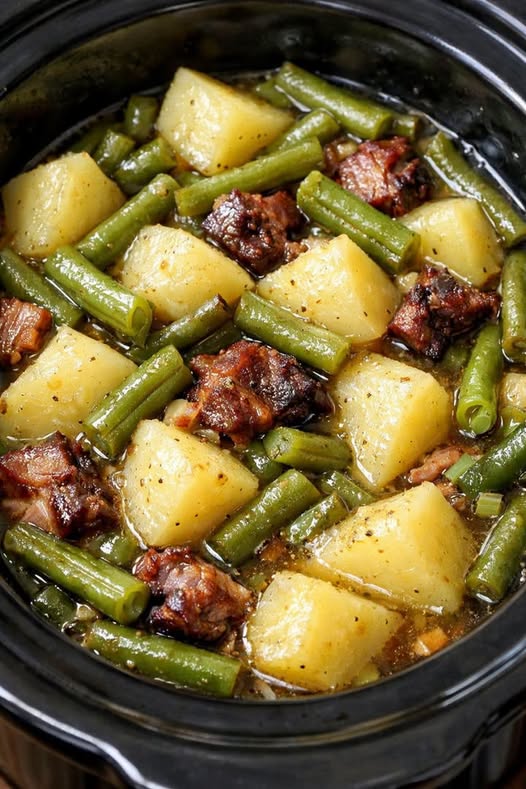
Layer the Potatoes – Place the potato chunks in the bottom of a 5- to 6-quart slow cooker, spreading them into an even layer. This bottom position allows them to cook thoroughly in the direct heat and absorb maximum flavor from the broth as it circulates.
Add the Green Beans – Scatter the trimmed green beans over the potatoes, keeping them mostly on top rather than mixed throughout. This positioning allows the beans to steam gently from the rising heat and broth vapor, helping them retain their vibrant green color rather than becoming overcooked and dull.
Distribute the Smoked Pork – Add the smoked pork pieces over the vegetables, distributing them evenly so that every serving will include some of that savory, smoky meat. This even distribution ensures balanced flavor throughout the finished dish.
Pour in the Broth – Pour the chicken broth evenly over everything in the slow cooker. The liquid should come most of the way up the vegetables without completely submerging them. This partial submersion is intentional—it helps the green beans stay bright and prevents them from becoming waterlogged while still creating that rich, flavorful cooking liquid that develops throughout the day.
Set and Cook – Cover the slow cooker with its lid and cook on LOW for 7 to 8 hours, or on HIGH for 3½ to 4 hours. You’ll know it’s ready when the potatoes are very tender when pierced with a fork and the green beans are soft but haven’t completely fallen apart.
Taste and Adjust Seasoning – Once cooking is complete, taste a bit of the broth along with a potato piece. If your smoked pork and broth combination isn’t particularly salty, you can add a light sprinkle of salt and freshly ground black pepper at this point. However, keep in mind that traditional Amish-style versions rely primarily on the pork itself for seasoning, so taste before adding much extra salt.
Gently Combine and Serve – Stir gently from the bottom of the pot to bring some of the smoky pork and flavorful broth up over the vegetables, being careful not to mash the potatoes in the process. Serve hot, spooning both the tender vegetables and plenty of that savory, smoky broth into each bowl.
Serving Suggestions
Perfect Main Course Pairings – This dish pairs beautifully with roasted or grilled chicken, baked ham, or simple pan-fried pork chops. The mild, comforting flavors complement rather than compete with these proteins.
Bread for Soaking – A crusty loaf of bread or warm dinner rolls proves essential for soaking up that savory, smoky broth. Don’t let any of that flavorful liquid go to waste.
Fresh Contrasts – Balance the rich, savory nature of this dish with a crisp green salad dressed in tangy vinaigrette, or simple sliced tomatoes seasoned with just salt and pepper. These fresh elements provide welcome contrast to the slow-cooked richness.
Complete Sunday Dinner – This works beautifully as part of a larger Sunday dinner spread, sitting alongside your main protein and other traditional sides.
Simple Weeknight Solution – Despite feeling special, this remains simple enough for regular weeknight rotation, especially since the slow cooker does virtually all the work.
Creative Variations and Tips
Enhanced Smoky Flavor – For a slightly richer broth, substitute 1 cup of the chicken broth with water from parboiling a small piece of smoked ham hock or smoked turkey wing. This technique intensifies the smoky flavor without requiring additional ingredients.
Leaner Alternative – If you prefer a lighter dish, choose smoked turkey instead of pork. This substitution still delivers that characteristic Lancaster-style smokiness while significantly reducing the fat content.
Firmer, More Vibrant Beans – If you prefer your green beans with more bite and brighter color, add them during the last 2 hours of cooking on LOW, or the last hour on HIGH, rather than including them from the start. This timing adjustment prevents them from becoming as soft while still allowing them to absorb plenty of flavor.
Rustic Texture Option – For a more rustic, hearty texture, use whole baby potatoes instead of chunked potatoes. Just before serving, lightly crush them with the back of a spoon so they soak up more of the flavorful broth while creating a slightly different, more rustic presentation.
Protein Swaps – While smoked pork provides traditional flavor, you could experiment with smoked kielbasa or andouille sausage for different but complementary smoky profiles.
Vegetable Additions – Some family versions include sliced carrots or diced onions added along with the potatoes for extra vegetable content and flavor complexity.
Storage and Reheating
Refrigerator Storage – Cool the dish completely before transferring to an airtight container. Properly stored, it stays fresh for 3-4 days in the refrigerator. The flavors often continue developing and improving during this time.
Reheating on the Stovetop – This dish reheats particularly well on the stovetop over low heat. If the broth has thickened in the refrigerator (which is common), simply loosen it with a splash of water or additional broth as it warms through. Stir occasionally to ensure even heating.
Microwave Reheating – For quicker individual servings, microwave portions in 1-2 minute intervals, stirring between each, until heated through. Add a splash of broth if the dish seems dry after refrigeration.
Freezing Considerations – While you can freeze this dish, potatoes sometimes develop a slightly grainy texture after freezing and thawing. If freezing, portion into freezer-safe containers, leaving room for expansion, and use within 2-3 months for best quality.
Understanding Pennsylvania Dutch Cooking Traditions
This recipe represents more than just convenient cooking—it embodies a specific culinary philosophy rooted in Pennsylvania Dutch farmhouse traditions. This style of cooking emerged from practical necessity: farm families needed hearty, satisfying meals that could cook with minimal supervision while they attended to demanding agricultural work.
The emphasis on simple ingredients cooked slowly reflects both practical wisdom and deep culinary knowledge. Rather than relying on numerous spices or complicated techniques, this tradition understood that patience and quality ingredients, given proper time, naturally develop complex, satisfying flavors.
Smoked pork appears frequently in Pennsylvania Dutch cooking because smoking was historically a preservation method, allowing families to store meat for extended periods. This practical origin evolved into a beloved flavor profile that continues defining the region’s cuisine today.
Why This Recipe Works
The slow, gentle heat of the slow cooker allows the tough fibers in the smoked pork to break down gradually, releasing flavor into the surrounding broth while the meat itself becomes tender. Simultaneously, the potatoes slowly absorb this increasingly flavorful liquid, taking on savory, smoky notes throughout their structure rather than just on the surface.
The strategic layering—potatoes on bottom, beans on top, pork distributed throughout—ensures each component cooks appropriately. Potatoes need direct contact with the heating element and liquid for thorough cooking, while beans benefit from gentler steam cooking that preserves more of their color and texture.
The partial submersion in broth (rather than complete submersion) represents thoughtful technique. This allows the vegetables to essentially braise rather than boil, developing concentrated flavor while maintaining better texture than they would if fully submerged in liquid for hours.
Perfect for Various Occasions
Sunday Family Dinners – Traditional and comforting, perfect for gathering family around the table.
Busy Weekday Solutions – Set it in the morning before work or other commitments, and return to a nearly finished meal.
Spring Entertaining – As suggested by its seasonal positioning, this works beautifully for spring gatherings when lighter, fresh flavors feel appropriate.
Potluck Contributions – Transport in the slow cooker itself, keeping it warm and ready to serve throughout gatherings.
Comfort Food Cravings – When you need something warming and satisfying without excessive richness, this delivers perfectly balanced comfort.
Final Thoughts
This Amish-style potatoes and green beans dish exemplifies the best of traditional American farmhouse cooking—simple ingredients transformed through patient technique into something genuinely satisfying. It requires no special skills, no unusual ingredients, and minimal active cooking time, yet delivers deep, complex flavor that feels like it required far more effort than it actually does.
There’s something deeply appealing about recipes that connect us to culinary traditions and family history, recipes passed down through generations because they simply work. This dish represents exactly that kind of enduring wisdom—proof that sometimes the best cooking isn’t about complexity, but about understanding how time, quality ingredients, and gentle heat can create something greater than the sum of its parts.
Whether you’re drawn to this recipe for its practical convenience, its connection to Pennsylvania Dutch heritage, or simply because it sounds delicious, you’ll likely find yourself returning to it regularly, especially during those days when you need dinner handled while you focus on everything else life demands.
Prep Time: 15 minutes
Cook Time: 7-8 hours (LOW) or 3½-4 hours (HIGH)
Total Time: 7¼-8¼ hours
Servings: 6
Course: Side Dish
Cuisine: Pennsylvania Dutch, American
Difficulty: Easy