
Step-by-Step Instructions
Step 1 — Prepare the Vegetables
Remove and discard any wilted or damaged outer leaves from the cabbage. Cut the head in half through the core, then cut each half into three or four wedges — six to eight total — keeping a piece of the core attached to each wedge so it holds together during cooking. Scrub the potatoes thoroughly under cold water; peel if preferred, though the skins of Yukon Golds are thin and pleasant in the finished dish. Cut into approximately 1½-inch chunks — roughly uniform sizing helps them cook evenly. Peel the onion, halve it through the root, and slice each half into thick half-moon pieces.
Step 2 — Layer the Slow Cooker
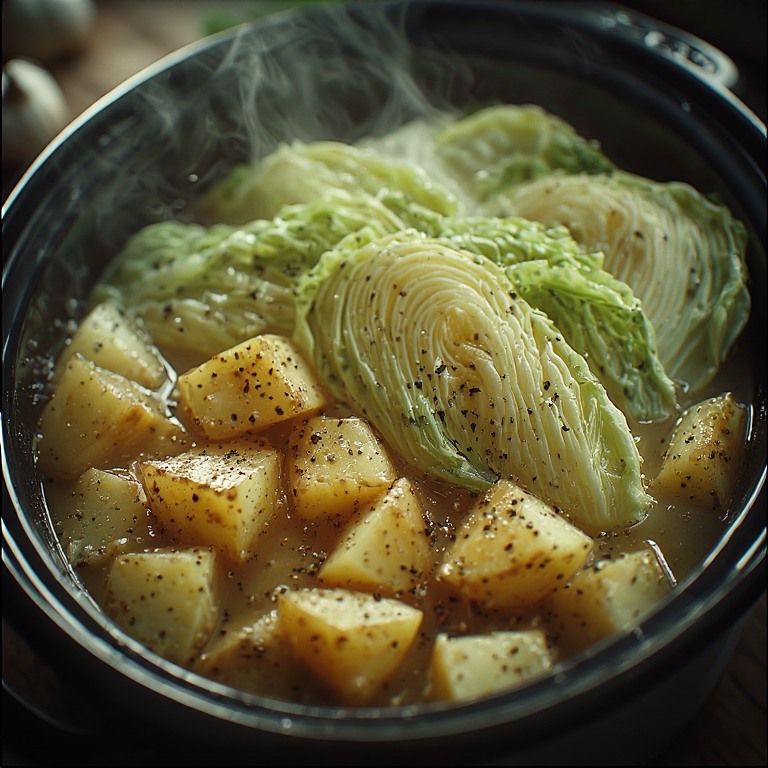
Spread the potato chunks in an even layer across the bottom of a 5- to 7-quart slow cooker insert. Scatter the sliced onion evenly over the potato layer. Arrange the cabbage wedges on top of the onion, nestling them in cut-side down so they fit snugly in the insert. The slow cooker will look very full at this stage — the vegetables will reduce considerably in volume as the cabbage cooks down.
Step 3 — Season and Add Butter
Sprinkle the kosher salt and black pepper evenly over the layered vegetables, distributing the seasoning across the entire surface rather than concentrating it in one area. Distribute the butter pieces over the top of the cabbage wedges and tuck several pieces down into the gaps between the cabbage and potatoes so the butter melts throughout the insert rather than only on the surface.
Step 4 — Add the Water
Pour the water carefully around the edges of the slow cooker insert rather than directly over the center of the seasoned vegetables, which would wash the salt and pepper off the cabbage surface into the liquid before it has a chance to season the vegetables. The water should come approximately one-third to halfway up the vegetables. Cover the slow cooker.
Step 5 — Cook
Cook on LOW for 6 to 7 hours or on HIGH for 3½ to 4 hours. The LOW setting is strongly preferred — the longer, more gradual cook produces more thoroughly softened cabbage, more evenly tender potatoes, and a more developed, flavorful broth than the faster HIGH setting. The dish is done when the potatoes are completely tender throughout when pierced with a fork and the cabbage wedges are silky and soft while still holding their wedge shape. Avoid lifting the lid in the first 4 hours of cooking; each opening releases heat and steam and can add 20 to 30 minutes to the total cook time.
Step 6 — Taste, Adjust, and Serve
Taste the broth and adjust the seasoning — it will almost certainly need an additional pinch or two of salt after the long cook, and a generous grind of fresh black pepper brightens everything just before serving. Use a large spoon or wide spatula to carefully lift the cabbage wedges from the slow cooker — they will be tender and delicate at this point. Plate the potatoes and onion alongside, and ladle the hot buttery broth generously over each serving. Keep the slow cooker on WARM for extended service if needed.
Tips for the Best Results
Keep the core on the cabbage wedges. The core holds each wedge together through the long braise. Without it, the outer leaves separate and the wedge loses its shape, producing loose strands of cabbage rather than identifiable portions. After cooking, the core will still be slightly firmer than the leaves — cut a thin sliver from the tip of each wedge if you want every bite equally tender.
Use Yukon Gold potatoes, not russets. Russet potatoes absorb too much liquid and begin to disintegrate after 6 to 7 hours on LOW, producing a starchy, waterlogged result. Yukon Gold’s waxy texture holds together while still becoming genuinely tender and creamy — the right balance of firmness and tenderness for a long braise.
Pour the water around the edges, not over the center. Pouring the water directly over the seasoned cabbage surface washes the salt and pepper off into the liquid before it has seasoned the vegetables. Directing the water toward the edges of the insert allows the seasoning to stay on the vegetables longer and season them more effectively.
Ladle the broth generously over each serving. The buttery, lightly sweet broth that accumulates in the slow cooker during the cook is the most flavorful element of the dish. It should be spooned lavishly over the plated vegetables — enough to pool on the plate and be soaked up by the potatoes and any bread served alongside. Don’t treat it as a byproduct; it’s central to the dish.
Add a splash of apple cider vinegar at the table. A small splash of apple cider vinegar stirred into each bowl at the table brightens the entire dish, cutting through the butter’s richness and making the cabbage’s natural sweetness more vivid. It’s one of those finishing touches that costs nothing but changes the character of the dish noticeably. Have a bottle at the table alongside the salt and pepper.
Frequently Asked Questions
Can I add sausage or ham to make this a more substantial main course?
Yes — and both are excellent additions that keep the spirit of the original recipe while making it more filling. Sliced smoked sausage or kielbasa added to the slow cooker at the beginning of the cook infuses the broth with smoky, garlicky depth and becomes tender throughout. A smoked ham hock nestled among the vegetables is the most traditional addition — it enriches the broth dramatically and the meat can be pulled from the bone and stirred through the finished dish. Thick-cut bacon laid over the vegetables before cooking contributes smoky richness without occupying much space. Any of these additions transforms the dish from a vegetable side to a complete one-pot meal.
Can I use broth instead of water?
Yes — chicken broth produces a noticeably richer, more savory result; vegetable broth keeps the dish vegetarian while adding more flavor depth than plain water. Reduce the added salt by half a teaspoon when using broth and taste at the end before adding any additional salt, since commercial broths vary considerably in salt content. Even a mix of two cups broth and one cup water is an improvement over plain water if you want more flavor without using a full three cups of broth.
Can I add other vegetables?
Yes — carrots are the most natural addition, cut into similar-sized chunks as the potatoes and added to the bottom layer; they become tender over the same timeframe as the Yukon Golds and add color and gentle sweetness to the broth. Turnips or parsnips are equally traditional additions in farmhouse versions of this dish. All root vegetables work well; avoid tender vegetables like zucchini or peas that would overcook completely during the long braise.
How do I store and reheat leftovers?
Store in an airtight container with as much of the broth as possible — the broth keeps the vegetables moist and prevents them from drying out during storage. Refrigerate for up to 4 days. Reheat on the stovetop over medium-low heat, covered, until warmed through, adding a small splash of water or broth if the liquid has been fully absorbed. The potatoes will be slightly softer after reheating; the cabbage holds up well. Leftovers are excellent alongside fried eggs for breakfast, or turned into a simple soup by adding more broth and gently simmering on the stovetop until heated through.
Can I partially mash the potatoes into the broth?
Yes — and it’s a very good option for anyone who prefers a thicker, stew-like consistency. After the full cook, use the back of a large spoon or a potato masher to crush some of the potato chunks directly in the slow cooker, allowing the starchy potato to thicken and enrich the broth into something between a braise and a thick vegetable stew. Leave some chunks intact for texture. This method produces a heartier, more cohesive dish that’s particularly satisfying on cold days.
Variations Worth Trying
Ham hock and cabbage version: Add one smoked ham hock to the slow cooker at the beginning of the cook, nestling it among the potatoes and onion before adding the cabbage on top. The ham hock enriches the broth with smoky, porky depth over the long braise and the meat from the hock — pulled off the bone and stirred through the dish just before serving — adds protein and additional flavor. This is the version closest to the old farmhouse soup tradition that this recipe descends from.
Caraway and cabbage version: Add one teaspoon of caraway seeds to the water before cooking. Caraway is the most traditional spice pairing for cabbage in Central and Eastern European cooking — its slightly anise-like, warm character deepens the broth and gives the cabbage a more distinctly Old World flavor. This version is particularly good with a smoked sausage added alongside the vegetables.
Brown butter and cabbage version: Instead of adding the butter directly to the slow cooker, cook the six tablespoons in a small saucepan over medium heat until the milk solids turn golden brown and the butter smells toasted and nutty — about 5 minutes. Add the brown butter to the slow cooker in place of the plain melted butter. The brown butter adds a nutty, caramel-like depth to the broth that makes the finished dish taste considerably more complex without adding any additional ingredients.
Garlic and herb version: Add four peeled whole garlic cloves and two sprigs of fresh thyme to the slow cooker with the water. The garlic mellows into sweetness over the long braise, adding a gentle savory depth throughout the broth; the thyme contributes a herbal, slightly earthy note that gives the dish a more sophisticated character. Remove the thyme sprigs before serving.
Creamy version: Stir three tablespoons of sour cream or crème fraîche into the finished broth just before serving, swirling it through the liquid until incorporated. The dairy fat and slight tanginess of the sour cream transforms the clear, buttery broth into a richer, creamier sauce that coats the vegetables more thickly and adds a mild tang that brightens the sweetness of the cabbage and the richness of the butter. This version is particularly good served with dark rye bread alongside.
Serving Suggestions
Slow cooker cabbage and potatoes is most at home served simply, with the broth ladled generously over each portion and good bread alongside to soak up the liquid. Crusty white bread, warm dinner rolls, dark rye bread, or soda bread are all excellent companions. A spoonful of whole-grain or Dijon mustard alongside — not stirred in, but available for each person to apply as they like — adds a pleasantly sharp contrast to the sweet, buttery broth. A splash of apple cider vinegar at the table is a traditional accompaniment in the farmhouse tradition and is genuinely recommended. As a side dish alongside a main protein, it pairs particularly well with baked or glazed ham, pan-fried pork chops, roasted chicken, or grilled smoked sausage — any pork or poultry that benefits from a sweet-savory braised vegetable accompaniment. For a next-day breakfast, reheat leftover cabbage and potatoes in a skillet and top with two fried eggs — the runny yolks enrich the broth and the combination is as satisfying a breakfast as any more complicated preparation.
Storage
Leftover cabbage and potatoes keep in an airtight container with their broth in the refrigerator for up to 4 days. The butter in the broth solidifies when cold — this is normal and expected, and it melts back into the liquid immediately on reheating. The potatoes will absorb more broth during storage and the dish will be somewhat drier when cold than when freshly made; reheat with a small splash of water or broth to restore the liquid level. The flavors deepen overnight and the second-day version is often noticeably more developed and satisfying than the day it was made.
Simple Ingredients, Lasting Satisfaction
Slow Cooker Cabbage and Potatoes is one of those recipes where the honest simplicity of the ingredients is the point rather than a limitation. Four vegetables and butter, water, salt, and pepper — and the result after a day’s slow cook is a pot of genuinely satisfying food with a broth that tastes like it was built from something more. The recipe has endured through generations of farmhouse cooking across multiple culinary traditions because it delivers reliably on its promise: a warm, filling, flavorful meal from whatever is in the root cellar and the pantry. That kind of reliability is worth carrying forward.
Enjoy!