
3. Instructions
-
Prepare the Sauce: In a small bowl, whisk together all the dipping sauce ingredients. Set aside to let the flavors meld.
-
Make the Batter: In a large mixing bowl, combine the all-purpose flour, rice flour, and salt. Add the beaten egg and ice-cold water. Whisk gently until just combined (don’t overmix; a few lumps are fine for crispiness).
-
Mix in Veggies: Fold the julienned vegetables and sliced scallions into the batter until they are evenly coated.
-
Fry the Pancakes: Heat 2-3 tablespoons of oil in a non-stick skillet over medium-high heat. Ladle about 1/2 cup of the mixture into the pan, spreading it thin.
-
Achieve Crispness: Cook for 3-4 minutes on one side until the edges look golden and crispy. Flip carefully and cook for another 2-3 minutes.
-
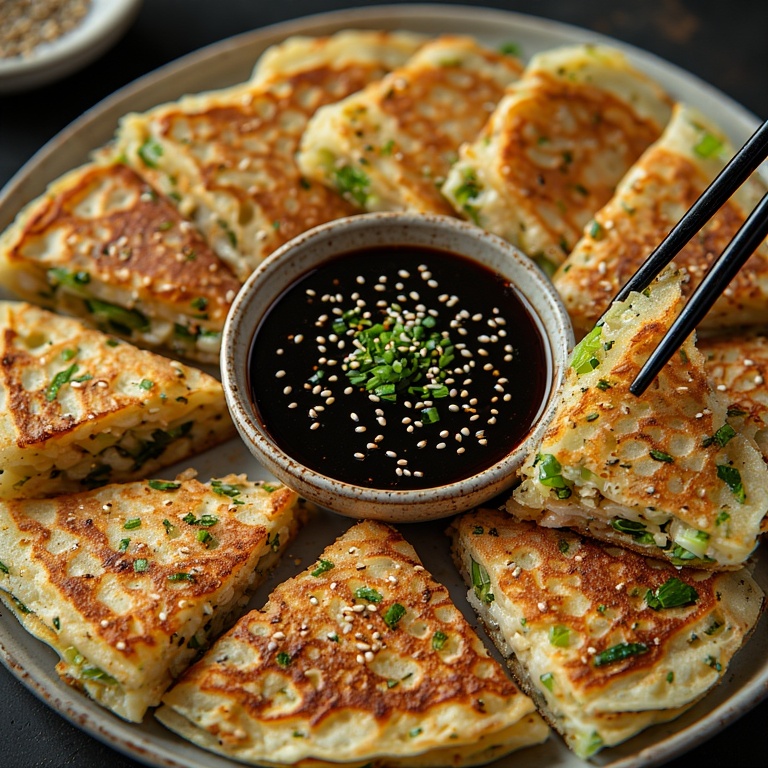
Drain and Slice: Transfer to a wire rack or paper towel to drain. Slice into triangles (pizza-style) for easy dipping.
-
Serve: Garnish with extra sesame seeds and serve immediately while hot and crunchy.
4. Variations
-
Seafood Version: Add chopped shrimp, squid, or clams to the batter to transform it into a classic Haemul Pajeon.
-
Kimchi Kick: Mix in 1/2 cup of chopped fermented kimchi and a splash of kimchi juice for a spicy, tangy version.
-
Gluten-Free: Use a gluten-free all-purpose flour blend and tamari instead of soy sauce in the dipping sauce.
5. Serving and Storage
-
Serving: Best served immediately while the exterior is at its crispiest. Arrange the triangles around the dipping sauce bowl for a beautiful presentation.
-
Storage: If you have leftovers, store them in the refrigerator for up to 2 days.
-
Reheating: Avoid the microwave! To restore the crunch, reheat them in a dry skillet over medium heat or in an air fryer at 180°C for 3-5 minutes.
6. Benefits
-
Vegetable-Forward: A fantastic way to consume a variety of colorful vegetables in one sitting.
-
High Fiber: Contains essential fiber from the fresh produce, aiding in digestion.
-
Versatile: Can be easily adapted to accommodate various dietary needs while remaining highly flavorful.
7. History of Vegetable Pancakes in Asian Cuisine
The history of the savory vegetable pancake is deeply embedded in the agricultural traditions of East Asia, particularly in Korea and China. In Korea, these pancakes are known as Buchimgae or Jeon. Historically, Jeon was a dish served at royal court banquets, but it eventually became a staple for commoners during the Joseon Dynasty. It was especially popular during the rainy season; the sound of the pancakes sizzling in the oil was said to mimic the sound of falling rain, leading to a cultural tradition of eating pancakes and drinking rice wine (Makgeolli) on rainy days.
In Chinese culinary history, the Cong You Bing (Scallion Pancake) traces its roots back to ancient flatbread traditions. Unlike Western pancakes, which are often sweet and leavened, these Asian variants focus on the structural integrity of the dough and the infusion of aromatics like green onions. Some culinary legends even suggest that Marco Polo was so inspired by these Chinese scallion flatbreads that he attempted to recreate them back in Italy, indirectly influencing the development of the modern pizza.
The transition from a simple flatbread to the batter-based vegetable pancake seen today was driven by the availability of different flours and the need to utilize seasonal harvests efficiently. By the mid-20th century, these dishes evolved from rustic home meals into iconic street foods. Today, the Crispy Vegetable Pancake serves as a global ambassador of Asian “snack culture,” representing a perfect balance of ancient grain processing techniques and the universal love for fried, savory comfort food.