
3. Instructions
-
Prep the Oven: Preheat your oven to 180°C (350°F). Grease a muffin tin or individual tartlet molds thoroughly.
-
Cut the Pastry: Roll out the pastry and use a circular cutter (slightly larger than the muffin holes) to cut out circles. Press the pastry gently into the bottom and sides of the molds.
-
Sauté the Greens: In a small pan, sauté the minced shallot and spinach until the spinach has wilted. Squeeze out any excess moisture to prevent a soggy crust.
-
Whisk the Custard: In a medium bowl, whisk together the eggs, cream, salt, pepper, and nutmeg until smooth.
-
Assemble: Distribute the sautéed spinach and crumbled feta evenly among the pastry shells. Pour the egg mixture over the top until each is about 3/4 full. Sprinkle with a little extra cheese.
-
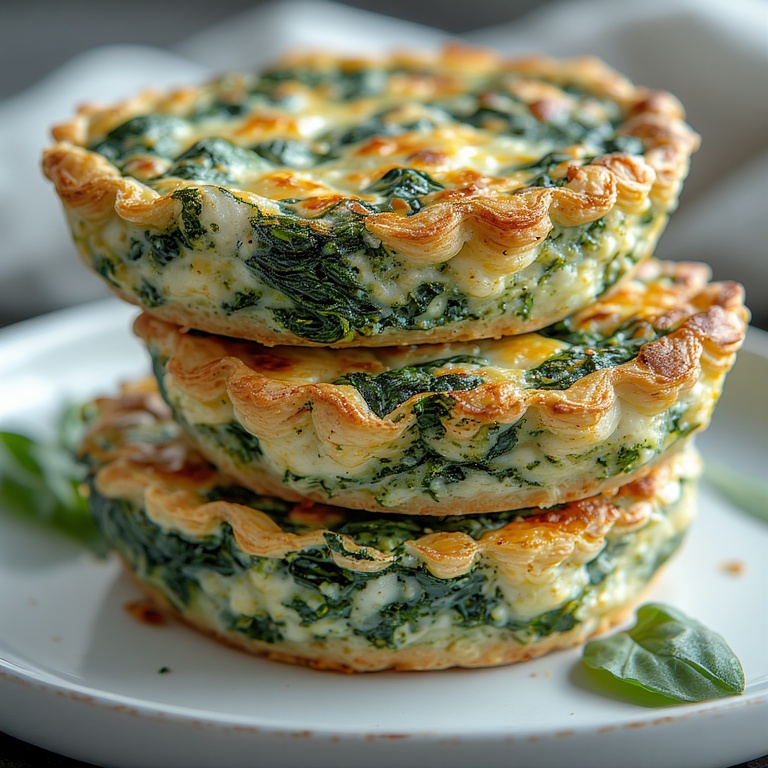
Bake: Bake for 20-25 minutes until the pastry is golden brown and the egg centers are set and slightly puffed.
-
Cool and Serve: Let them rest in the tin for 5 minutes before removing. Garnish with fresh basil.
4. Variations
-
Crustless (Egg Muffins): Skip the pastry entirely and pour the mixture directly into a well-greased muffin tin for a gluten-free, low-carb version.
-
Protein Boost: Add chopped cooked bacon, smoked salmon, or diced ham to the filling.
-
Sun-Dried Tomato: Add chopped sun-dried tomatoes for an extra punch of umami and color.
5. Serving and Storage
-
Serving: Serve warm or at room temperature. They pair excellently with a side of fresh cherry tomatoes or a light balsamic vinaigrette salad.
-
Storage: These can be stored in an airtight container in the refrigerator for up to 4 days.
-
Freezing: These are freezer-friendly! Wrap them individually and freeze for up to 2 months. Reheat in the oven at 170°C for 10 minutes to maintain the pastry’s crispness.
6. Benefits
-
Rich in Iron: Spinach provides a significant amount of plant-based iron and Vitamin K.
-
High-Quality Protein: Eggs provide all nine essential amino acids needed for body repair.
-
Low Glycemic Index: If made crustless, they are an excellent option for maintaining stable blood sugar levels throughout the morning.
7. History of Savory Mini Tarts and Quiches
The lineage of the savory mini tart, or “miniature quiche,” is deeply rooted in European culinary traditions, specifically tracing back to the medieval “pottage” and open-faced meat pies. While the most famous iteration, the Quiche Lorraine, emerged from the German kingdom of Lothringen (later renamed Lorraine by the French), the concept of small, individual savory custards baked in pastry became a staple of French haute cuisine and English “savories” in the Victorian era.
Historically, quiches were large, rustic pies intended for communal meals. However, as the 20th century progressed, the “miniaturization” of these dishes took hold in the 1950s and 60s as cocktail party culture flourished. The shift toward smaller, bite-sized versions allowed for a variety of ingredients to be showcased at social gatherings without the need for cutlery.
The combination of spinach and feta, specifically, owes its popularity to the global spread of Greek Spanakopita. By merging the French technique of a creamy egg custard (crème prise) with the Mediterranean flavors of salty sheep’s milk cheese and leafy greens, the modern spinach and feta mini quiche was born. Today, it represents a fusion of traditions—utilizing the portability of the American “muffin tin” craze and the timeless elegance of European pastry arts. It remains a symbol of sophisticated yet accessible home cooking that bridges the gap between breakfast and dinner.