

Step-by-Step Instructions
Step 1 — Prepare the Beans and Layer
Rinse the dried lima beans under cold running water in a colander, sorting through them as you rinse to remove any small stones, shriveled beans, or debris. No soaking is required for an eight-to-ten-hour LOW cook — the beans go in dry. Spread the rinsed beans in an even layer across the bottom of a 5- to 7-quart slow cooker. The beans on the bottom are in the most direct contact with the slow cooker’s heat and benefit from being at the bottom where the broth will surround them most consistently throughout the cook.
Step 2 — Add the Chicken
Lay the bone-in, skinless chicken thighs on top of the bean layer in as close to a single layer as the insert allows. The chicken on top of the beans means it is elevated slightly above the bottom heat and surrounded by the beans on all sides, which produces more even cooking for both elements — the beans cook in the liquid from below while the chicken cooks in the braising liquid from above and the steam from below.
Step 3 — Add the Broth and Seasoning
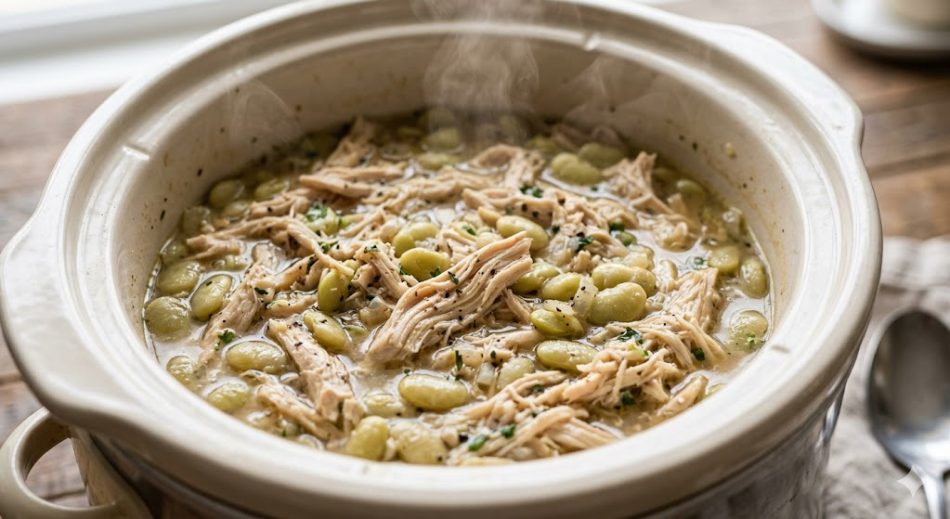
Pour the chicken broth over the chicken and beans. The liquid should come just above the level of the chicken — if it doesn’t, add enough additional water to bring the level up until everything is just submerged. Sprinkle the salt and the full teaspoon of black pepper evenly over the surface of the liquid. The pepper will distribute through the broth during the cook; the visible flecks in the finished bowl are part of the dish’s characteristic appearance and a visual indicator of its properly peppery character.
Step 4 — Cook
Cover the slow cooker and cook on LOW for 8 to 10 hours or on HIGH for 4 to 5 hours until the lima beans are plump and completely tender throughout — pressing one between two fingers should produce no resistance, with the bean soft all the way through — and the chicken is completely yielding and pulls away from the bone easily. LOW is strongly preferred for the most developed broth and the most consistently cooked beans. Use fully thawed chicken and verify the internal temperature reaches 165°F at the thickest part of the largest thigh before serving.
Step 5 — Shred and Return the Chicken
Using tongs, carefully lift the chicken thighs from the slow cooker onto a cutting board or wide plate — they will be very tender and may want to fall apart during transfer. Allow them to cool for five minutes until they can be handled safely. Remove and discard the bones and any cartilage. Use two forks to shred the chicken into bite-sized pieces. Return the shredded chicken and any juices that have accumulated on the cutting board to the slow cooker and stir gently to combine the shredded chicken evenly throughout the beans and broth.
Step 6 — Season and Serve
Taste the finished dish and adjust the seasoning — the beans will have absorbed significant salt during the long cook and the broth may need more than the initial amount provided. Add salt in small increments, tasting after each addition, until the broth tastes properly seasoned. Add additional black pepper if you prefer a more assertively peppery result. If the mixture seems thicker than desired, stir in a small splash of hot water or broth to loosen it to the preferred consistency. Serve hot in wide bowls with an additional grind of black pepper over the top, with good bread alongside for soaking up the broth.
Tips for the Best Results
Use bone-in thighs — the bone matters. The bone’s contribution to the broth over eight to ten hours on LOW is what distinguishes this preparation from the same dish made with boneless thighs. The gelatin and depth that the bone contributes makes the broth richer and more satisfying in a way that is perceptible in every spoonful. Boneless thighs produce a thinner, less satisfying broth. Do not substitute.
Be generous with the black pepper. The peppery broth is the dish’s signature flavoring beyond salt and chicken. One teaspoon is the starting amount; taste the finished broth and add more if it tastes flat or bland — a pinch of additional pepper at the end costs almost nothing and makes a meaningful difference. Freshly ground black pepper produces a more aromatic, more vibrant result than pre-ground.
Always start with fully thawed chicken. Unlike some slow cooker preparations where frozen chicken can be safely used from frozen, this recipe uses bone-in pieces and a long cook time — always start with chicken that has been fully thawed in the refrigerator. The food safety concern with bone-in frozen chicken in the slow cooker is that the thick bone can insulate the meat around it, keeping it in the temperature danger zone (40°F to 140°F) for too long before the internal temperature rises to the safe 165°F. Verify with a thermometer before serving.
Taste and re-season before serving. Dried beans absorb a significant amount of salt during the long cook, and the broth may taste well-seasoned at the start but flat or under-seasoned at the end. Always taste after shredding and returning the chicken, and add salt in small amounts until the broth tastes properly seasoned. The same applies to pepper — some people prefer a more aggressively peppery bowl than the initial amount produces.
Mash some beans for a thicker, creamier result. If the finished broth seems thinner than preferred, pressing five or six lima beans against the side of the insert with the back of a spoon and stirring the mashed bean into the broth thickens it quickly and naturally using the bean’s own starch. Mashing a larger portion of the beans produces a much thicker, almost porridge-like consistency that is deeply satisfying as a cold-weather bowl food. This is a quick, effective way to dial the texture to personal preference without any additional thickening agent.
Frequently Asked Questions
Can I use canned lima beans instead of dried?
Yes, with significant timing adjustments. If using canned lima beans, drain and rinse three 15-ounce cans and add them to the slow cooker during the final one to one and a half hours of the cook rather than at the beginning — canned beans are already fully cooked and need only to be warmed through and flavor-absorbed, not cooked from dry. Reduce the broth to four cups since the canned beans don’t absorb as much liquid as dried. The finished dish will have a somewhat different texture (firmer, more distinct beans rather than the slightly dissolved, starchy quality of long-cooked dried beans) and slightly less developed bean flavor throughout the broth, but is a practical alternative when dried beans aren’t available or when time is limited.
Do I need to soak the dried beans?
No — for an eight-to-ten-hour LOW cook, dried lima beans will fully hydrate and cook through from a dry start without soaking. Soaking overnight shortens the cooking time by approximately thirty minutes and may produce slightly more evenly cooked beans, but is not necessary for this recipe’s intended cooking window. If cooking on HIGH (four to five hours), soaking the beans overnight first is recommended to ensure they cook through completely in the shorter time frame.
Can I add vegetables?
Yes — in the spirit of the recipe’s original Depression-era philosophy of using what’s available. A whole peeled yellow onion added to the beans at the beginning of the cook contributes aromatic sweetness and depth to the broth without requiring any prep beyond peeling. Two or three stalks of celery (whole or roughly chopped) add a mild herbal note. A medium carrot, peeled and halved, adds sweetness. All of these can be removed before serving or left in and served alongside. Any hardy vegetable that can survive an eight-to-ten-hour braise is appropriate.
What’s the best way to stretch this dish further?
Stirring one to two cups of cooked white rice into the finished dish, with a splash of additional broth or water to account for the rice’s absorption, produces a more substantial, even more filling bowl that stretches six servings to eight. Small pasta shapes (ditalini, small elbows) cooked separately and stirred in at serving time produce a similar result with a different texture. Serving over mashed potatoes in the bowl — ladling the chicken, beans, and broth over a scoop of mashed potatoes at the center — produces the most indulgent and most filling presentation, appropriate for very hungry households or very cold days.
How do I store and reheat leftovers?
Cool the finished dish within two hours of serving, transfer to shallow airtight containers, and refrigerate for up to three to four days or freeze for up to three months. The lima beans continue absorbing the broth during storage and the dish will be considerably thicker when cold than when freshly made. Add a splash of water or broth when reheating to restore the broth to its original consistency. Reheat on the stovetop over medium heat, stirring gently, until steaming throughout; or in the microwave at medium power in a covered container, stirring once or twice during heating. Always reheat until steaming hot throughout before serving.
Variations Worth Trying
Onion and garlic version: Add one large yellow onion (peeled and quartered) and three whole peeled garlic cloves to the beans before adding the chicken and broth. The onion and garlic soften completely during the long cook, dissolving their flavor into the broth and making it considerably more savory and aromatic. Remove and discard the large onion pieces before shredding the chicken if preferred, or mash them into the broth for additional body. This is the most natural and most effective single addition to the base recipe.
Smoked ham version: Add one smoked ham hock or one cup of diced smoked ham to the beans at the beginning of the cook alongside or instead of the chicken. A ham hock contributes gelatin, smoke, and rich pork flavor to the broth in the same way the chicken bones do — the finished dish has a smokier, more complex character and a darker broth. Using both a chicken thigh and a ham hock produces the richest, most deeply flavored version of this preparation. This version is the closest to the traditional Southern ham and beans preparation and is particularly satisfying in winter.
Bay leaf and thyme version: Add two bay leaves and three sprigs of fresh thyme (or one teaspoon of dried) to the broth before the lid goes on. The bay and thyme add an herbal dimension to the broth that deepens its complexity without changing its fundamental character. Remove the bay leaves before serving. This modest addition is the most effective single flavor enhancement available to the base recipe that stays within its simple, accessible spirit.
Tomato version: Add one 14.5-ounce can of diced tomatoes (undrained) to the broth at the start of the cook. The tomatoes add acidity, sweetness, and color to the broth and produce a slightly different, slightly more Southern-stewed character that is very good with cornbread alongside. Increase the black pepper slightly to compensate for the tomato’s sweetness.
White bean version: Replace the lima beans with an equal quantity of dried Great Northern beans or dried navy beans for a different but equally satisfying legume base. Great Northern beans produce a slightly less starchy, less thick broth and a more delicately flavored bean; navy beans produce a finer, more evenly distributed bean texture that dissolves more readily into the broth and creates a slightly thicker, more porridge-like consistency. Both use the same method and timing as the lima bean version.
Serving Suggestions
Depression-era chicken and lima beans is most naturally served in wide, deep bowls with something starchy alongside for soaking up the peppery broth — the broth is too good to leave in the bowl and the right bread or starch is the essential accompaniment. Crusty bread (a good baguette or a country loaf with a crisp exterior) is the most satisfying option for tearing and dipping. Warm cornbread is the most specifically American Southern accompaniment and pairs naturally with the bean-forward dish. Buttered toast is the simplest and most Depression-era-authentic choice — two slices of white bread toasted and buttered, placed at the edge of the bowl for soaking. For a more substantial meal, ladle the chicken and beans over mashed potatoes or a scoop of cooked white rice in the center of each bowl, with the broth pooling around the starch. A simple cucumber salad with vinegar dressing or a handful of sliced raw vegetables alongside provides the fresh, crisp element that the warm, soft dish benefits from as a contrast.
Storage
Store leftovers in shallow airtight containers in the refrigerator for up to three to four days or freeze for up to three months. The beans absorb broth during storage and the leftovers will be thicker than the freshly made dish — add water or broth when reheating to restore the original consistency. The dish is excellent reheated and often more deeply flavored the following day as the seasonings continue to integrate. Pack leftovers in a wide-mouth thermos for lunch — with a slice of bread alongside, the reheated chicken and bean broth is one of the most warming and satisfying packed lunches available in cold weather.
Five Ingredients, One Bowl That Endures
Slow Cooker Depression-Era Chicken and Lima Beans belongs to the category of dishes that survive not through novelty or elaboration but through the kind of fundamental, honest satisfaction that simple food made well and eaten warm reliably produces. Bone-in chicken, dried beans, broth, salt, and pepper — assembled in five minutes and cooked for eight hours on LOW — produce something that feeds six people thoroughly and genuinely well from the most modest pantry inputs available. The lima bean’s creaminess, the chicken’s richness, the peppery broth’s warmth, and the generous bowl of it all together with good bread: this is why the recipe has persisted through generations of practical kitchens, and why it will continue to.
Enjoy!