
Step-by-Step Instructions
-
Prep Your Pan: Preheat your oven to 400°F (204°C). Line a large, rimmed baking sheet completely with aluminum foil or parchment paper. (Foil makes it incredibly easy to gather the cooled grease later). 2. Arrange the Strips: Lay the bacon slices across the prepared baking sheet in a single layer. It is perfectly fine if the strips touch slightly since they will shrink as they cook, but do not overlap them. If you are making peppered bacon, dust the tops generously with cracked black pepper now.
-
Bake to Perfection: Place the baking pan on the center rack of the oven.
-
For Standard-Cut Bacon: Bake for 15 to 18 minutes.
-
For Thick-Cut Bacon: Bake for 20 to 25 minutes until the fat renders out and the meat turns deep golden brown and bubbly.
-
-
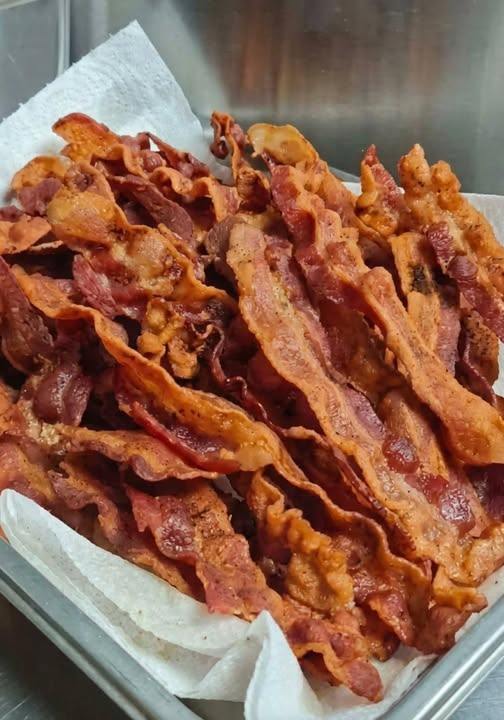
Drain and Set: Carefully remove the pan from the oven. Use kitchen tongs to instantly transfer the hot bacon strips onto a plate lined with clean paper towels. Let them rest for 2 minutes; they will crisp up significantly as they cool down.
Chef’s Pro Tips
-
The Cold Oven Trick: For the absolute straightest, flattest bacon strips, place your loaded baking sheet into a cold oven, then turn the heat on to 400°F. As the oven heats up gradually, the bacon fat melts slower, reducing curling and shrinking.
-
Save Liquid Gold: Do not throw away the rendered bacon grease left in the pan! Pour it through a fine sieve into a glass jar and store it in your fridge. It adds an incredible depth of savory flavor when used to sauté onions, fry eggs, or pop popcorn.
How to Serve
-
The Gourmet BLT: Layer these rigid, shatteringly crisp strips onto toasted brioche bread with heirloom tomato slices, crisp butter lettuce, and a smear of garlic aioli.
-
Savory Salad Toppers: Chop the cooled crispy bacon into small chunks and scatter over a classic wedge salad or a creamy potato salad.
-
Breakfast Spread Companion: Serve alongside fluffy scrambled eggs, silver dollar pancakes, and fresh fruit for a classic diner experience at home.
History and Culinary Origins
While cured pork bellies have been a cornerstone of European and Asian diets for thousands of years, the universal obsession with thin, uniform bacon strips fried to a crisp is largely a 20th-century Western development. Historically, bacon was pan-fried out of necessity, as early cast-iron skillets were the standard primary cooking vessel over stoves and hearths.
The shift toward oven-baking emerged alongside modern commercial kitchens and high-volume restaurants. Chefs recognized that frying bacon in small skillets led to uneven hot spots, excessive curling, and required constant monitoring. Transitioning to flat sheet pans in large ovens allowed for massive batches to render evenly in their own fat, bringing a reliable, restaurant-grade crunch to home kitchens worldwide